
Why watering your watermelon leaves is actually the fastest way to kill your harvest. Most gardeners think more water equals bigger melons, but splashing the leaves is a recipe for rot. Switch from standard hose spraying to precision root-zone hydration to see your brix levels soar and your vines stay disease-free.
I have spent many decades leaning over garden fences, watching folks blast their melon patches with a high-pressure nozzle. It always breaks my heart a little. You see the vibrant green vines today, but within a week of humid weather and wet foliage, those leaves start looking like they have been dusted with flour or burnt by a phantom fire.
Watermelons are thirsty creatures, certainly, but they are also remarkably sensitive to how that thirst is quenched. Treating them like a lawn is the quickest path to a funeral for your fruit. If you want those heavy, sugar-laden melons that make the table groan at a summer picnic, you have to change your perspective on irrigation entirely.
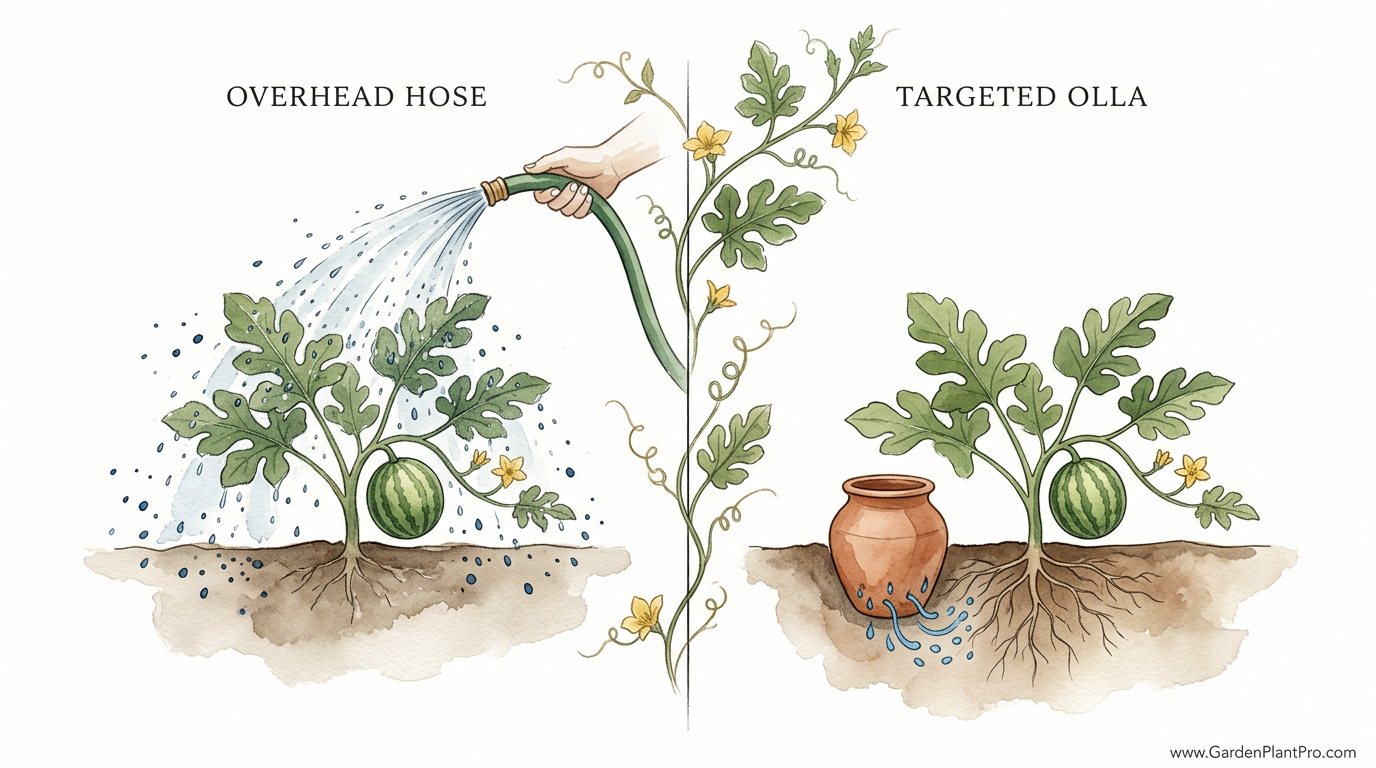
Success in the melon patch is about keeping the feet wet and the hair dry. This means moving away from the overhead spray and getting the moisture exactly where the plant can actually use it: the root zone. Let me walk you through the hard-won lessons of my gardening life so you can avoid the soggy mistakes that ruin so many harvests.
Best Way To Water Watermelons
The best way to water watermelons is through consistent, deep, root-zone irrigation that keeps moisture in the soil while leaving the foliage completely dry. This approach recognizes that watermelons are essentially big bags of water held together by a thin rind, requiring massive amounts of hydration that must be delivered without inviting fungal pathogens to dinner.
In the real world, this translates to using tools like drip irrigation, soaker hoses, or ancient clay ollas. These methods ensure that the water reaches the deep taproots and extensive lateral roots of the plant. A watermelon plant can have roots that reach down 3 to 4 feet (90 to 120 cm) and spread just as wide, searching for every drop of moisture in the surrounding earth.
Think of the plant like a straw. It pulls moisture from the soil, moves it through the vines, and evaporates it through the leaves in a process called transpiration. When you water the roots directly, the straw works perfectly. When you spray the leaves, you create a humid microclimate under the canopy that acts as a greenhouse for diseases like powdery mildew and anthracnose.
This method is used by professional growers and seasoned backyard veterans alike because it mimics the natural way plants receive water in their ancestral desert homes. They are adapted to find water deep in the sand while basking in hot, dry air. Replicating that balance is the secret to a record-breaking harvest.
Why Root-Zone Hydration Wins
Targeted watering at the base of the plant saves a tremendous amount of resources. Standard sprinklers lose nearly half of their water to evaporation before it even hits the ground, especially during the heat of the day. A root-zone system, particularly one tucked under a layer of mulch, ensures that almost 90% of the water you use actually reaches the plant.
Maintaining dry leaves is the most effective organic disease prevention strategy available. Most fungal spores require a film of water on the leaf surface to germinate. If you deny them that moisture, you stop the disease cycle before it can even start, which is far better than trying to spray your way out of a powdery mildew outbreak later in the season.
How Root-Zone Hydration Works
Implementing a precision watering system requires a bit of setup, but the rewards are measured in pounds and sugar content. The goal is to saturate the soil profile to a depth of at least 12 inches (30 cm) every time you water. This encourages the roots to grow downward rather than staying near the surface where they are vulnerable to the baking sun.
The process starts with understanding the volume of water needed. Watermelons generally require 1 to 2 inches (2.5 to 5 cm) of water per week. In a typical garden bed, this equates to roughly 0.6 to 1.2 gallons of water per square foot (24 to 48 liters per square meter). However, the frequency of delivery changes as the plant grows.
- The Seedling Stage: Keep the soil consistently moist but never soggy. Small plants have tiny root systems and can dry out in a single afternoon.
- The Vegetative Stage: Once the vines start “running,” transition to deeper, less frequent watering. This forces the roots to seek moisture deeper in the soil.
- The Flowering Stage: This is a critical window. Inconsistent watering now can cause the plant to drop its female flowers, meaning no fruit will set.
- The Ripening Stage: As the melons reach full size, you actually want to taper off the water. This concentrates the sugars and prevents the fruit from splitting.
Traditional gardeners often use “hills” to plant their melons. These mounds are excellent for drainage, but they can be tricky to water. The water often runs off the side of the hill before soaking in. If you use hills, make a small “crater” or basin at the top around the stem to hold the water and force it to sink straight down to the roots.
Using a timer with your irrigation system can take the guesswork out of the process. Early morning watering is best, typically between 4:00 AM and 8:00 AM. This gives the plant a chance to hydrate before the midday heat hits and ensures that any stray splashes on the stems have all day to dry out in the sun.
The Benefits of Precision Watering
The primary advantage of this method is the dramatic increase in fruit quality. When a watermelon receives a steady, predictable supply of water, the cells in the fruit expand at a constant rate. This prevents the “hollow heart” condition and ensures the texture of the flesh is crisp rather than mealy.
Sugar concentration, often measured as Brix levels, is directly tied to your watering schedule. If you keep the soil saturated right up until harvest, the melon will be watery and bland. By using a precision system to slowly reduce water in the final two weeks, you force the plant to pack the fruit with sugars, resulting in that legendary “honey-sweet” flavor.
Weed control becomes much easier when you only water the plants you want to grow. Sprinklers water every weed seed in the garden, creating a carpet of green that competes with your melons for nutrients. Drip lines or ollas keep the “inter-row” spaces bone dry, which naturally suppresses weed germination without you having to lift a hoe.
Soil structure is also preserved through gentle watering. Heavy overhead sprays can compact the soil surface, creating a hard crust that prevents air from reaching the roots. A slow drip or a seeping olla keeps the soil friable and airy, which is exactly how watermelons like it. They need oxygen in the root zone just as much as they need water.
Common Challenges and Mistakes
The biggest pitfall I see is the “weekend warrior” approach to watering. Letting the soil go bone dry all week and then flooding the patch on Saturday is a recipe for disaster. This cycle of extreme stress followed by a sudden deluge causes the fruit to expand too quickly, which leads to the rind cracking or splitting open.
Another frequent error is watering the fruit itself. While the rind is tough, constant moisture on the underside of the melon—where it touches the soil—can lead to belly rot. It is wise to place a small piece of wood, a tile, or even a bed of straw under each developing melon to keep it off the damp earth, especially if you are not using a mulch barrier.
DIY PROJECT: Collect rainwater no matter where you live...
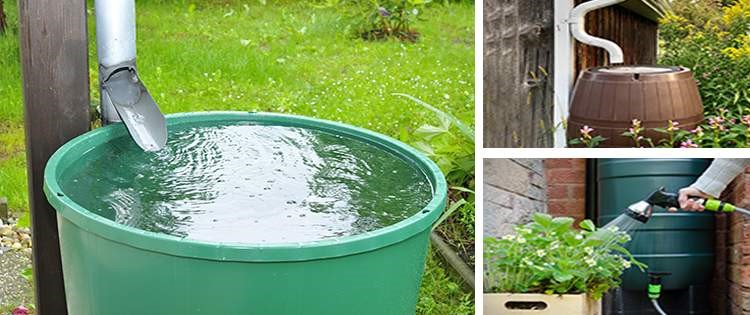
This DIY project is the best way to legally collect rainwater NO MATTER where you live. Get chlorine-free water, cut down on your water bills, and have enough for an emergency situation or to water your garden. Read More Here...
Misreading the leaves is a challenge even for experienced growers. On a blistering afternoon, watermelon leaves will often wilt or “flag” to protect themselves from the sun. This is a natural defense mechanism and doesn’t always mean the plant needs more water. If the leaves are still wilted the following morning, then you have a genuine moisture problem. If they perk up overnight, the soil moisture is likely fine.
Neglecting the calcium connection is a mistake that leads to blossom-end rot. While we often think of this as a tomato problem, watermelons suffer from it too. Calcium moves through the plant via water. If your watering is inconsistent, the calcium cannot reach the developing fruit, resulting in a black, leathery patch on the end of the melon.
Limitations of Precision Systems
While root-zone irrigation is superior, it does have its limits. In extremely sandy soils, water moves vertically very quickly and may not spread horizontally enough to reach all the lateral roots. In these conditions, you may need multiple emitters per plant or a wider soaker hose layout to ensure the entire root radius is covered.
Initial cost and complexity can be a barrier for some. Setting up a drip system requires a pressure regulator, a filter, and various connectors. If you have a very small patch with only one or two plants, the investment might seem steep. However, even a simple olla made from two unglazed terra cotta pots glued together can provide the same benefits for just a few dollars.
Water quality can also be an issue for precision emitters. If you are using well water with high mineral content or “hard” water, the tiny holes in drip tape can clog over time. You must be diligent about using filters and occasionally flushing the lines with a mild acidic solution to keep the water flowing freely throughout the season.
Targeted Olla vs. Overhead Hose
It helps to see the numbers when deciding which method to use. While the “neighborly” way is often to just grab the hose, the data suggests otherwise. Below is a comparison of how these methods perform over a standard growing season.
| Feature | Overhead Hose Spray | Targeted Olla / Drip |
|---|---|---|
| Water Efficiency | 40% – 50% (High Loss) | 90% – 95% (High Efficiency) |
| Disease Risk | High (Wet Foliage) | Very Low (Dry Foliage) |
| Weed Growth | Prolific (Broad Watering) | Minimal (Localized) |
| Labor Requirement | High (Daily Manual Task) | Low (Set and Forget) |
| Fruit Quality | Variable (Bland/Watery) | Consistently Sweet |
Practical Tips for Success
Always use mulch. Whether you prefer straw, wood chips, or black plastic, a thick layer of mulch is the partner of any good watering system. It prevents the sun from evaporating the moisture you just painstakingly delivered and keeps the soil temperature stable, which is vital for the sensitive roots of the watermelon.
Check your soil moisture by hand. No matter how fancy your system is, nothing beats the “finger test.” Stick your finger 2 to 3 inches (5 to 7.5 cm) into the soil. It should feel like a wrung-out sponge. If it feels dusty, increase your watering time. If it feels like mud, back off for a few days.
Adjust for the weather. During a heatwave with temperatures exceeding 95°F (35°C), the transpiration rate of those massive leaves is astronomical. You may need to water daily during these peaks. Conversely, during a week of overcast, cool weather, you can often skip a watering cycle entirely to prevent root rot.
- Morning Glory: Always water in the early morning to allow any accidental leaf moisture to evaporate before sunset.
- Deep Soak: Aim for fewer, longer watering sessions rather than many short bursts. This deepens the root system.
- Tapering: Start reducing water when the tendril nearest the fruit turns brown and starts to shrivel.
Advanced Considerations for Serious Growers
Serious practitioners often use a refractometer to measure the Brix levels of their melons. This handheld device uses light to determine the sugar content of the juice. By monitoring a “sacrifice” melon, you can time your final water shut-off perfectly. A commercial-grade watermelon usually hits 10% Brix, but a home-grown one managed with precision watering can reach 12% or higher.
Subsurface drip irrigation (SDI) is the “gold standard” for large patches. This involves burying the drip lines 4 to 6 inches (10 to 15 cm) below the soil surface. This virtually eliminates evaporation and delivery losses, and it keeps the very top of the soil completely dry, which is excellent for long-term soil health and pest management.
Consider your soil’s Cation Exchange Capacity (CEC) if you are fertigating through your water lines. High-clay soils hold onto nutrients longer, while sandy soils allow them to leach away. Matching your watering duration to your soil type ensures that you aren’t just wasting water, but also preventing the loss of vital fertilizers that fuel fruit growth.
Real-World Example: The “Olla Orchard”
Consider a garden in a hot, arid climate like Arizona or Southern Australia. A gardener there might plant three “Sugar Baby” watermelons around a single 2-gallon (7.5-liter) olla. The olla is buried up to its neck in the center of the hill. Every four days, the gardener refills the olla.
Because the clay is porous, the water seeps out only when the surrounding soil is dry. During a particularly hot week, the plants pull more water through the clay walls. During a rare rainstorm, the pressure equalizes and the olla holds onto its water. This “smart” system requires almost no electricity or moving parts and results in melons that are uniform in size and intensely sweet because the plants never experienced a single hour of moisture stress.
Final Thoughts
Mastering the art of watermelon watering is less about the volume of water and more about the delivery and timing. By moving away from the “hose and hope” method and embracing root-zone hydration, you are giving your plants the exact environment they need to thrive. Keeping those leaves dry is the single best thing you can do for the long-term health of your vines.
As you watch your melons swell under the summer sun, remember that you are managing a delicate biological machine. The transition from the high-water demand of the fruit-sizing phase to the restricted-water demand of the ripening phase is where the magic happens. That is when a simple fruit becomes a backyard legend.
Take these lessons out to your garden and experiment. Whether you start with a simple soaker hose or go all-in on a buried olla system, your taste buds will thank you come harvest time. Once you have tasted a melon grown with precision hydration, you will never go back to the old way of watering again.
Do you have some charcoal in your house right now? We call charcoal a “miracle leftover” for anyone who wants to be a little more self-sufficient and cut costs. That’s because it can help you with so many different things around the house and garden. You can even use it to make an energy-free fridge. Read More Here...