
Is your fertilizer feeding your plant or killing your soil? High-NPK synthetic fertilizers might give you a quick flush of growth, but they often lead to sour fruit and weak vines. Switch to a biological approach with worm castings and fungal-dominant mulch to unlock the true sugar potential of your harvest.
If you have ever looked at a passionfruit vine that is all green leaves and no purple fruit, you know the frustration of “empty growth.” You followed the label on the bag, tossed out the blue pellets, and watched the vine race across the fence, yet the harvest was a dud. Most folks think a vine that grows fast is a healthy one, but in my decades of gardening, I have learned that a plant fueled by salt-based synthetics is often just a bloated version of itself.
Real passionfruit success comes from the ground up, not from a laboratory. When you focus on feeding the soil biology—the worms, the fungi, and the microscopic life—the vine takes care of itself. It becomes more resilient to heat, finds its own water during dry spells, and most importantly, produces fruit so sweet it tastes like sunshine and honey. Let me walk you through how to move away from the “chemical hit” and toward a biological system that actually works.
Best Fertilizer For Passionfruit Vines
The best fertilizer for passionfruit vines is not a single bottle or bag, but a combination of biological inputs that mimic a forest floor. While these vines are notoriously heavy feeders, they are also sensitive. Their shallow root systems, with 60% of roots located in the top 30 cm (12 in.) of soil, make them vulnerable to the high salt index of concentrated synthetic fertilizers.
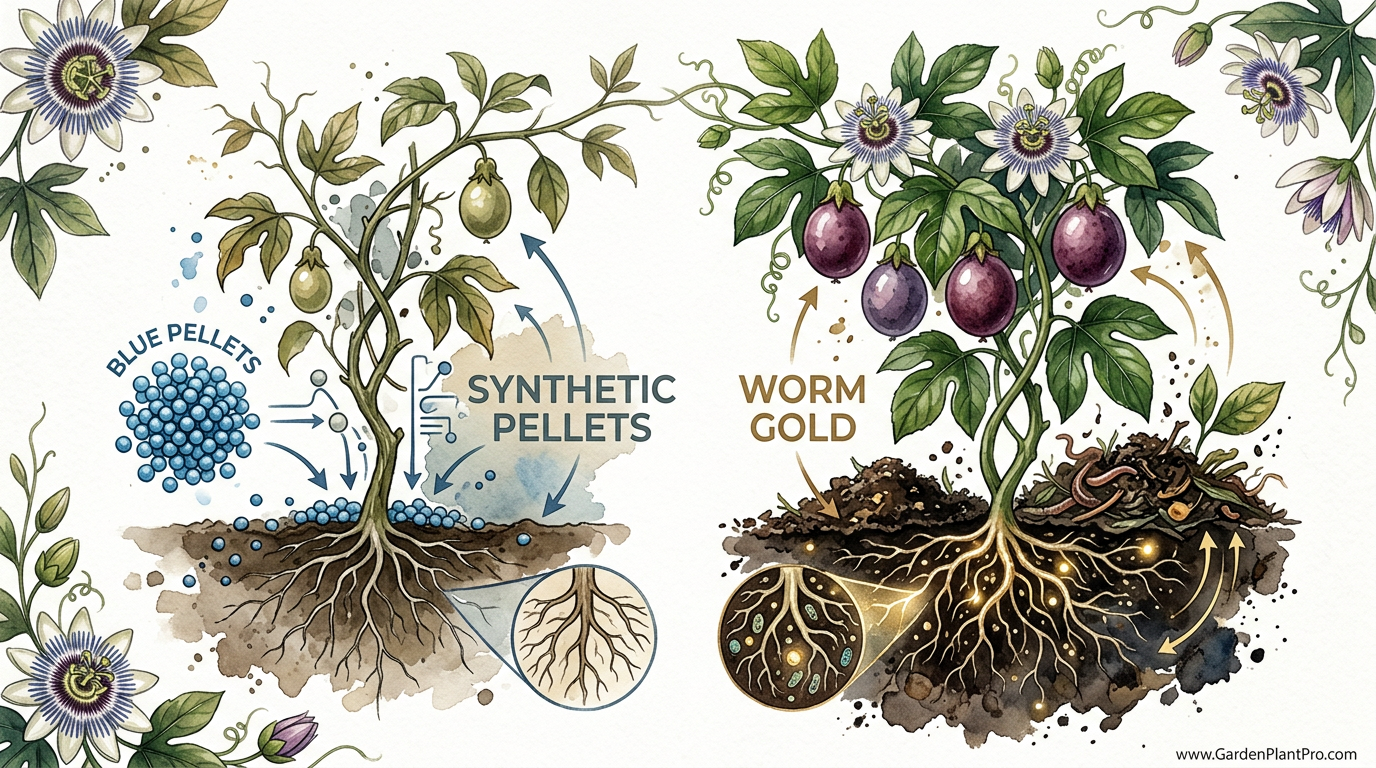
In a real-world garden, a biological approach centered on worm castings and fungal-dominant mulch outperforms traditional NPK granules over the long term. Worm castings, often called “Worm Gold,” provide a steady release of nutrients along with growth-promoting hormones like auxins and gibberellins. Unlike synthetic “Blue Pellets,” these biological amendments do not leach away in the rain or burn the delicate surface roots of your vine.
Passionfruit require a balance of nitrogen for leafy growth, phosphorus for root development, and high levels of potassium for fruit quality. However, they also need a suite of micronutrients including magnesium, calcium, and boron. A biological system ensures these minerals are “unlocked” by soil microbes, making them available to the plant exactly when it needs to set fruit.
How a Biological System Works
To understand why this works, you have to look past the plant and into the dirt. A biological approach relies on two main pillars: vermicompost (worm castings) and mycorrhizal fungi. When you apply these, you aren’t just adding food; you are installing a decentralized infrastructure for nutrient delivery.
Worm castings are teeming with beneficial bacteria that coat the roots. This microbial layer acts as a shield against soil-born pathogens like root rot, which is the number one killer of passionfruit vines. Simultaneously, these microbes work to break down organic matter into “plant-available” forms. This means your vine spends less energy processing minerals and more energy producing sugars.
Then there is the fungal side of the equation. By using a fungal-dominant mulch—think coarse, woody materials like chunky woodchips or straw—you encourage the growth of mycorrhizal fungi. These fungi attach themselves to the passionfruit roots, effectively extending the root system by 100 times. This fungal network can reach into tiny soil pores that roots cannot, pulling in phosphorus and water that would otherwise be out of reach.
Building the “Worm Gold” Foundation
- Initial Application: When planting, mix 2–4 kg (4–9 lbs) of high-quality worm castings into the planting hole.
- Seasonal Top-Dressing: Every spring and autumn, apply a 2 cm (0.8 in.) layer of castings around the entire root zone, reaching out at least 45 cm (18 in.) from the main stem.
- Microbial Tea: Once a month during the growing season, soak a handful of castings in a bucket of water for 24 hours to create a “biological brew.” Pour this directly over the roots to recharge the soil life.
Benefits of the Biological Approach
The most measurable benefit of switching to a biological system is the Brix level of your fruit. Brix is a measure of the dissolved sugar and mineral content in the juice. High-NPK synthetics often force a plant to take up too much water, which dilutes the sugars and results in that sour, watery flavor many supermarket passionfruits have.
A biological system, however, focuses on “mineral density.” Because the mycorrhizal fungi are efficient at transporting trace minerals like boron and zinc, the plant can synthesize more complex sugars and antioxidants. The result is a fruit that is heavier, more aromatic, and significantly sweeter. This is the difference between a vine that just “survives” and one that truly thrives.
Beyond the fruit, the vine itself becomes much tougher. Biological gardening improves soil structure, creating a “crumbly” texture that holds moisture during a drought but drains perfectly during a downpour. This reduces the risk of root rot, which is common in compacted soils treated only with chemical fertilizers.
Common Challenges and Mistakes
The biggest mistake I see gardeners make is “Nitrogen Overload.” It is tempting to dump high-nitrogen fertilizer on a vine to make it grow faster, but this backfires. Excessive nitrogen tells the plant to keep growing leaves and vines, essentially “forgetting” to produce flowers. If your vine looks like a green monster but hasn’t flowered in two years, you likely have a nitrogen imbalance.
Another pitfall is “Salt Burn.” Synthetic fertilizers are essentially salts. If you apply them too close to the stem or in dry conditions without enough water, they will pull moisture out of the roots, causing the leaves to yellow and drop. Passionfruit roots are surface-feeders; they don’t have the deep taproots of a tree to escape the salt zone.
Finally, avoid using “Hot” Manures. Fresh chicken or horse manure that hasn’t been fully composted is too acidic and high in ammonia for passionfruit. It can introduce fungal diseases or attract pests like fruit flies that are drawn to the high sugar content of the decomposing matter. Always ensure any manure or compost is well-rotted and smells like forest floor, not a barnyard.
Limitations of the Method
While a biological approach is superior for fruit quality, it does require patience. Unlike a synthetic “kick” that might show greening in 48 hours, biological amendments work on the schedule of the soil life. It can take a few months for the fungal networks to fully establish and for the nutrient cycling to hit its stride.
Climate also plays a role. In very cold, temperate regions, soil biology slows down significantly in the winter. If you are trying to push growth in a marginal climate, you might need a “bridge” fertilizer—a low-concentration organic liquid feed like seaweed or fish emulsion—to help the plant during the shoulder seasons when the soil is too cool for the worms and fungi to be active.
Comparison: Blue Pellets vs. Worm Gold
| Feature | Synthetic (Blue Pellets) | Biological (Worm Gold) |
|---|---|---|
| Speed of Results | Rapid (3-7 days) | Gradual (2-4 weeks) |
| Impact on Brix (Sugar) | Often Low (diluted) | High (concentrated) |
| Soil Health | Can degrade biology over time | Builds topsoil and microbial life |
| Risk of Root Burn | High (salt-based) | Very Low (buffered) |
Practical Tips for Success
When you apply your worm castings or mulch, always keep it 10–15 cm (4–6 in.) away from the main trunk. This prevents “collar rot,” a fungal disease that thrives when the base of the vine stays too damp. Think of your fertilizer and mulch as a “donut” around the plant, not a pile against it.
Watch the leaves for clues. If the new growth is pale yellow but the veins stay green, your vine is likely struggling with a magnesium deficiency. Instead of reaching for a chemical fix, apply a light foliar spray of diluted worm tea or seaweed extract. This delivers the nutrients directly to the leaves for a quick boost while the soil biology catches up.
Don’t forget the Pollinators. Even with the best fertilizer in the world, you won’t get fruit without bees. If your vine is flowering but the fruit isn’t setting, try planting “pollinator companions” like lavender or borage nearby. A biologically active garden naturally attracts more beneficial insects than a chemically treated one.
DIY PROJECT: Collect rainwater no matter where you live...
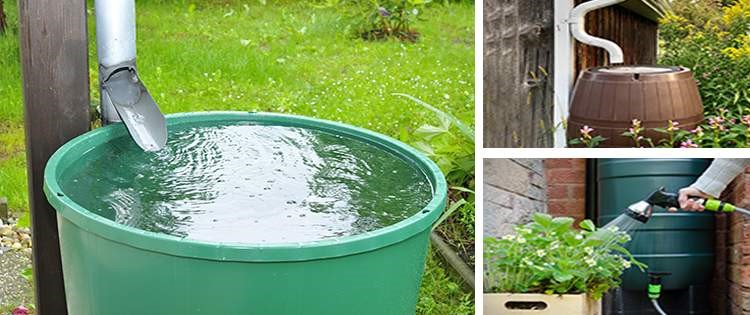
This DIY project is the best way to legally collect rainwater NO MATTER where you live. Get chlorine-free water, cut down on your water bills, and have enough for an emergency situation or to water your garden. Read More Here...
Advanced Considerations: The Brix Connection
Serious growers use a Brix refractometer to measure the success of their fertilizer program. A “poor” passionfruit will measure around 8–10 on the Brix scale, while a biologically grown fruit can reach 16–20. This increase isn’t just about sweetness; it’s a sign that the plant has high levels of minerals and complex proteins.
High-Brix plants are also less attractive to pests like aphids and mites. These insects have simple digestive systems that cannot process the complex sugars found in healthy, biologically fed plants. By focusing on the soil fungi and worm activity, you are essentially building a natural pest-resistance system into the vine itself.
Example Scenario: The Revived Vine
Imagine a backyard gardener in a subtropical climate who has an 18-month-old vine. It grew 5 meters (16 ft) in its first year using standard blue pellets, but the few fruits it produced were hollow and sour. The gardener stops the synthetic pellets and instead applies 5 kg (11 lbs) of worm castings and a thick layer of straw mulch in early spring.
Within six weeks, the new growth is a darker, glossier green. By mid-summer, the vine is covered in flowers that stay on the plant rather than dropping off. By autumn, the harvest is so heavy the trellis needs reinforcing, and the fruit juice is thick and sweet. This gardener didn’t just “fertilize” the plant; they restored the ecological loop between the roots and the soil.
Final Thoughts
Working with passionfruit vines is a lesson in patience and observation. It is easy to be seduced by the quick fix of synthetic fertilizers, but that path often leads to long-term soil depletion and mediocre harvests. By embracing a biological approach—focusing on worm castings, fungal-dominant mulch, and microbial health—you are investing in the future of your garden.
Your soil is a living organism, and the passionfruit vine is merely the visible part of a much larger system. When you feed the worms and the fungi, they in turn provide the vine with everything it needs to produce a truly exceptional crop. I encourage you to experiment this season; leave the chemicals on the shelf and see what a little “Worm Gold” can do for your harvest.
Once you get the soil right, everything else—from irrigation methods to pest management—becomes significantly easier. You’ll find yourself spending less time worrying about deficiencies and more time enjoying the rewards of a truly healthy, sustainable garden.