Most gardeners throw this ‘trash’ away, but your soil thinks it’s pure gold. Don’t let your garden’s hard-earned nutrients end up at the dump. Those tough, woody stalks are the perfect fuel for your next crop. Learn how to shred and recycle your collard waste to create the ultimate organic fertilizer for free.
If you have ever harvested a row of collard greens, you know the aftermath: a forest of thick, skeletal stalks that look more like driftwood than garden waste. To the uninitiated, these stems are a nuisance that won’t break down in a standard compost pile for a year or more. But for the seasoned gardener, those stalks represent a concentrated bank of nitrogen, potassium, and calcium that the plant spent months mining from your soil.
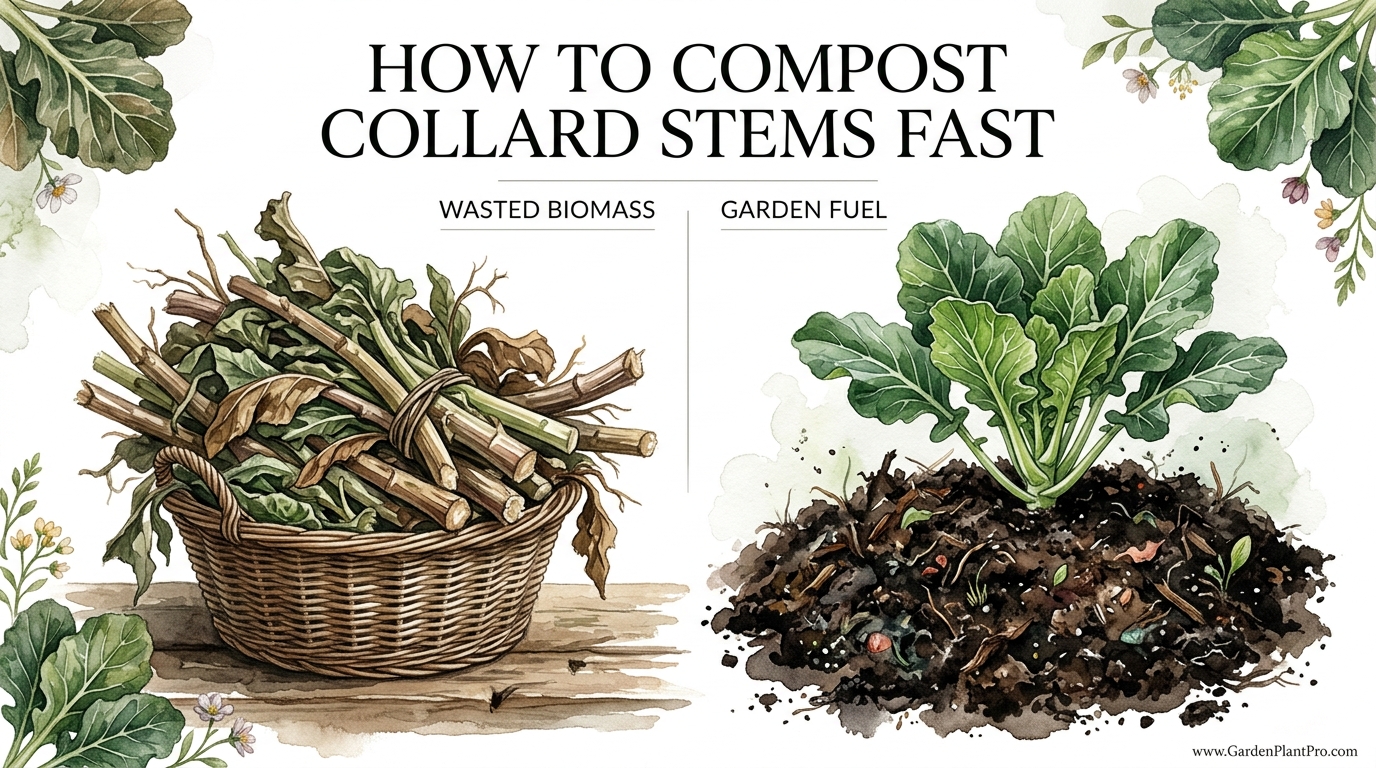
Recycling this “wasted biomass” isn’t just about being tidy; it’s about closing the nutrient loop in your backyard. When we harvest the leaves, we only take a fraction of the plant’s total weight. The remaining 70% to 80% of the biomass is locked inside those fibrous stems. By learning how to process them correctly, you can turn a slow-rotting problem into a fast-acting soil superfood.
How To Compost Collard Stems Fast
Composting collard stems effectively requires overcoming their natural defense mechanism: lignin. Lignin is the organic polymer that makes stalks woody and resistant to decay. In a passive or “cold” compost pile, a whole collard stalk can sit virtually unchanged for two seasons. To speed this up, you must drastically increase the surface area available to soil microbes.
Fast composting is a race between microbial activity and time. When you leave a stalk whole, bacteria can only attack the outer “skin.” By shredding or pulverizing the material, you invite millions of decomposers to feast on the interior fibers simultaneously. This turns a twelve-month waiting game into an eight-week transformation.
Think of it like a block of ice versus a bag of crushed ice. Both have the same mass, but the crushed ice melts in minutes because the air and heat can reach every surface at once. Your compost pile works on the exact same principle. Small pieces provide more “entry points” for the fungi and bacteria that turn stalks into humus.
Processing Techniques: From Manual to Mechanical
The first step in recycling your collard waste is choosing the right tool for the job. Depending on the size of your garden and your physical strength, there are several ways to break down those tough fibers.
- The Mower Method: Lay your stalks in a flat row on the lawn and run over them with a mulching mower. The blades will slice them into 1-inch (2.5 cm) bits while mixing them with nitrogen-rich grass clippings.
- The Machete or Hatchet: For smaller gardens, a sharp blade and a sturdy wooden block work wonders. Chop the stems into “coins” about half an inch (1.3 cm) thick. It is a bit of a workout, but it’s remarkably effective.
- The Dedicated Garden Shredder: If you grow brassicas on a large scale, an electric or gas-powered chipper-shredder is the gold standard. These machines pulverize stalks into a fluffy mulch that begins to disappear into the soil almost as soon as it touches the ground.
- The Hammer Technique: If you don’t want to cut, you can crush. Smashing the stalks with a heavy mallet breaks the internal cellular structure, allowing moisture and microbes to penetrate deep into the core.
Once processed, these fragments should be mixed into the center of a “hot” compost pile. Aim for a mix that is about 50% “greens” (fresh vegetable waste and grass) and 50% “browns” (shredded cardboard, dry leaves, or the stalks themselves if they have dried out). Keep the pile as moist as a wrung-out sponge to ensure the microbes don’t go dormant.
The Hidden Benefits of Brassica Recycling
Beyond just clearing space, recycling collard stems provides specific chemical benefits to your soil. Brassicas are heavy feeders, and they are particularly good at accumulating secondary macronutrients that other plants might miss.
Calcium Boost: Collards are exceptionally high in calcium. When the stalks decompose, they release this calcium back into the soil, which is vital for preventing blossom end rot in future crops like tomatoes and peppers. Research suggests that brassica tissue can contain up to 2.4 kg of calcium per ton of fresh matter.
Potassium Reservoir: Potassium is often found in higher concentrations in brassica stalks than nitrogen. This mineral is essential for water regulation and disease resistance. By returning the stalks to the garden, you are essentially providing a free, slow-release potash treatment for your next planting cycle.
Soil Structure: The fibrous nature of shredded stems adds “loft” to the soil. As these fibers break down, they create tiny channels that improve aeration in heavy clay and help retain moisture in sandy soils. This creates a more hospitable environment for earthworms, the ultimate garden helpers.
Limitations and When to Avoid Recycling
As much as we love “garden fuel,” there are times when you should strictly avoid composting collard waste. The Brassicaceae family is susceptible to several persistent soil-borne diseases that can be spread through contaminated compost.
The primary concern is Clubroot (Plasmodiophora brassicae). This is a protist that causes swollen, distorted roots and can live in the soil for up to 20 years. If you notice any “clubbing” or strange swellings on the roots of your collards, do not compost any part of those plants. Standard home compost piles rarely get hot enough to kill clubroot spores, which require temperatures of at least 140°F (60°C) for a full 24 hours to be neutralized.
Similarly, if your plants were heavily infested with Cabbage Root Maggot or Harlequin Bugs late in the season, shredding the stalks might inadvertently protect the larvae or eggs. In these cases, it is safer to bag the waste or bury it at least 2 feet (60 cm) deep in a part of the garden where you won’t be planting brassicas for several years.
Comparison: Whole Stems vs. Shredded Waste
To help you decide if the extra effort of shredding is worth it, consider how the material behaves under different conditions. The following table highlights the differences between leaving your garden waste in its raw state versus processing it for fuel.
| Factor | Whole Stalks | Shredded Stems |
|---|---|---|
| Decomposition Time | 12–18 months | 8–12 weeks |
| Microbial Surface Area | Low (External only) | Very High (Full access) |
| Nutrient Release | Slow-leakage | Rapid, bio-available |
| Pest Risk | High (Provides habitat) | Low (Destroyed in hot pile) |
| Volume in Bin | Bulky, creates air pockets | Compact, high density |
Practical Tips for Success
When you start shredding your collard waste, keep a few best practices in mind to maximize the “fuel” efficiency of your material. These tips come from years of trial and error in the backyard.
- Mix Your Ratios: Shredded collard stems are technically “greens” when fresh, but their high carbon content makes them behave a bit like “browns.” Always balance them with high-nitrogen materials like kitchen scraps or fresh grass to keep the pile cooking.
- The Trash Can Trick: If you don’t have a shredder, put your stems in a tall plastic trash can and use a string trimmer (weed whacker) as a vertical blender. This will pulverize the stalks into a fine mulch in seconds. Wear safety goggles!
- Trench Composting: If your compost bin is full, dig a 12-inch (30 cm) deep trench directly in your garden bed. Fill the bottom with shredded stalks, cover with soil, and let the earthworms do the work. By next spring, the area will be a nutrient-rich hotspot.
- Keep it Moist: Dry stalks are like wood chips; they need consistent moisture to break down. If your pile feels dry to the touch, give it a soak with a hose.
Advanced Considerations: Liquid Fertilizers
For those who want to take their garden recycling to the next level, you can convert shredded collard waste into a potent liquid fertilizer. This is often called “compost tea” or “liquid organic fertilizer” (LOF). The process involves fermenting the chopped greens in water to extract the soluble nutrients quickly.
Fill a five-gallon (19-liter) bucket one-third full with shredded collard stalks and leaves. Fill the rest with non-chlorinated water (rainwater is best) and cover it loosely. Let it sit in a shady spot for two weeks, stirring it every few days. The resulting dark, somewhat smelly liquid is a nitrogen and potassium powerhouse. Dilute it 10:1 with water and use it to water your plants for a mid-season growth spurt.
DIY PROJECT: Collect rainwater no matter where you live...
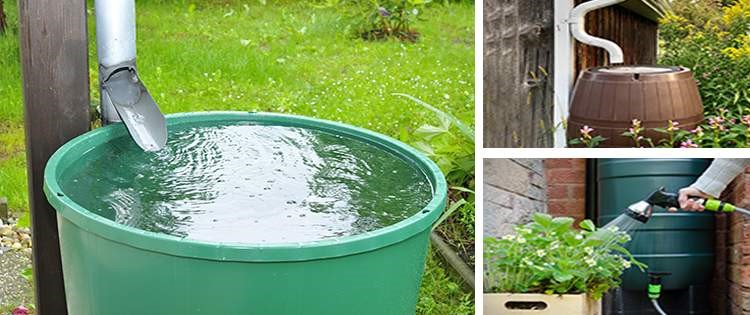
This DIY project is the best way to legally collect rainwater NO MATTER where you live. Get chlorine-free water, cut down on your water bills, and have enough for an emergency situation or to water your garden. Read More Here...
This method is particularly useful if you need to feed your plants immediately and don’t have time to wait for a traditional compost pile to finish. It bypasses the need for the lignin to fully break down, as the water extracts the “easy” nutrients while the remaining fiber can still be tossed into the compost later.
Final Thoughts
Turning your collard stalks into garden fuel is one of those small shifts that changes the way you look at your backyard. Once you realize that a pile of “trash” is actually a concentrated source of calcium and potassium, you’ll never look at a bare stalk the same way again. It takes a little extra elbow grease to shred that material, but the reward is a more resilient, self-sustaining soil system.
Start small this season. Whether you use a machete, a mower, or a high-powered shredder, make a commitment to keep those nutrients on your property. Your soil will thank you with bigger harvests, fewer diseases, and that rich, dark humus that every gardener dreams of. Experiment with different methods and see which one fits your routine—after all, the best way to garden is the way that works for you and your land.
Remember that gardening is a cycle, not a straight line. By recycling your brassica waste, you are participating in a natural process that has kept soils fertile for millennia. If you find success with this, consider looking into other ways to improve your soil health, such as mulching or garden planning for the next season. The more you give back to the earth, the more it will give back to you.