
Why your back is hurting and your yam yields are still tiny. Most gardeners think growing massive yams requires back-breaking labor and deep pits. In reality, it is about building UP, not digging DOWN. See how the strategic mound method creates air pockets and drainage that yams crave, leading to double the harvest with half the sweat.
I remember watching my grandfather in the garden decades ago. He never seemed to fight the earth; he worked with it. While the neighbors were out there straining their backs to dig deep, narrow trenches, he was busy piling up loose, rich soil into what looked like miniature volcanoes. Those were his yam mounds, and come harvest time, the tubers he pulled out were often the size of a man’s thigh.
Over the years, I have learned that yams are not like potatoes or carrots that can tolerate a bit of heavy soil. Yams are the aristocrats of the tuber world. They demand luxury: specifically, perfectly aerated soil, plenty of heat, and drainage so sharp that even a tropical downpour doesn’t leave their roots “sitting in the wet.” This guide is about moving away from the “pit mentality” and embracing the mound. We are going to walk through every step of the process, from choosing your varieties to the day you finally lift those heavy, starchy prizes from the ground.
How To Plant Yams For Maximum Yield
When we talk about planting yams for maximum yield, we are looking at the genus Dioscorea. These aren’t the sweet potatoes often mislabeled as “yams” in American supermarkets. True yams are vigorous, climbing vines that produce starchy underground tubers. To get the best results, you need to understand that the yield is determined long before the first sprout breaks the surface. It starts with the seedbed.
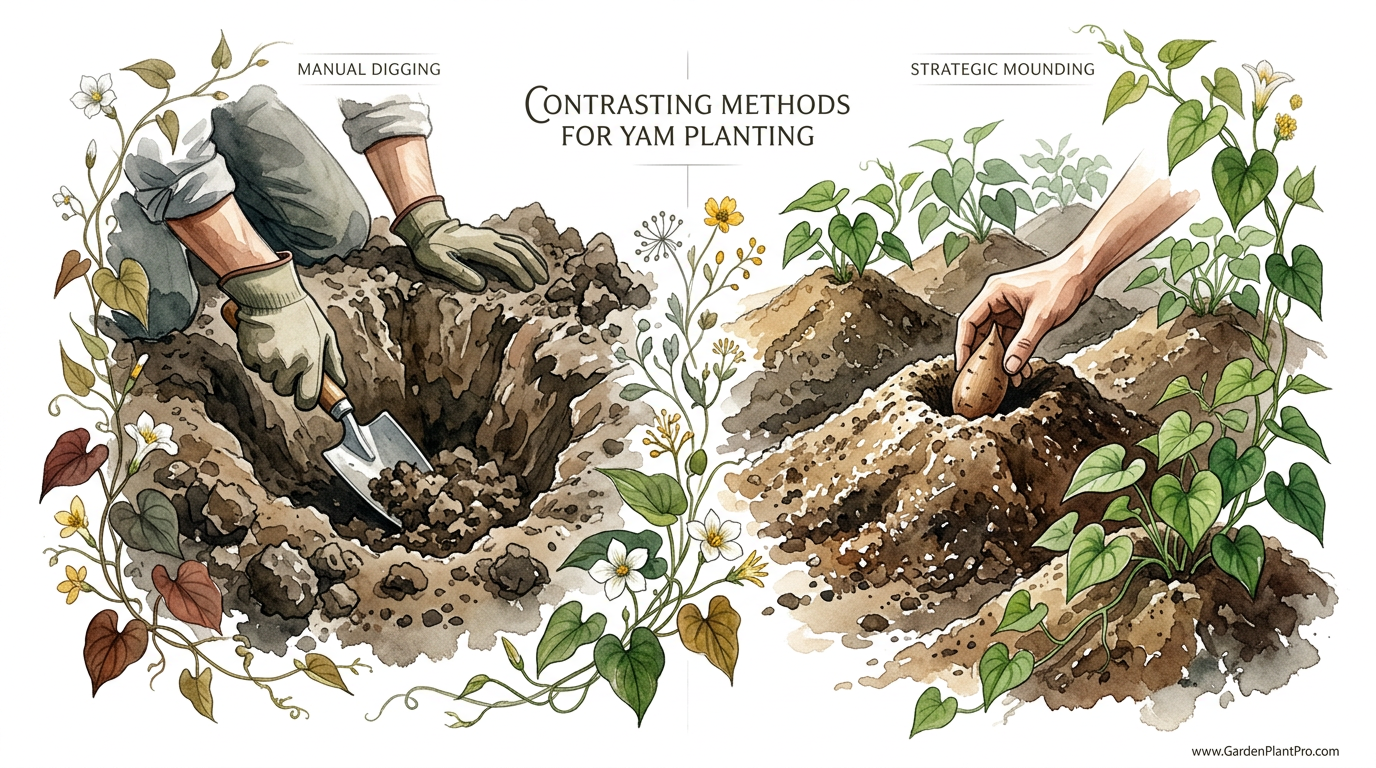
The strategic mound method is the gold standard for backyard and small-scale production. By building a mound of loose, organic-rich soil, you are essentially creating a customized environment. The mound catches the sun’s warmth, which yams love, and the elevation ensures that water moves away from the tuber, preventing the rot that ruins so many harvests. In the real world, this method is used across the “Yam Belt” of West Africa and throughout the Caribbean because it works reliably even in varied soil conditions.
Think of the mound as a nursery and a pantry combined. You aren’t just giving the plant a place to sit; you are providing a reservoir of nutrients and the physical space it needs to expand without resistance. When a yam tuber meets hard, compacted soil, it stops growing or becomes stunted and misshapen. In a well-constructed mound, the tuber can stretch and “bulk” to its full genetic potential.
Understanding the Soil and Climate Needs
Yams are tropical and subtropical by nature. They thrive best in temperatures between 25°C and 30°C (77°F to 86°F). If you live in a region where the ground freezes, you will need a solid 7 to 10 months of frost-free weather to get a decent harvest. They prefer a slightly acidic soil with a pH between 5.5 and 6.8. If your soil is heavy clay, the mound method is your only real path to success, as it allows you to “amend up” rather than trying to fix the deep, heavy ground below.
Choosing Your Yam Variety
Before you lift a hoe, you have to know what you are planting. Not all yams are created equal. Some are bred for size, some for flavor, and others for their ability to store through a long winter. Here are the most common species you’ll encounter:
- White Guinea Yam (Dioscorea rotundata): The king of yams in West Africa. It has a dry, starchy texture that is perfect for pounding. These can grow massive but require a very long growing season and high soil fertility.
- Water Yam or Winged Yam (Dioscorea alata): Originating in Southeast Asia, this is the most widely distributed species globally. It is called “water yam” because of its higher moisture content. It is often more resistant to pests and can produce incredibly high yields even in slightly poorer soils.
- Yellow Yam (Dioscorea cayenensis): Named for its yellow flesh, which is rich in carotenoids. It has a shorter dormancy period than white yams, meaning it often needs to be planted sooner after harvest.
- Lesser Yam (Dioscorea esculenta): These produce clusters of smaller, potato-sized tubers rather than one or two giant ones. They are easier to harvest but require more careful handling because their skins are thin.
Preparing Your Planting Materials (The “Setts”)
Yams are typically grown from pieces of the tuber itself, known as “setts.” You can use small, whole “seed yams” (about the size of a large lemon) or cut larger tubers into sections. If you are cutting them, each piece should weigh between 400g and 500g (about 0.9 to 1.1 lbs) for a standard harvest. If you are looking to multiply your stock quickly, you can use the “minisett” technique with pieces as small as 30g to 100g, but these will yield smaller tubers in the first year.
Curing is the secret step: Never plant a freshly cut yam sett. The wet “wound” is an invitation for fungus and soil-borne bacteria. After cutting, dip the pieces in wood ash or a copper-based fungicide. Let them sit in a shaded, well-ventilated area for 2 to 3 days until the cut surface has formed a hard, dry “cork” layer. This simple act of patience can increase your germination rate by 50%.
The Step-by-Step Mounding Process
This is where we leave the “back-breaking” labor behind. Instead of digging a deep hole, we are going to gather the topsoil. The best time to do this is when the soil is moist but not muddy.
- Clear the Area: Clear away weeds and grass. If you have compost or well-rotted manure, spread a thick layer (about 5cm or 2 inches) over the planting spot.
- Build the Base: Use a hoe or spade to pull the surrounding topsoil into a pile. Aim for a mound that is about 1 meter (3.3 feet) in diameter at the base.
- Reach for Height: Your mound should be between 60cm and 90cm (24 to 36 inches) high. The taller the mound, the better the drainage and the longer your tubers can grow without hitting the hard subsoil.
- Spacing: Space your mounds about 1 meter (3.3 feet) apart from center to center. This gives the vines enough room to spread and ensures the root systems aren’t competing for the same nutrients.
Within the mound, the soil should be loose and crumbly. If you find large clods of clay, break them up with your hands or the back of your hoe. I like to mix in a handful of bone meal or a high-potassium organic fertilizer into the top 15cm of the mound before planting.
Planting the Setts
Wait for the first consistent rains of the season, or ensure your soil temperature is at least 20°C (68°F). To plant, make a small hole at the very peak of your mound. Place the sett about 10cm to 15cm (4 to 6 inches) deep.
The Orientation Trick: If you are using a cut sett, plant it with the cut surface facing upwards or sideways, never directly down. The primary buds (the “eyes”) are located near the skin. If you plant the skin side up, the sprout has a shorter and easier journey to the sunlight. Once the sett is in, cover it firmly with soil, but don’t pack it down so hard that you squeeze out all the air.
Mulching and “Capping”
This is a step most beginners skip, and it’s why their yams fail during the first heatwave. Freshly planted mounds are vulnerable to the sun. The heat can “cook” the sett before it even sprouts. To prevent this, place a “cap” of dried grass, straw, or broad leaves over the top of the mound. Secure it with a little bit of soil or a few stones. This mulch layer keeps the soil cool, retains moisture, and prevents the mound from eroding during heavy rains.
Staking: The Engine of Growth
Yams are climbers. In the wild, they would scramble up trees to reach the canopy. In your garden, the vine is the solar panel that feeds the tuber underground. If the vines are left to crawl on the ground, they will get shaded by weeds, they’ll be prone to fungal diseases from soil splash, and your yields will be pathetic.
The Staking Rule: As soon as the sprouts are about 30cm (12 inches) long, provide a stake. I use bamboo poles or sturdy tree branches at least 2 to 3 meters (6.5 to 10 feet) tall. Drive the stake firmly into the ground next to the mound, not directly into the center where the tuber is growing. You can lean three or four stakes together from neighboring mounds to form a “tepee” or tripod. This makes the structure much more stable against the wind. Train the vines to climb clockwise—most yam species naturally twine in that direction.
Maintenance and Long-Term Care
Once the vines have reached the top of their stakes and begun to leaf out, the plant’s main job is photosynthesis. Your job is to keep the “factory” running smoothly.
Watering Requirements
Yams need consistent moisture, especially during the “bulking” phase (months 3 through 6). If the soil dries out completely, the plant may go into a premature dormancy, and your tubers will stop growing. If you aren’t getting at least 2.5cm (1 inch) of rain per week, give the mounds a deep soaking. However, avoid getting water on the leaves late in the evening, as this encourages anthracnose, a fungal disease that can turn the leaves black and kill the vine.
DIY PROJECT: Collect rainwater no matter where you live...
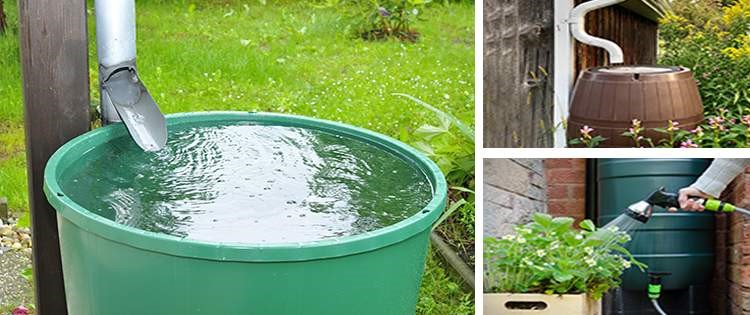
This DIY project is the best way to legally collect rainwater NO MATTER where you live. Get chlorine-free water, cut down on your water bills, and have enough for an emergency situation or to water your garden. Read More Here...
Fertilization Strategy
Yams are heavy feeders. If you prepared the soil with plenty of compost, you’re halfway there. About 6 to 8 weeks after planting, when the vines are vigorously climbing, apply a side-dressing of fertilizer. Use an NPK ratio like 10-10-20 or 12-12-17. The high potassium (the third number) is critical; potassium is the element that drives starch production and tuber “bulking.” Apply the fertilizer in a ring around the base of the mound, about 15cm away from the main vine, and lightly scratch it into the soil.
Benefits of the Strategic Mound Method
Why go through the effort of building these mounds? The proof is in the harvest, but the benefits start much earlier:
- Reduced Rot: By raising the tuber above the water table, you virtually eliminate the risk of waterlogging, which is the #1 killer of yams in rainy climates.
- Easier Harvest: Digging a yam out of flat, compacted ground is a nightmare. In a mound, the soil is so loose you can often “grapple” the tubers out with your hands or a small hand tool, significantly reducing the risk of nicking or bruising the skin.
- Soil Warmth: Mounds have more surface area exposed to the sun, which warms the soil faster in the spring and keeps the “metabolism” of the plant high throughout the season.
- Oxygenation: The loose structure of a mound allows oxygen to reach the roots and the developing tuber. Roots need to breathe just as much as they need to drink.
Challenges and Common Mistakes
Even seasoned gardeners can stumble. Here are the pitfalls I see most often:
- Using Too Much Nitrogen: If you use a high-nitrogen fertilizer (like one meant for lawns), you will get beautiful, lush green vines that reach for the moon, but tiny, spindly tubers. Nitrogen grows leaves; potassium grows tubers.
- Shallow Staking: If your stakes are too short (less than 2 meters), the vine will run out of room and bunch up at the top. This creates a “bird’s nest” that traps moisture and invites fungus.
- Neglecting Weeds: Early in the season, before the yam leaves shade the mound, weeds will try to take over. They will steal the nutrients you intended for your yams. Keep the mounds clear, but be careful when weeding near the center so you don’t disturb the delicate young tubers.
Limitations: When This May Not Work
While the mound method is fantastic, it isn’t universal. If you are gardening in an extremely arid region with zero irrigation, mounds can actually dry out too fast because of their high surface area. In those specific desert-like conditions, a “sunken bed” or a deep pit might actually be better for moisture conservation.
Additionally, if you have extremely sandy soil that doesn’t hold its shape, your mounds might simply slump into flat piles after the first rain. In that case, you may need to use “ridges” (long continuous mounds) or reinforced raised beds to keep the soil in place.
Mounds vs. Ridges: A Practical Comparison
Many commercial farmers use ridges because they can be made with a tractor, but for the backyard gardener, the choice depends on your goals.
| Factor | Mound Method | Ridge Method |
|---|---|---|
| Space Efficiency | Better for irregular garden plots. | Better for long, straight rows. |
| Labor Level | High initial setup per plant. | Easier to manage at scale. |
| Tuber Shape | Produces thicker, more “bulky” tubers. | Tubers tend to be longer and more slender. |
| Drainage | Superior; water drains in all directions. | Good, but water can pool in furrows. |
Practical Tips for Success
- The “Two-Stage” Harvest: If you are growing D. rotundata, you can often do a “milking” harvest. Carefully open the side of the mound around mid-season, cut off the bottom part of the tuber for eating, and leave the “head” attached to the vine. Cover it back up, and it will grow a second, irregularly shaped tuber that makes excellent seed for next year.
- Avoid Fresh Manure: Never put fresh animal manure directly in the mound. It can burn the setts and often contains nematodes that will tunnel into your tubers, leaving them covered in ugly brown lesions.
- Intercropping: Yams take a long time to mature. You can plant fast-growing crops like radishes, leaf lettuce, or even bush beans on the lower slopes of the mound. They will be harvested and gone before the yam vines really take over.
Advanced Considerations: The Minisett Technique
For those who want to turn one prize-winning yam into forty plants, the minisett technique is the answer. Instead of large 500g pieces, you cut the tuber into 30g to 50g cubes, ensuring each piece has a bit of skin. These are sprouted in a nursery bed of moist sawdust or coco-coir for about 4 weeks. Once they have a strong sprout and a root system, they are transplanted into the mounds. While the first-year tubers will be smaller (usually 1-2 kg), this is the most efficient way to scale up a rare or high-performing variety without buying new seed every year.
Harvesting: The Moment of Truth
You’ll know it’s time to harvest when the vines start to turn yellow and eventually die back. This usually happens as the weather cools or the dry season sets in. Don’t be in a rush; the tubers do a lot of their “bulking” in those final few weeks as the nutrients from the vine are pulled back into the root.
To harvest, carefully remove the mulch and use your hands or a wooden digging stick to probe the mound. Dig around the tuber, loosening the soil until you can lift it out. Handle them like eggs. A bruised yam won’t store well. Once harvested, let the tubers sit in the sun for no more than 30 minutes to dry the surface soil, then move them to a cool, dark, and well-ventilated place. Properly cured yams can last 4 to 6 months in storage.
Final Thoughts
Growing yams is a lesson in patience and proper preparation. By shifting your focus from the depth of the hole to the quality of the mound, you are giving the plant exactly what it needs to thrive. It’s a method that respects the biology of the tuber and the anatomy of the gardener’s back.
I encourage you to start small—maybe just three or four mounds this season. Experiment with different mulching materials and see which varieties perform best in your local microclimate. There is a profound satisfaction in pulling a massive, heavy tuber from a mound you built yourself, knowing that most of that growth came from simple air, water, and sunlight.
Once you master the mound, you might find yourself looking at other root crops—like ginger, turmeric, or sweet potatoes—and wondering how they, too, might benefit from a little more “up” and a little less “down.” Happy gardening, neighbor!