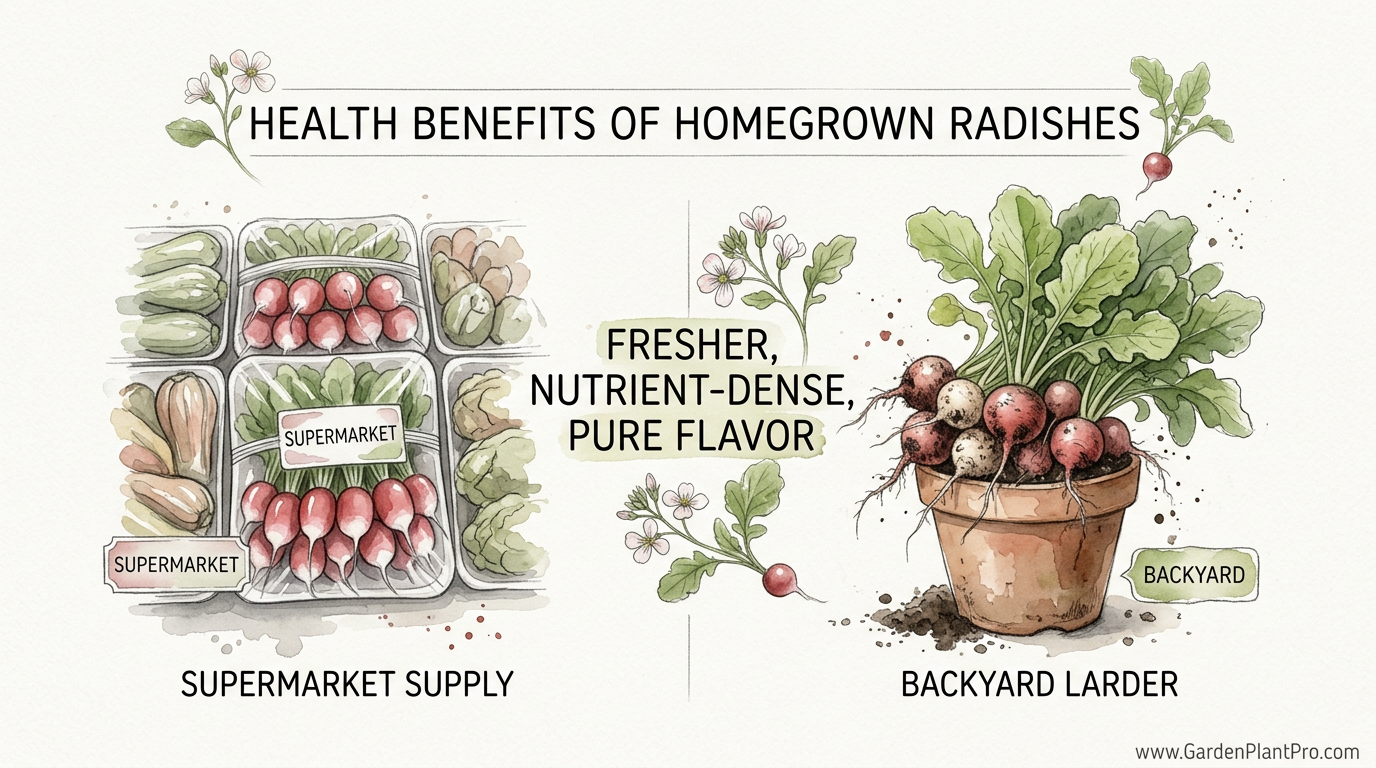
One of these is a watery filler, the other is a nutrient-dense flavor explosion that takes only 25 days to create. Supermarket radishes spend weeks in the supply chain, losing their signature snap and spicy punch. By becoming a producer, you can harvest a crop in under a month that is crisper, hotter, and more nutrient-dense than anything in a plastic bag.
I have spent years leaning over garden fences, trading stories about the humble radish. Most folks start with them because they are fast, but they stay with them because nothing else in the garden offers such an immediate reward for such little work. When you pull that first ruby-red globe from the damp earth, it feels less like gardening and more like finding buried treasure.
Growing radishes effectively is about speed and moisture. These little roots are in a race against the sun; if they grow too slowly or get too dry, they turn woody and bitter. If they grow fast, they are sweet, crisp, and full of life. It is the perfect entry point for a beginner and a necessary staple for the seasoned veteran looking to fill the gaps between slower-maturing crops like carrots or parsnips.
Health Benefits Of Homegrown Radishes
Radishes are often dismissed as a mere garnish, but they are a nutritional powerhouse hiding in plain sight. They belong to the Brassicaceae family, the same prestigious group that includes broccoli and kale. This means they are packed with glucosinolates—sulfur-containing compounds that give them their peppery bite and provide significant antioxidant benefits.
In practical terms, these roots are excellent for your liver and gallbladder. They contain compounds like indole-3-carbinol and 4-methylthio-3-butenyl-isothiocyanate, which help the liver process and remove toxins more efficiently. Because they are over 90% water, they are also incredibly hydrating and low in calories, making them a perfect snack for anyone keeping an eye on their weight or blood sugar.
The health benefits extend beyond the root itself. Radish leaves are actually more nutrient-dense than the bulbs, containing higher concentrations of protein, calcium, and Vitamin C. They also provide a healthy dose of folate (Vitamin B9) and potassium, which helps regulate blood pressure. When you grow them at home, you get the whole plant, ensuring you aren’t tossing out the most nutritious parts that supermarkets usually trim off for shipping.
Understanding the Radish Timeline: Spring vs. Winter
Not all radishes are created equal. To be successful, you have to understand that there are two main “camps” of radishes: the sprinters and the marathoners. Most of us are familiar with the spring varieties—the small, round, red ones like ‘Cherry Belle’ or ‘French Breakfast’. These are annuals that thrive in the cool, moist days of early spring and can be ready in as little as 22 to 30 days.
Then there are the winter radishes, such as the massive white Daikon, the striking Watermelon radish, or the earthy Black Spanish. These take much longer to mature, often 50 to 70 days. They are typically sown in mid-to-late summer to mature as the days shorten and the weather cools. Unlike their spring cousins, winter radishes are sturdier, store better, and can even be left in the ground through a light frost, which often improves their sweetness.
Popular Varieties to Try
- French Breakfast: An heirloom favorite with an elongated shape and a white tip. It is prized for its mild, nutty flavor.
- Daikon: A Japanese staple that can grow 12 to 18 inches (30 to 45 cm) long. It is crisp, mild, and excellent for pickling.
- Easter Egg: A fun mix that produces a variety of colors—red, purple, white, and pink—all in one row.
- Watermelon Radish: A large, ball-shaped winter radish with a dull green exterior and a shocking pink interior. It is sweet and mild.
Preparing the Soil for Success
Radishes are not particularly fussy, but they do have a few “non-negotiables.” They need loose, well-drained soil that is free of rocks and large clumps. If the root hits a stone while it is trying to expand, it will become misshapen or split. I always recommend tilling or double-digging the bed to a depth of at least 6 to 8 inches (15 to 20 cm) for spring varieties, and even deeper for Daikons.
The ideal soil pH is between 5.8 and 6.8. If your soil is too acidic, you might notice the leaves looking stunted or the roots failing to bulb up. A bit of compost mixed in goes a long way, but be careful with nitrogen. If you use a fertilizer too high in nitrogen, you will get beautiful, lush green leaves and tiny, shriveled roots. For radishes, phosphorous and potassium are your friends, as they focus the plant’s energy on root development.
| Factor | Ideal Range (Imperial) | Ideal Range (Metric) |
|---|---|---|
| Soil Temperature | 50°F – 65°F | 10°C – 18°C |
| Sowing Depth | 1/4″ – 1/2″ | 6 mm – 12 mm |
| Row Spacing | 8″ – 12″ | 20 cm – 30 cm |
| Soil pH | 5.8 – 6.8 | 5.8 – 6.8 |
The Sowing Process and the Critical Art of Thinning
Direct sowing is the only way to go with radishes. They have a delicate taproot that hates being disturbed, so starting them in trays and transplanting them almost always leads to failure. I like to make a shallow “drill” or groove in the soil with my finger, drop the seeds about an inch apart, and cover them lightly. Water them in immediately with a fine mist so you don’t wash the seeds away.
Now, here is where most gardeners fail: thinning. It feels wrong to pull out perfectly healthy seedlings, but if radishes are crowded, they will never “bulb.” They will grow into long, thin, stringy roots that are impossible to eat. Once the seedlings are about 2 inches (5 cm) tall, thin them so they are at least 2 to 3 inches (5 to 7 cm) apart. Don’t throw those thinnings away! They are delicious in a salad and contain all that concentrated radish spice.
Watering: The Secret to Quality
Consistency is everything. If the soil dries out and then gets hit with a heavy rain, the roots will absorb water too quickly and literally explode, causing deep cracks. Uneven watering also stresses the plant, which leads to that “woody” texture and an overwhelming heat that can make your eyes water.
In most climates, radishes need about an inch of water per week. If you are in a dry spell, you might need to water every other day. A light layer of mulch, like straw or shredded leaves, can help keep the soil cool and retain that precious moisture. Remember, a stressed radish is a spicy, tough radish. Keep them pampered and they will stay crisp and mild.
Common Challenges and Pitfalls
Even the easiest crop has its enemies. The most common pest you will encounter is the flea beetle. You’ll know they are there because your radish leaves will look like they were hit with a tiny shotgun, covered in small, round holes. While a healthy radish can usually outgrow this damage, a young seedling can be wiped out in a day. Floating row covers are the best organic solution; put them on the moment you sow your seeds to keep the beetles out.
Another common mistake is leaving them in the ground too long. We often think “bigger is better,” but with spring radishes, the opposite is true. Once they reach the size of a large marble, pull them. If you wait until they are the size of a golf ball, they will likely be “pithy”—hollow and spongy on the inside. Winter radishes are more forgiving, but even they have a limit before they lose their sweetness.
Troubleshooting Guide
- Bolting: This is when the plant suddenly sends up a flower stalk. It is caused by heat or long summer days. To avoid this, plant only in the cool windows of spring and fall.
- Splitting: This is caused by uneven moisture. Keep your watering schedule consistent.
- All leaves, no roots: This is usually caused by too much nitrogen or overcrowding. Check your fertilizer and make sure you thinned your seedlings properly.
Advanced Techniques: Edible Pods and Seed Saving
If your radishes do bolt and go to seed, don’t despair. You can actually eat the green seed pods! They look like tiny green peppers and have a wonderful, concentrated radish crunch. They are fantastic in stir-fries or pickled. Some gardeners even grow specific varieties, like the ‘Rat’s Tail’ radish, just for the pods rather than the roots.
If you want to save seeds for next year, leave the pods on the plant until they turn brown and brittle. You can then pull the whole plant, hang it upside down in a paper bag, and let the seeds fall out naturally. Radish seeds stay viable for up to 4 or 5 years if kept in a cool, dry place. Just keep in mind that radishes cross-pollinate very easily, so if you have two different varieties blooming at once, your seeds next year might be a surprise hybrid!
Integration with Other Garden Practices
Radishes are the ultimate team players in the garden. Because they grow so fast, you can use them as “row markers” for slower seeds like carrots or parsnips. By the time the carrots are just starting to poke through the soil, the radishes are already being harvested, naturally thinning the soil and leaving room for the carrots to expand. This is a classic example of maximizing space in a backyard larder.
DIY PROJECT: Collect rainwater no matter where you live...
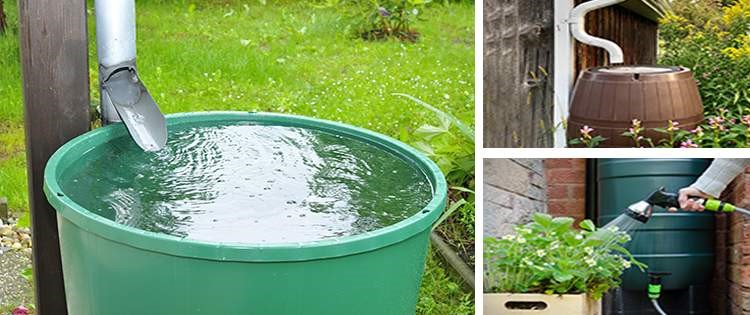
This DIY project is the best way to legally collect rainwater NO MATTER where you live. Get chlorine-free water, cut down on your water bills, and have enough for an emergency situation or to water your garden. Read More Here...
They also make great companion plants for cucumbers and squash. Some gardeners swear that radishes help repel cucumber beetles and squash borers. Whether it’s the smell or the sacrificial nature of the plant, tucking a few radish seeds around your larger vines is a low-cost experiment that often pays off in healthier summer harvests.
Final Thoughts
Success with radishes comes down to one simple mindset: treat them like a quick-turnaround project, not a long-term commitment. Sow small amounts every 10 days rather than one giant patch all at once. This “succession planting” ensures you have a steady supply of perfect roots rather than a mountain of woody ones that all matured on the same Tuesday.
Gardening is often a lesson in patience, but the radish is the exception to the rule. It gives you that early win in the spring that keeps you motivated to weed the tomatoes and water the peppers. So, get out there, clear a small patch of dirt, and drop some seeds. In less than a month, you’ll be standing over your garden fence, crunching on a radish that tastes exactly how a vegetable should—fresh, fiery, and full of life.