Stop fighting the sun; let the calendar do the hard work for your radicchio crop. Radicchio isn’t a summer crop. If you are struggling with tall plants and bitter leaves, your timing is the problem, not your skill. Switch to a strategic fall schedule and let the cooling earth do the work for you.
When I first started gardening, I treated every leafy green like a spring lettuce. I would rush to get my radicchio in the ground as soon as the frost lifted, only to find that by June, my plants were shooting up toward the sky like skinny rockets. They were tough, painfully bitter, and honestly, a bit of a heartbreak. It took me years to realize that radicchio is essentially a winter soul trapped in a vegetable’s body. It doesn’t want the long, searing days of July. It wants the crisp, dew-heavy mornings of October and the gentle bite of a November frost.
If you have ever looked at those stunning, jewel-toned heads of radicchio in a fancy market and wondered why yours look like green weeds, you are in the right place. We are going to talk about why shifting your focus to the fall is the single best decision you can make for your garden. It is about working with the seasons instead of against them, and I promise you, once you taste a head of radicchio that has been “kissed” by a light frost, you will never go back to spring planting again.
Best Time To Plant Radicchio For Fall
The secret to a perfect radicchio harvest lies in the countdown to the first hard freeze. Unlike tomatoes or peppers that die the moment the temperature dips, radicchio actually needs those cooling temperatures to develop its signature colors and to temper its natural bitterness with a bit of sweetness. To get this right, you have to look at your local climate and count backward from your expected first frost date.
Generally, the best time to plant radicchio for a fall harvest is in midsummer to late summer. If you live in a colder northern region (like USDA Zones 3 to 5), you should be looking at sowing your seeds in late June or early July. For those in more temperate zones (Zones 6 to 8), late July through mid-August is usually the sweet spot. If you are in a very mild, southern climate (Zone 9 and above), you might even wait until September or October to plant for a midwinter harvest.
The goal is to have the plant reach its full size just as the days are getting shorter and the nights are getting colder. Radicchio seed can enter a state of “thermal dormancy” if you try to sprout it when the soil is too hot—usually above 77°F (25°C). This is why many gardeners choose to start their seeds indoors in a cool basement or a shaded area before transplanting them out into the garden once the extreme heat of summer has peaked. Ideally, you want the plants in the ground and established about 10 to 12 weeks before your first consistent hard frosts arrive.
How To Successfully Grow A Fall Radicchio Crop
Growing radicchio is a game of patience and precision. While it is related to the wild chicory you see growing on the side of the road, the heading varieties we love require a bit more pampering to reach their full potential. You can either direct sow the seeds or start them in flats, but most seasoned gardeners prefer starting them in trays to protect the young seedlings from the scorching midsummer sun.
Starting From Seed
Sow your seeds about 1/4 inch (6 mm) deep in a high-quality seed-starting mix. Keep the soil moist but not waterlogged. If your garage or shed is cooler than the outdoors, keep the trays there until you see green shoots. Radicchio seeds typically germinate best when soil temperatures are between 60°F and 68°F (15.5°C to 20°C). Once they have sprouted, they need plenty of light to prevent them from getting “leggy.”
Transplanting Into The Garden
After about 3 to 4 weeks, your seedlings should have a few sets of true leaves. This is the time to move them to their permanent home. Space your plants 8 to 12 inches (20 to 30 cm) apart in rows that are about 18 inches (45 cm) apart. When transplanting, try to keep the base of the plant slightly above the soil line. This small adjustment helps prevent bottom rot, which can happen if the soil stays too wet around the crown.
Watering and Mulching
Radicchio has a shallow root system, which means it doesn’t handle drought well. If the soil dries out completely, the plant will get stressed and produce an excess of bitter compounds. Aim for about 1 to 1.5 inches (2.5 to 3.8 cm) of water per week. I always recommend a thick layer of organic mulch, like straw or shredded leaves. Not only does this keep the moisture in, but it also keeps the soil temperature down during those final weeks of summer heat.
The Major Benefits Of A Fall Planting Strategy
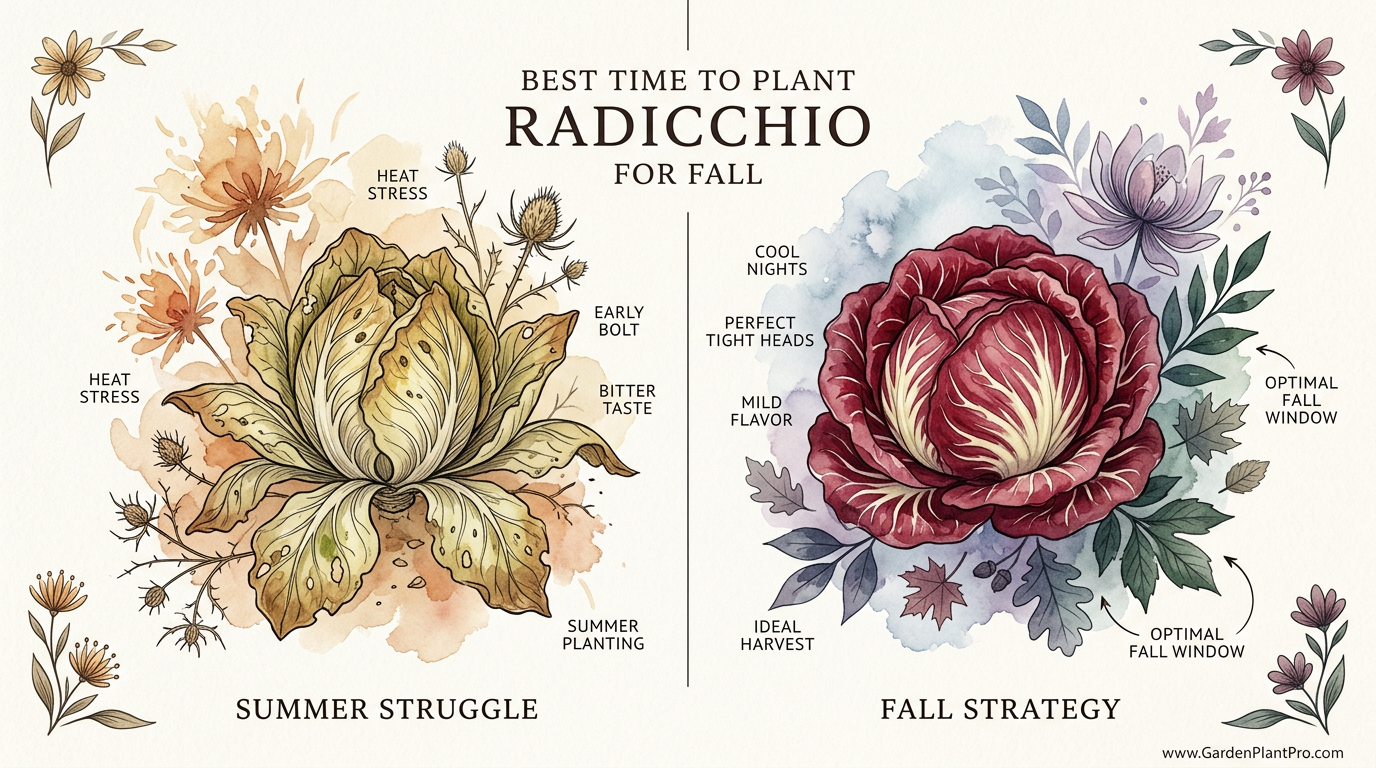
Choosing the fall over the spring isn’t just a matter of preference; it is a matter of biology. Radicchio is a “short-day” plant in many respects, meaning its growth patterns are heavily influenced by the amount of daylight it receives. When you plant in the spring, the days are getting longer and hotter, which signals to the plant that it is time to produce seeds. This results in “bolting”—the plant shoots up, the leaves become tough, and the flavor becomes unpalatable.
In the fall, the reverse happens. The days are shortening and the temperatures are dropping. This environment encourages the plant to stay low to the ground and form a tight, protective head. The cold weather also triggers a chemical change within the leaves, converting some of the starches into sugars to act as a natural antifreeze. This is why fall-grown radicchio has that complex, sweet-and-bitter balance that spring crops simply cannot match.
Another practical advantage is pest management. Many of the pests that plague young greens in the spring—like certain aphids or slugs—are less active as the weather cools down in the autumn. While you still need to keep an eye out, you will likely find that your fall crop requires much less intervention than a spring one would.
Common Challenges and How to Avoid Them
Even with the best timing, radicchio can be a bit finicky. One of the most common mistakes I see is over-fertilizing with nitrogen. While most greens love nitrogen, too much of it can actually prevent radicchio from forming a head. It encourages lots of loose, green leaf growth but stops the heart of the plant from tightening into that beautiful ball we are looking for. Stick to a balanced compost or a low-nitrogen organic fertilizer.
Another hurdle is “thermal dormancy.” If you try to sow seeds directly into the garden during a heatwave, they might simply refuse to sprout. If you must direct sow in August, try watering the soil deeply and covering it with a board or a piece of burlap for a few days to cool it down before planting.
Lastly, watch out for “tip burn.” This is often caused by inconsistent watering or a calcium deficiency in the soil. It looks like the edges of the inner leaves are turning brown and crispy. Keeping your moisture levels steady is the best way to prevent this from ruining your beautiful heads of radicchio.
Limitations Of Growing Radicchio
While radicchio is hardy, it is not invincible. If you live in an area where the temperature routinely drops below 20°F (-6°C) very early in the season, you might struggle to get the plants to head up in time. In these extreme northern climates, you are almost forced to use a cold frame or a heavy row cover to extend the season.
Conversely, if you are in a tropical or semi-tropical climate where it never really gets “cold,” your radicchio may never develop that vibrant red color. Many varieties need a significant temperature swing between day and night to trigger the production of anthocyanins—the pigments responsible for the red and purple hues. Without those chilly nights, your radicchio might stay stubbornly green, though it will still be edible.
Fall Strategy vs. Summer Struggle
| Feature | Summer Struggle (Spring Sown) | Fall Strategy (Summer Sown) |
|---|---|---|
| Flavor Profile | Intensely bitter, often one-dimensional. | Complex, balanced sweetness and bitterness. |
| Plant Structure | Prone to bolting (stretching) and flowering. | Forms tight, dense, protective heads. |
| Color Development | Often remains green or pale. | Deep burgundy, bright reds, or speckled patterns. |
| Maintenance | High; requires constant shade and water. | Moderate; benefits from natural cooling. |
| Harvest Window | Very short before the plant spoils. | Long; heads can “hold” in the cold soil for weeks. |
Practical Tips For Success
If you want to take your radicchio game to the next level, here are a few things I have learned from my years in the dirt. These aren’t just theories; they are the little habits that make the difference between a “good” garden and a “great” one.
DIY PROJECT: Collect rainwater no matter where you live...
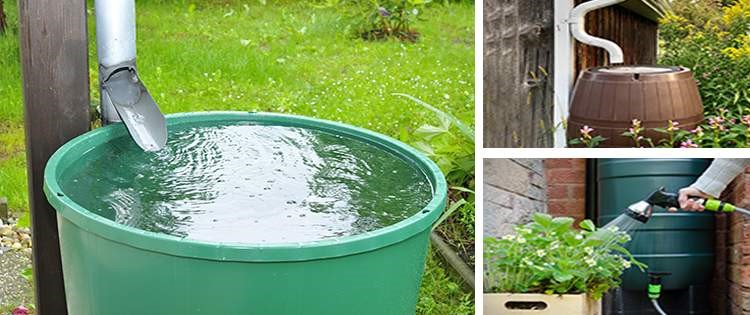
This DIY project is the best way to legally collect rainwater NO MATTER where you live. Get chlorine-free water, cut down on your water bills, and have enough for an emergency situation or to water your garden. Read More Here...
- Choose the Right Variety: Not all radicchio is created equal. ‘Chioggia’ is the classic round red type, while ‘Treviso’ is elongated and looks like a large red Belgian endive. For a fall harvest, look for varieties labeled “precoce” (early) if you have a short season, or “tardivo” (late) if you want to harvest into the winter.
- The “Kiss of Frost”: Don’t rush to harvest the moment you see a head. Let it experience a light frost or two. This is the magic ingredient that mellows the bitterness. Just be sure to harvest before a “killing freeze” (usually below 25°F or -4°C) unless you have them protected.
- Soil pH Matters: Radicchio prefers a slightly acidic to neutral soil, ideally between 6.0 and 6.5. If your soil is too alkaline, the plant might struggle to take up the nutrients it needs to form a dense head.
- Succession Planting: Instead of planting all 20 of your seedlings at once, try planting a few every week for three weeks. This “slots” your harvest so you aren’t overwhelmed with 20 heads of radicchio all at the same time.
Advanced Considerations: The Art Of “Slotting”
In Italy, where radicchio is a way of life, professional growers use a technique called “slotting.” Instead of just planting one type of radicchio and hoping for the best, they plant several different varieties that have different “days to maturity.” For example, they might plant a 60-day variety, an 80-day variety, and a 120-day variety all on the same day in August.
This ensures a continuous harvest from October through January. The 60-day plants are ready for the early fall salads, while the 120-day varieties are hardy enough to sit in the garden through the snow, waiting to be picked for a mid-winter feast. If you have the space, experimenting with these different maturation windows is the best way to become a true radicchio expert.
Example Scenario: A Typical Fall Timeline
Let’s look at how this might play out in a typical Zone 6 or 7 garden. Imagine your first frost usually hits around October 20th.
July 15: Start your seeds in trays indoors. Keep them in a cool spot and ensure they stay moist.
August 10: Prepare your garden bed by raking in some aged compost. Transplant your seedlings into the ground in the evening when it’s cooler.
August – September: Keep the plants well-watered. Apply mulch once the plants are about 4 inches (10 cm) tall.
October 1: You will notice the center of the plants starting to “cup” and tighten. The green outer leaves might still look like weeds, but the treasure is forming inside.
October 25: After the first light frost, you peel back the green outer leaves to find a stunning, tight, ruby-red head. It’s time for the first harvest.
Final Thoughts
Radicchio is one of those crops that rewards the patient and the observant. It asks you to pay attention to the subtle shifts in the weather and to understand the needs of a plant that thrives when most other things are packing it in for the year. By moving your planting to the fall, you aren’t just growing a vegetable; you are participating in a long tradition of seasonal eating that values flavor and resilience over convenience.
Don’t be discouraged if your first few heads aren’t perfect. Gardening is a lifelong conversation with the earth, and radicchio is a particularly interesting partner in that dialogue. Experiment with different varieties, play with your timing, and most importantly, enjoy the process. There is something deeply satisfying about walking out to a frosty garden in November and bringing in a vibrant, red head of radicchio that you grew yourself.
Give the fall strategy a try this year. Let the cooling earth and the shortening days do the heavy lifting. You might just find that radicchio becomes the highlight of your gardening year. Once you master the timing, you’ll realize that the “struggle” was never about your skill—it was just about the calendar.