You are spending hours watering your leaves while the roots are dying of thirst. Most gardeners think more time equals better plants. In reality, hand-watering is often the least efficient way to keep your garden alive. Learn how strategic systems like ollas do the hard work for you by delivering moisture exactly where it counts.
I have spent many decades with my hands in the dirt, and if there is one thing I have learned, it is that the plants are a lot smarter than we give them credit for. They do not want a shower every afternoon; they want a steady drink from the bottom up. When you stand there with a hose, most of that water is gone before the plant even knows it arrived. It evaporates into the hot air, runs off the hard-baked surface, or feeds the weeds that are waiting to steal nutrients from your prize tomatoes.
Strategic irrigation is not about fancy gadgets or spending a fortune. It is about working with the physics of the soil. Moving from manual watering to a system that targets the roots changes the very structure of your garden. You stop growing shallow, lazy roots that wilt the second the sun gets high, and you start growing deep, resilient systems that can handle a heatwave without flinching.
Let us walk through how these systems work and why making the switch might be the best thing you ever do for your soil. Whether you have a small raised bed or a sprawling vegetable patch, the principles of efficiency remain the same.
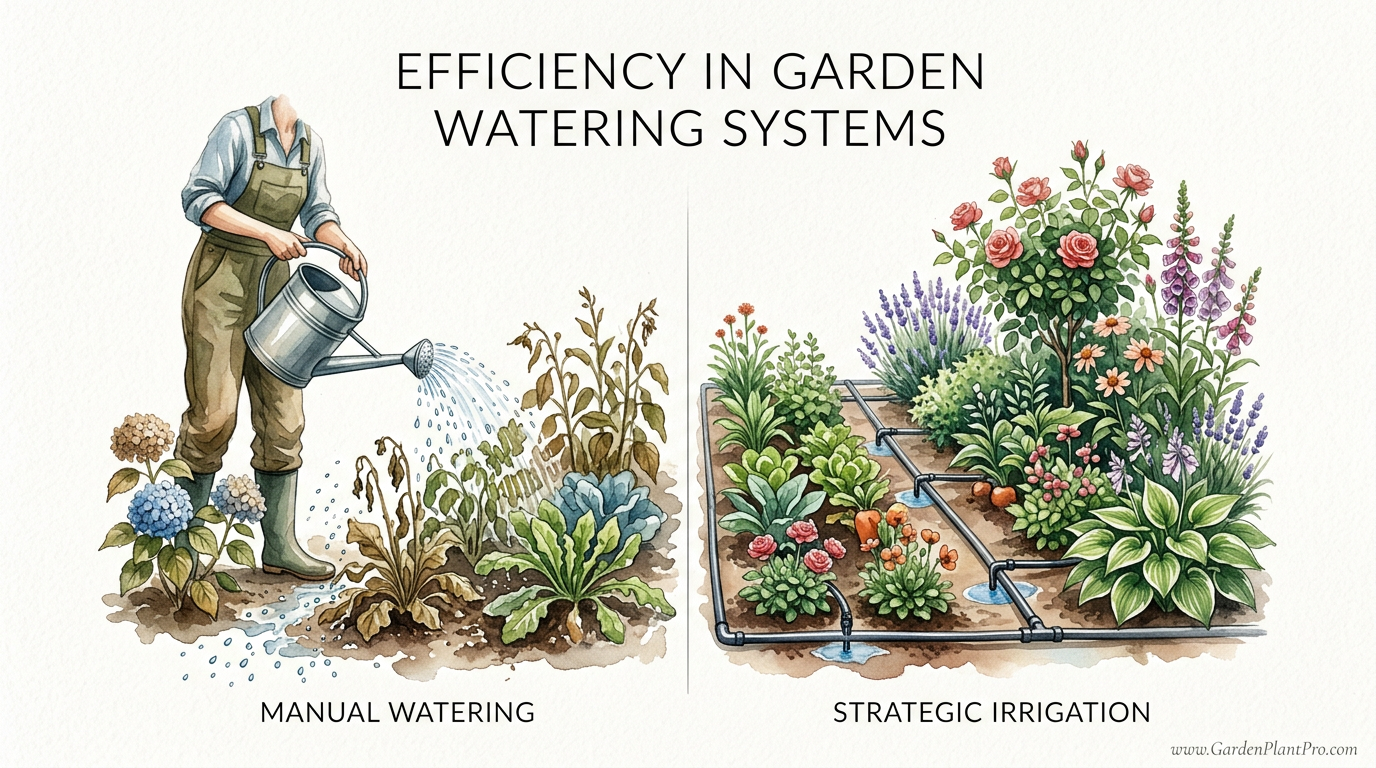
Efficiency In Garden Watering Systems
Efficiency in the garden is often misunderstood as simply using less water. While conservation is a massive part of it, true efficiency is the percentage of applied water that actually reaches the root zone and stays there long enough for the plant to use it. In a traditional setup where you might use a sprinkler or a handheld hose, you are lucky if 50% of that water does any good. The rest is lost to wind drift, evaporation, or “deep percolation,” which is just a fancy way of saying it sinks past where the roots can reach.
Strategic irrigation systems, such as ollas or drip lines, aim for a much higher success rate. A well-managed drip system can reach 90% to 95% efficiency. An olla system, which is an ancient method involving buried clay pots, can be even more effective because it operates on a “pull” rather than a “push” system. The soil literally asks the pot for water only when it is dry. This creates a stable environment where the soil moisture remains at “field capacity”—the perfect balance where the soil holds all the water it can without drowning the air pockets the roots need to breathe.
I often tell my neighbors that watering from above is like trying to fill a glass of water by throwing a bucket at it from across the yard. You might get some in the glass, but you are mostly just making a mess. Strategic systems are the straw in the glass. They put the resource exactly where the demand is, which saves you money, saves the planet’s resources, and, most importantly, keeps your plants from the stress of the “wilt and soak” cycle.
The Mechanics of Sub-Surface Irrigation
To understand why these systems work, we have to look at how water moves through the ground. In most cases, we are looking at two forces: gravity and capillary action. When you pour water on top of the soil, gravity pulls it down. If the soil is hard or compact, the water moves sideways or sits on top until the sun bakes it away.
The Science of the Olla
Ollas—pronounced “oy-yas”—are unglazed terracotta pots buried up to their necks in the soil. Because the clay is unglazed, it remains porous. This is where the magic happens. Through a process called soil-moisture tension, the water inside the pot seeps through the clay walls and into the surrounding dirt.
If the soil is already wet from a rainstorm, the tension is low, and the water stays in the pot. If the soil is dry, the tension increases, and the soil “pulls” the moisture out. This creates a self-regulating system. You are not guessing if the plant needs water; the plant’s environment is deciding for you. Research from the University of Arizona suggests that this method can save between 50% and 70% of water compared to conventional surface watering.
Precision Drip and Soaker Systems
Drip irrigation uses a network of tubes with small emitters that release water at a very slow, controlled rate—usually between 0.5 to 2 gallons (1.9 to 7.6 liters) per hour. Unlike a hose that blasts the soil, a drip system allows the water to soak in deeply, creating a “wetting bulb” beneath the surface.
Soaker hoses are a simpler version of this, made from porous material that “sweats” along its entire length. While they are less precise than drip emitters, they are excellent for closely planted rows of greens or carrots. Both methods keep the foliage dry, which is your best defense against fungal diseases like powdery mildew or tomato blight.
The Tangible Benefits of Going Deep
Making the move to strategic watering offers more than just a lower water bill. It changes the health of the entire garden ecosystem in ways that are visible to the naked eye within a single season.
- Deep Root Architecture: When the surface of the soil stays dry but there is a reliable moisture source 6 to 12 inches (15 to 30 cm) down, roots grow deeper. Deeper roots mean the plant can access minerals and nutrients that stay locked away in the subsoil.
- Weed Suppression: Most weed seeds live in the top 2 inches (5 cm) of soil. If you never water the surface, those seeds have a much harder time germinating. You will find yourself spending significantly less time on your knees pulling stubborn grass and clover.
- Disease Prevention: Splashing water on leaves is an open invitation for pathogens. By keeping the water at the root level, you keep the “sun zone” of the plant dry and healthy.
- Consistency: Plants like tomatoes and melons are prone to “splitting” or “cracking” when they go from bone-dry to soaking wet. Strategic systems provide a steady state of moisture that prevents these structural failures.
In my experience, the flavor of the harvest improves as well. Stress can make leafy greens like kale or lettuce turn bitter. A consistent supply of water ensures that the plant spends its energy on growth and flavor compounds rather than survival.
Challenges and Common Pitfalls
Nothing in the garden is entirely “set it and forget it,” and strategic systems have their own set of quirks. Understanding these before you start will save you a lot of frustration.
One of the biggest mistakes people make with ollas is failing to protect them from the winter. Since terracotta is porous, it holds water within the walls of the pot. If the ground freezes hard, that water expands and shatters the pot. I always make it a point to dig mine up after the first frost, give them a good scrub, and store them in the shed until spring.
With drip systems, the primary enemy is clogging. If you have “hard” water with a lot of mineral content, calcium and lime can build up in the tiny emitters. This is why a good filter is not optional—it is a necessity. You also need to check the lines periodically for “critter damage.” Squirrels and gophers have a habit of chewing through plastic lines when they are thirsty, which can lead to a swamp in one corner of the garden and a desert in the other.
Salt buildup is another subtle issue. In very arid climates, because you are not “flushing” the soil with large amounts of water, salts can accumulate at the edges of the wetting zone. Every once in a while, it is a good idea to give the whole bed a deep soak from above to wash those salts down past the root zone.
Limitations and Environmental Constraints
While I am a big fan of these systems, they are not a universal fix for every situation. You have to consider your soil type and your specific climate before choosing a method.
DIY PROJECT: Collect rainwater no matter where you live...
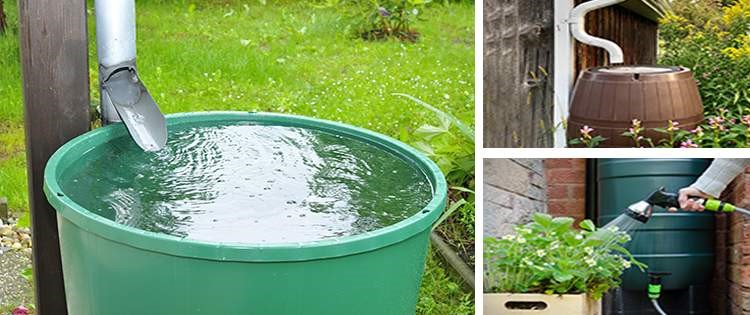
This DIY project is the best way to legally collect rainwater NO MATTER where you live. Get chlorine-free water, cut down on your water bills, and have enough for an emergency situation or to water your garden. Read More Here...
Soil Texture Matters
In very sandy soil, water tends to move straight down rather than sideways. If you place an olla in pure sand, the “moisture plume” might only reach a few inches horizontally. In these cases, you might need to space your emitters or pots much closer together—perhaps every 12 to 18 inches (30 to 45 cm) instead of the standard 2 to 3 feet (60 to 90 cm).
On the flip side, in heavy clay soil, water moves very slowly. If you have a high-flow drip system in clay, the water might pool at the surface because the soil cannot absorb it fast enough. Strategic systems in clay need to be very low-flow to allow the soil time to “wick” the moisture away from the source.
Plant Selection
Not every plant wants a deep reservoir. Succulents and drought-tolerant herbs like rosemary or lavender often prefer the “soak and dry” cycle of manual watering. If you put a Mediterranean herb right next to an olla, you might end up with root rot. These systems are best suited for “thirsty” crops: tomatoes, peppers, cucumbers, melons, and leafy greens.
Manual Watering vs. Strategic Systems
It helps to see the numbers laid out. Here is how I generally break down the differences for folks who are on the fence about changing their routine.
| Feature | Manual (Hose/Can) | Olla Systems | Drip Irrigation |
|---|---|---|---|
| Water Efficiency | 40% – 60% | 70% – 90% | 90% – 95% |
| Setup Cost | Very Low | Moderate | High |
| Maintenance | High (Daily) | Low (Refill 3-7 days) | Moderate (Clean filters) |
| Target Zone | Surface / Foliage | Deep Root | Root Zone |
| Best For | Pots / Small beds | Vegetables / Arid zones | Large gardens / Rows |
Practical Tips for a Successful Setup
If you are ready to start, do not feel like you have to redo the whole garden at once. Start with one bed and see the difference for yourself. Here are a few “pro tips” from my years of trial and error.
- Mulch is Non-Negotiable: No matter which system you use, you must cover the soil. 3 to 4 inches (7 to 10 cm) of straw, shredded leaves, or wood chips acts like a lid on a pot. It keeps the surface cool and prevents the moisture from the sub-surface system from escaping into the air.
- The “Finger Test”: Even with an automatic system, you should still touch your soil. Stick your finger 4 to 6 inches (10 to 15 cm) into the dirt. It should feel like a wrung-out sponge—cool and moist, but not muddy.
- Refill Schedule: For ollas, check them every morning during the first heatwave of the season. You will be surprised how quickly a large tomato plant can drink a gallon of water. Once you know the rhythm of your garden, you can usually settle into a twice-a-week refilling routine.
- Add a Timer: If you are using a drip or soaker system, get a simple battery-operated timer. The best time to water is just before dawn, when the air is still and the plants are preparing for the sun.
When burying an olla, leave about 1 to 2 inches (2.5 to 5 cm) of the neck above the soil line. This prevents mulch and dirt from falling inside and filling the pot. Always keep a lid or a flat stone over the opening. This keeps mosquitoes from breeding in the water and prevents evaporation from the top.
Advanced Considerations: Tuning Your System
Once you have the basics down, you can start looking at ways to optimize the performance of your irrigation. This is where the serious hobbyists really start to see those massive yields.
Gravity-fed systems are a great next step for those with rain barrels. You do not need a high-pressure pump to run an olla system or even a low-pressure drip line. By raising your water barrel just 2 to 3 feet (60 to 90 cm) off the ground, you can create enough “head pressure” to keep your garden hydrated for weeks. This is a perfect setup for off-grid properties or for people looking to reduce their reliance on municipal water.
You can also use these systems for “fertigation.” If you have a liquid organic fertilizer, like fish emulsion or seaweed extract, you can add it directly into the olla or the drip reservoir. Because the water is delivered straight to the roots, the nutrients are absorbed immediately. Just be careful to strain any solids so you do not clog the clay pores or the emitters.
Scaling is another consideration. If you have a large orchard, you might look into “deep root pipes.” These are perforated PVC pipes buried vertically near the “drip line” of a tree. They work on a similar principle to the olla, delivering water deep into the subsoil to encourage the tree to grow a massive, drought-resistant root network.
A Real-World Example: The Tomato Experiment
A few years ago, I decided to run a little test in my own backyard. I had two identical raised beds, both with the same compost-rich soil. In the first bed, I hand-watered my “Celebrity” tomatoes every evening. In the second bed, I buried three 2-gallon (7.5 liter) ollas.
By mid-July, the difference was staggering. The hand-watered bed looked fine, but the soil surface was always crusty, and I was pulling weeds every weekend. The plants would wilt slightly by 3 PM every day. In the olla bed, the plants never wilted. The stems were noticeably thicker, and the leaves were a deeper shade of green.
When harvest time came, the olla bed produced nearly 30% more fruit by weight. More importantly, I didn’t have a single “blossom end rot” issue in the olla bed, whereas the hand-watered bed had several. This is because blossom end rot is often caused by inconsistent moisture levels affecting calcium uptake. The ollas provided that perfect, unwavering consistency that my hose simply couldn’t match.
Final Thoughts
Gardening is a relationship between you, the soil, and the sky. While we cannot control the weather, we can certainly control how we respond to it. Moving away from the chore of manual watering and toward a more strategic, root-focused system is about more than just saving time. It is about respecting the biology of the plants we love.
I encourage you to experiment. Maybe you start with a single DIY olla made from two terracotta pots glued together, or perhaps you finally lay out that drip line you have been eyeing in the catalog. Whatever you choose, pay attention to the soil. It will tell you when you have reached that perfect balance.
You will find that once you stop fighting the cycle of evaporation and runoff, the garden starts to feel less like a set of chores and more like a thriving, self-sustaining ecosystem. There is a deep satisfaction in knowing that while you are sitting on the porch with a cold drink, your plants are doing the same thing underground, sipping steadily and growing strong roots for the seasons to come.