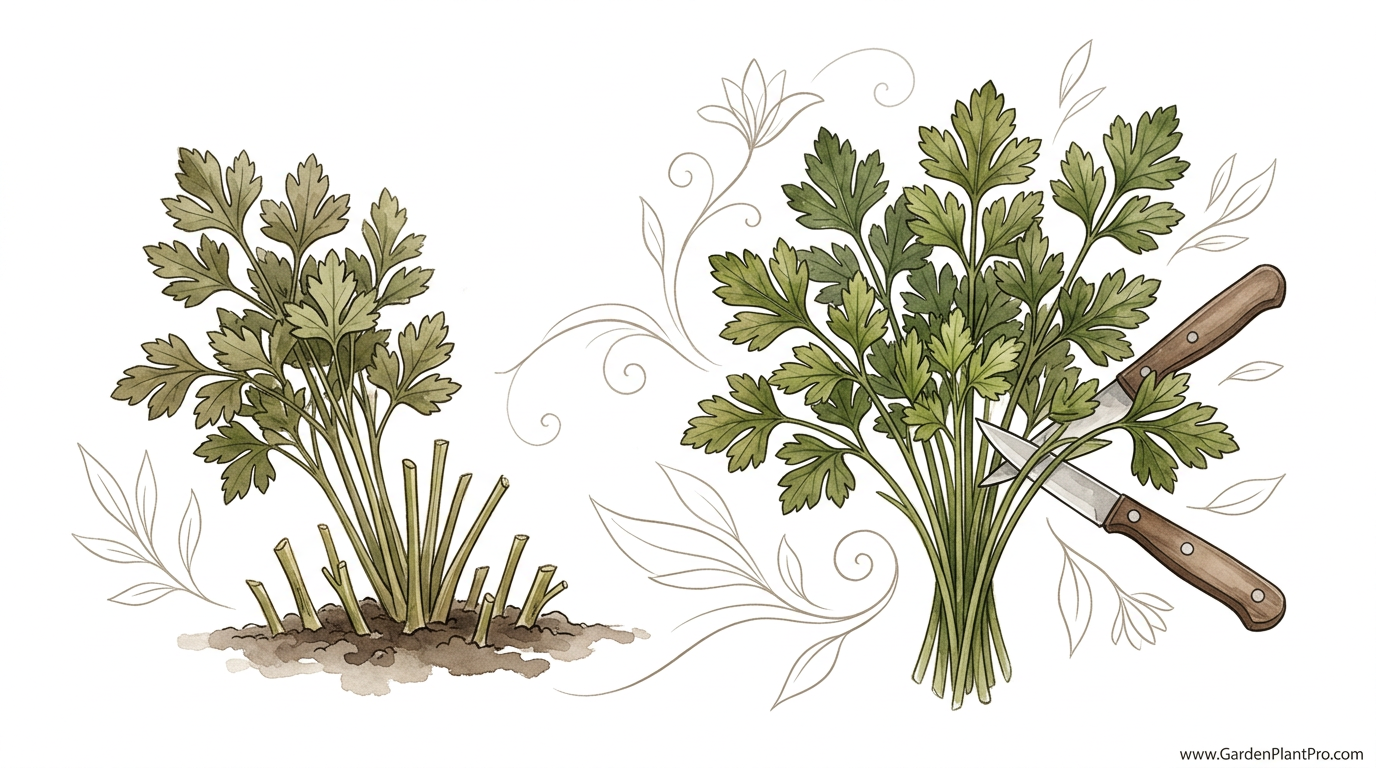
One of these methods kills your parsley, while the other gives you a fresh harvest all season long. Most gardeners treat parsley like a one-time crop, cutting the whole thing down at once. But if you know the ‘center-out’ secret, you can harvest from the same plant for months. Learn why cutting the center is the fastest way to end your herb garden.
There is nothing quite like reaching into a lush, green patch of parsley to brighten up a summer potato salad or a winter stew. For years, I watched neighbors plant beautiful flat-leaf and curly varieties only to see them dwindle into yellowing stumps by July. They were harvesting the way most people do: grabbing a handful and hacking it off at the knees.
That “scalped plant” approach is the quickest way to send your herbs into early retirement. If you want to keep your kitchen stocked with fresh greens from spring until the first hard frost, you have to understand how the plant actually thinks. Once you master the “outside-in” technique, your parsley will reward you with more leaves than you know what to do with.
How To Harvest Parsley For Continuous Growth
The secret to a never-ending parsley harvest lies in understanding the plant’s growth point, often called the crown. Parsley grows from the center outward. New, tender shoots emerge from the very middle of the plant, while the older, larger stems are pushed to the edges. When you harvest the outer stems, you are essentially “pruning” the plant, which signals the roots to keep pushing out new growth from that central hub.
In the gardening world, we call this the “cut-and-come-again” method. Instead of treating the plant like a head of lettuce that you harvest all at once, you treat it like a recurring gift. By taking only the mature stems from the perimeter, you leave the “factory” in the center untouched and productive. This practice is common in professional herb farms, but it is just as effective in a 12-inch (30 cm) pot on a sunny windowsill.
Think of it like a bank account. If you withdraw all your capital at once, the account is closed. But if you only take the interest—the outer, mature leaves—the principal remains to grow more wealth for the next harvest. This method ensures that the plant always has enough foliage to photosynthesize and stay healthy, while you get the freshest, most flavorful herbs for your cooking.
The Step-by-Step “Outside-In” Technique
To get started, you need to wait until your plant is established. I usually look for at least 8 to 10 main stems before I make my first cut. This typically happens about 70 to 90 days after sowing seeds, or a few weeks after transplanting a healthy nursery start. A good rule of thumb is to wait until the plant is about 6 inches (15 cm) tall.
- Identify the mature stems: Look for the stems on the very outer edge of the plant. These are the oldest and most mature. You can tell they are ready because they usually have at least three distinct clusters of leaves.
- Follow the stem to the base: Don’t just snip the leafy tops. Follow the stem down to about 1 inch (2.5 cm) above the soil level.
- Make a clean cut: Use sharp garden shears or kitchen scissors. A clean cut heals faster than a jagged tear. Snip the stem at its base, being careful not to nick the surrounding stems or the central crown.
- Respect the 30% rule: Never take more than one-third of the plant at one time. If you need a large batch of parsley for a recipe like chimichurri, it is better to have three or four plants and take a little from each rather than scalping one plant entirely.
Leaving those central, younger leaves is vital. They are the future of the plant. They are thinner, lighter green, and much more delicate than the outer leaves. Protecting them ensures the plant never enters a “survival mode” where it stops producing leaves and starts trying to flower prematurely.
Why Harvesting This Way Works
When you harvest from the outside, you are helping the plant stay tidy and productive. Older stems eventually turn yellow and lose their flavor if left on the plant too long. By removing them, you improve air circulation around the crown, which prevents rot and fungal issues like leaf spot.
Furthermore, regular harvesting prevents the plant from getting “leggy.” If you only snip the tops of the leaves, the long stems remain and eventually collapse under their own weight. Cutting at the base encourages a bushier, more compact growth habit. This is especially important for container gardeners where space is limited and you want the most “green” for your square inch.
There is also a biological benefit. Constant, gentle harvesting keeps the plant in its vegetative state. Since parsley is a biennial—meaning it lives for two years—its ultimate goal is to flower and produce seeds in its second year. By keeping it pruned and vigorous in its first year, you can often extend the harvest well into the winter months in milder climates.
Common Mistakes to Avoid
The most frequent error I see is what I call the “top-down haircut.” This is when a gardener takes a pair of scissors and cuts the entire top half of the plant off. While the plant might survive, the remaining stems will never grow new leaves; they will just sit there and eventually wither. New growth will have to start from scratch at the crown, which takes much longer and stresses the root system.
Another mistake is harvesting too early. It is tempting to grab those first few leaves as soon as they look edible, but the plant needs a solid root foundation first. If you take leaves from a tiny seedling, you are removing its only way to create energy from the sun. Give it those first few months to get established, and it will pay you back with interest for the rest of the season.
Lastly, keep an eye on the center of the plant. If you accidentally snip the tiny emerging leaves in the very middle, you have effectively “topped” the plant. This often causes it to split into two smaller, less productive growth points or, in some cases, it can cause the plant to stop growing entirely for several weeks.
Limitations and Seasonal Factors
While the outside-in method is the gold standard, there are times when it might not work perfectly. In the height of a blistering summer, parsley can struggle. If the temperature stays above 90°F (32°C) for several days, the plant may go dormant. During these heat waves, it is best to slow down your harvesting and provide some afternoon shade. If you keep cutting during extreme stress, the plant might not have the energy to recover.
In the second year of its life cycle, parsley will naturally begin to “bolt.” This means it will send up a thick, tough center stalk that eventually produces flowers. Once bolting starts, the leaves become bitter and tough. No amount of careful harvesting can stop this biological clock. At this point, I usually let the plant go to seed to attract pollinators like hoverflies and parasitic wasps, and then I pull it to make room for a new spring planting.
Environmental conditions also play a role. Parsley loves “cool feet” and moist soil. If you are growing in a sandy soil that dries out fast, the plant will produce fewer leaves and they will be much tougher. Adding a layer of organic mulch around the base—being careful not to cover the crown—can help maintain the moisture needed for that lush, continuous growth we’re aiming for.
Comparing Flat-Leaf vs. Curly Parsley Harvesting
| Feature | Flat-Leaf (Italian) | Curly (French) |
|---|---|---|
| Growth Habit | Tall and gangly, often reaching 12-18 inches (30-45 cm). | Compact, ruffled, and mounded, usually 8-12 inches (20-30 cm). |
| Flavor Profile | Strong, peppery, and assertive; best for cooking. | Mild, grassy, and subtle; best for garnishes and salads. |
| Harvest Ease | Easy to separate individual stems at the base. | Denser stems; requires more care to avoid nicking the crown. |
| Heat Tolerance | Slightly more tolerant of summer heat. | Tends to struggle more in high temperatures; prefers shade. |
Both varieties respond beautifully to the outside-in harvesting method. I personally find flat-leaf parsley easier to manage because the stems are longer and more distinct. Curly parsley grows in such a tight mound that you really have to peel back the outer leaves to see where you are cutting. However, that compact shape makes curly parsley a fantastic choice for garden planning where it can serve as a beautiful, edible border for flower beds.
Maintenance for Maximum Yield
To keep the harvest coming, you have to feed the “factory.” Parsley is a heavy feeder, especially when it comes to nitrogen. Every 4 to 6 weeks, I like to apply a liquid seaweed fertilizer or a side-dressing of rich compost. This provides the nutrients necessary for the plant to quickly replace the stems you’ve removed.
DIY PROJECT: Collect rainwater no matter where you live...
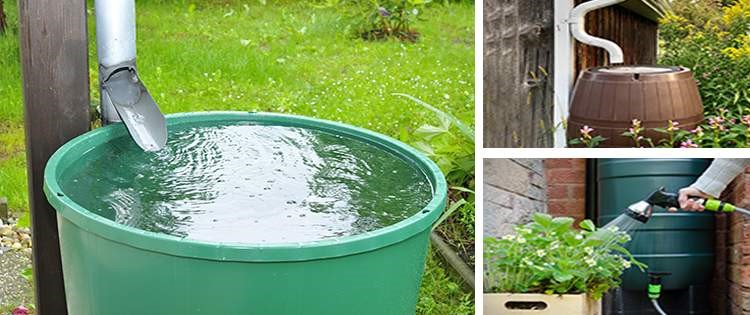
This DIY project is the best way to legally collect rainwater NO MATTER where you live. Get chlorine-free water, cut down on your water bills, and have enough for an emergency situation or to water your garden. Read More Here...
Watering is equally critical. Parsley has a long taproot, similar to its cousin the carrot. It needs deep, consistent watering rather than frequent light sprinkles. If the top inch (2.5 cm) of soil is dry to the touch, it is time for a drink. If you notice the leaves looking a bit dull or floppy, give the plant a deep soak and wait an hour before harvesting; the leaves will crisp right back up.
Keep an eye out for yellowing leaves. While old leaves naturally turn yellow as they age, widespread yellowing can indicate a nutrient deficiency or a watering issue. Snip off any yellow stems immediately to keep the plant’s energy focused on new, green growth. This simple bit of plant care goes a long way in maintaining a professional-looking herb patch.
Advanced Strategy: Successive Sowing
Serious herb growers don’t rely on just one planting. Because parsley can be slow to start and eventually peters out in its second year, I recommend successive sowing. Start one batch of seeds in early spring and another in mid-summer. This ensures that as your spring plants begin to tire out or bolt, your summer plants are just hitting their prime.
In regions with mild winters, the mid-summer planting can often be overwintered. I have successfully harvested parsley under a light layer of snow by using a simple cold frame or even just a heavy mulch of straw. The flavor of “frost-kissed” parsley is surprisingly sweet, as the plant converts starches into sugars to act as a natural antifreeze.
If you are growing indoors, rotation is key. I usually keep three pots on the go. One is being harvested, one is recovering from a recent harvest, and one is a young plant getting ready for its first cut. This cycle ensures a steady supply for the kitchen without ever over-stressing a single plant.
A Real-World Harvest Scenario
Let’s say you’re making a Sunday roast and you need a good handful of parsley for a garlic-herb butter. Instead of grabbing the whole plant, you approach your three parsley plants. On the first plant, you find two large, dark green stems on the outer edge and snip them at the base. You move to the second plant and take another two. On the third, you see a stem that is just starting to turn slightly pale—you take that one too.
In total, you have five robust stems, which is plenty for your butter. Each of those three plants has lost less than 15% of its total foliage. Because the cuts were clean and low, the plants don’t “panic.” Within three to five days, the tiny leaves you saw in the center will have expanded, and by next Sunday, they will be moving toward the outer ring, ready to be harvested again. This is how a seasoned gardener maintains a “perpetual” parsley patch.
Final Thoughts
Success with parsley isn’t about having a “green thumb”—it’s about understanding the plant’s natural rhythm. By shifting your perspective from a “one-time cut” to the “center-out” secret, you transform your herb garden from a fleeting summer project into a reliable, year-round pantry staple. It only takes a second longer to snip at the base than it does to tear at the top, but that second makes all the difference to the health of your plant.
I encourage you to get out there and practice this today. Look for those outer stems, respect the crown, and watch how your parsley responds. You’ll soon find that the more you give the plant exactly what it needs, the more it gives back to you. Once you have mastered this, you might find yourself exploring other aspects of garden health, such as improving your soil health or fine-tuning your irrigation methods to keep your entire garden as lush as your parsley patch.
Remember, gardening is a conversation with nature. The “outside-in” harvest is your way of telling the plant that you appreciate its hard work and want it to keep going. Happy growing, and may your kitchen always smell like fresh herbs.