Are you working harder than the bees to get a single fruit? Spending your weekends with a tiny paintbrush is a sign of a broken ecosystem. You can outsource the labor to the experts and see your yield triple overnight through the strategic planting of ‘bee magnets’ near your vine. Here is how to work with nature, not against it.
I have spent forty years watching passionfruit vines crawl over my back fences. In that time, I have seen every mistake a gardener can make. Most folks think they just need more fertilizer or a better trellis when their vine stops producing, but usually, the problem is much smaller—and it has wings.
When you sit down and really look at a passionfruit flower, you realize it is a bit of a biological puzzle. It is built for a specific type of visitor. If those visitors aren’t showing up, all the nitrogen in the world won’t put a single piece of fruit on your table. We need to stop acting like the primary worker in the garden and start acting like the manager of a very tiny, very busy workforce.
This guide comes from decades of dirt under my fingernails and plenty of failed harvests. We are going to look at how to transform your garden from a sterile patch of green into a buzzing hub of productivity. It is about more than just fruit; it is about restoring the balance that makes a garden thrive on its own.
How To Increase Passionfruit Yield Naturally
To increase your yield naturally, you must first understand that passionfruit is a “pollinator-dependent” crop. This means the pollen is too heavy and sticky for the wind to carry it. Unlike a tomato plant that can often fruit with just a little breeze, a passionfruit flower requires a physical visitor to move pollen from the male anthers to the female stigmas.
The morphology of the flower is fascinating. The female parts, known as stigmas, sit high above the male parts, known as anthers. In many varieties, particularly the yellow passionfruit (Passiflora edulis flavicarpa), the flowers are self-incompatible. This means they cannot even pollinate themselves with their own pollen; they need a delivery from a completely different vine to set fruit.
Natural yield increases happen when we focus on the “Carpenter Bee” (Xylocopa) and the common honeybee. These insects are the primary engines of your fruit production. A Carpenter Bee is particularly effective because of its large, heavy body. As it crawls deep into the flower to reach the nectar, its back (thorax) brushes against the downward-facing anthers, getting coated in yellow dust. When it moves to the next flower, it delivers that payload directly to the stigmas.
When gardeners complain about “hollow fruit”—those light, juice-less husks—the culprit is almost always poor pollination. A single passionfruit needs about 100 seeds to develop properly for a full, juicy interior. If a bee only makes a half-hearted visit, you might get 20 seeds. The fruit grows, but the “arils” (the juicy bits) never fill the cavity. True success in the passionfruit patch is measured by seed count, and seed count is managed by bees.
Strategies for Creating a Pollinator Paradise
Creating a “bee magnet” system involves more than just buying a flat of petunias. You need a staggered bloom schedule that keeps pollinators in your yard year-round. If the bees only visit when the passionfruit is in flower, they might miss the first few days of the bloom cycle. You want them living in your garden, treating your passionfruit vine as just one stop on their daily commute.
The Heavy Hitters: Top Bee Magnets
Lavender is the gold standard for any passionfruit grower. It thrives in the same sunny, well-drained conditions that passionfruit loves. Whether you choose French, Italian, or English varieties, the constant purple blooms act like a neon sign for honeybees. I like to plant lavender in 30 cm (12 inch) pots and place them directly under the trellis where the passionfruit hangs.
Borage is another secret weapon. Often called “bee bread,” borage produces nectar so quickly that a bee can visit the same flower every few minutes and find a fresh meal. It is a prolific self-seeder, so once you plant it, you will likely have a lifetime supply. The bright blue flowers are edible and look lovely in a salad, but their real value is the sheer volume of bees they pull into the vicinity of your vine.
Herbs That Double as Workhorses
Do not be too quick to harvest your herbs. If you let your basil, oregano, and rosemary go to flower, you are providing a buffet for the smaller native bees. Rosemary is especially useful because it often blooms in the cooler months when other food sources are scarce, keeping your resident bee population healthy and ready for the spring passionfruit flush.
Native Plants and “Wild” Corners
Carpenter bees, our best pollinators, are solitary creatures that often nest in soft wood or pithy stems. Keeping a “wild” corner of the garden with some old logs or untreated timber can encourage them to set up shop. Native Acacias (Wattle) are also fantastic. In a permaculture setup, planting a wattle near your trellis provides nitrogen to the soil and attracts a diverse range of insects that the passionfruit vine benefits from.
Feeding for Flowers, Not Just Leaves
A common mistake I see is the “Green Monster” syndrome. This is when a gardener feeds their vine so much high-nitrogen fertilizer that it grows 5 meters (16 feet) in a single season but never produces a single flower. Nitrogen builds leaves and stems, but Potassium (Potash) and Phosphorus build fruit and flowers.
I recommend a balanced approach. In early spring, just as the new shoots appear, give the vine a light dressing of well-rotted chicken manure or a balanced organic pellet. This provides the “bones” for the season’s growth. However, as soon as you see the first tiny flower buds forming, switch your focus to Potassium.
Liquid seaweed or a dedicated fruit and flower fertilizer applied every 2 to 4 weeks will encourage the vine to put its energy into reproduction. A handful of sulphate of potash dissolved in a 10-liter (2.6 gallon) bucket of water and poured around the root zone can do wonders for a stubborn vine. Remember to water the soil well before and after fertilizing to prevent root burn.
The Art of the Spring Prune
Passionfruit vines fruit on “new wood.” This means if you let your vine become a tangled mess of old, grey, leafless stems, your yield will plummet. Pruning is not just about keeping the vine tidy; it is about forcing the plant to create the fresh, green growth where the flowers actually grow.
The best time to prune is late winter or early spring, just as the weather begins to warm up but before the main growth spurt. I usually aim to remove about one-third of the previous year’s growth. Focus on removing any dead wood, “water shoots” (those very thin, weak stems that grow straight up), and any branches that are tangled or growing toward the ground.
Aim for a “curtain” effect. If you have a wire trellis, you want a few main horizontal “leader” branches, with fruiting laterals hanging down like a curtain. This exposes the flowers to the sun and makes them much easier for the bees to find. A dense, thick canopy might look healthy, but it hides the flowers from the pollinators, leading to poor fruit set.
DIY PROJECT: Collect rainwater no matter where you live...
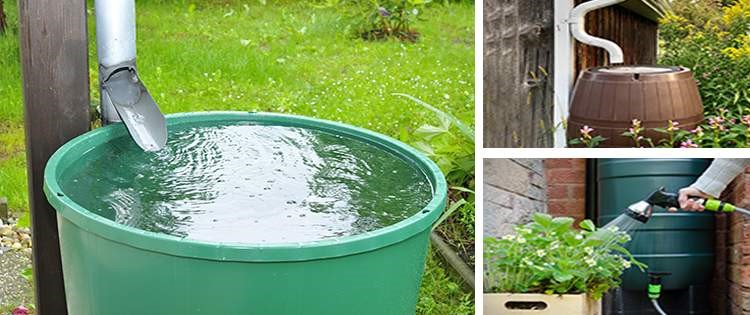
This DIY project is the best way to legally collect rainwater NO MATTER where you live. Get chlorine-free water, cut down on your water bills, and have enough for an emergency situation or to water your garden. Read More Here...
Benefits of Natural Pollination Over Hand Brushing
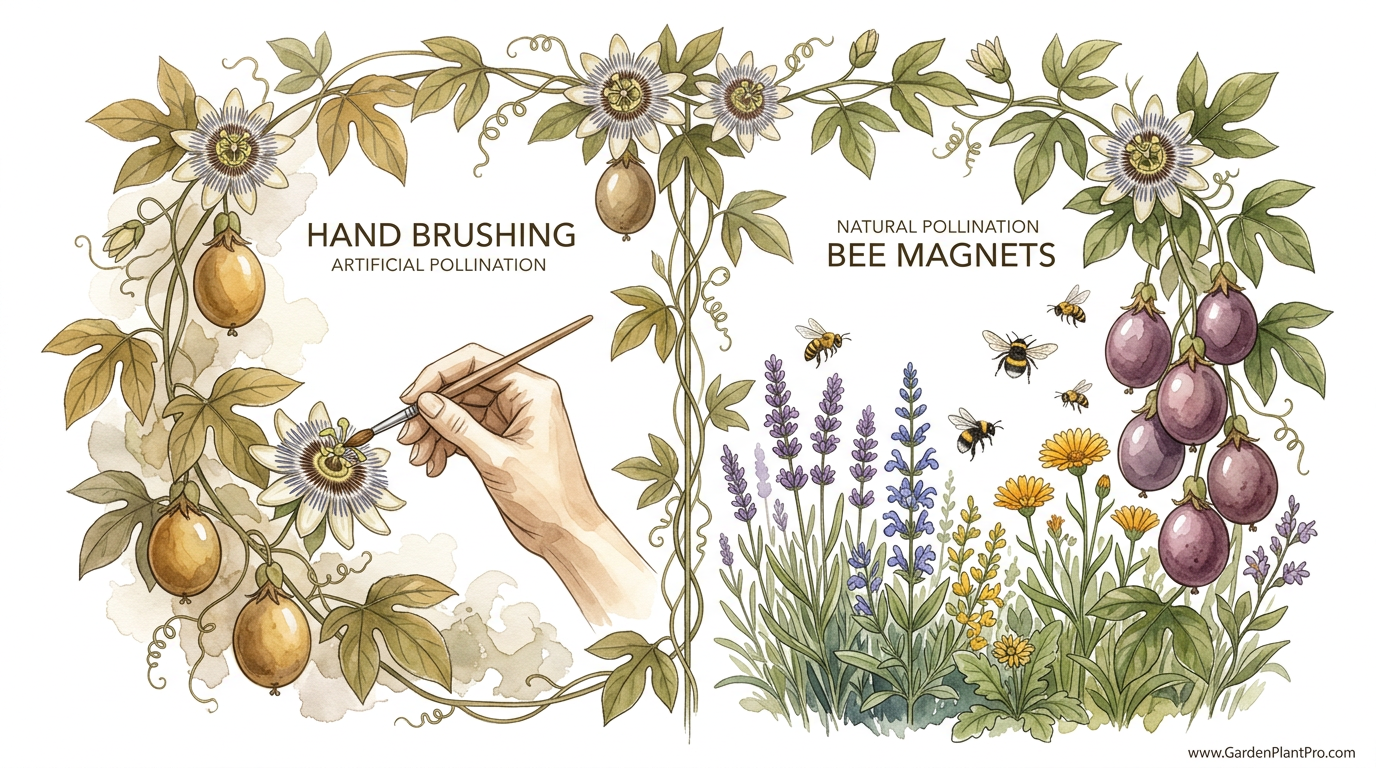
While hand pollination works, it is a tedious substitute for a healthy ecosystem. Moving from flower to flower with a paintbrush is time-consuming and prone to human error. Nature’s way is simply more efficient and leads to better quality fruit.
- Better Seed Set: Bees are more thorough than humans. They vibrate their bodies (buzz pollination), which releases more pollen than a brush ever could. This leads to heavier, juicier fruit.
- Genetic Diversity: If you have more than one vine, bees will naturally cross-pollinate them. This is essential for varieties like the Panama Red or Yellow passionfruit, which often require pollen from a different cultivar to fruit at all.
- Time Savings: A healthy bee population can visit thousands of flowers in the time it takes you to do twenty. This frees you up to enjoy the garden rather than micromanaging it.
- Eco-Health: By planting bee magnets, you aren’t just helping your passionfruit; you are supporting the entire local insect population, which helps your citrus, veggies, and flowers too.
Challenges and Common Mistakes
Even with the best intentions, things can go wrong. One of the biggest mistakes is using broad-spectrum insecticides. If you see aphids or scale on your vine and spray them with a heavy-duty chemical, you are also killing the very bees you need for your fruit. If you must treat a pest, do it in the late evening after the bees have gone back to their hives, and use organic options like neem oil or soap sprays.
Another challenge is “Flower Drop.” This is when the vine produces flowers, but they fall off before turning into fruit. This is often caused by environmental stress. If the temperature spikes above 35°C (95°F) or drops below 15°C (59°F), the plant may abort its flowers to save energy. Similarly, irregular watering can cause the plant to panic. A passionfruit vine needs consistent moisture—not soggy soil, but never bone-dry either.
Poor drainage is a silent killer. Passionfruit roots are very susceptible to fungal rot. If your soil is heavy clay, plant your vine on a mound at least 20 cm (8 inches) high to ensure the root crown stays dry. I have seen many beautiful vines die overnight after a heavy rain simply because the roots “drowned” in standing water.
Limitations of the “Bee Magnet” Approach
While planting bee-attracting flowers is powerful, it isn’t a magic wand if your climate is fundamentally unsuitable. Passionfruit are subtropical to tropical plants. In very cold regions, even the most dedicated bees won’t help if the overnight frost kills the tender blossoms. If you live in a frost-prone area, you must choose cold-hardy varieties like ‘Nellie Kelly’ or plant your vine against a north-facing brick wall (in the Southern Hemisphere) or south-facing (in the Northern Hemisphere) to trap heat.
There is also the “Pollination Gap.” This happens during periods of heavy, persistent rain. Bees do not like to fly in the rain, and passionfruit pollen can be ruined if it gets too wet. In these specific cases, even a garden full of lavender won’t help. This is the only time I’d suggest reaching for that paintbrush—to help the vine along during a week of grey, soggy weather.
Practical Comparisons: Methods for Maximizing Yield
| Feature | Hand Brushing | Bee Magnets |
|---|---|---|
| Labor Intensity | High (Daily commitment) | Low (One-time planting) |
| Fruit Quality | Inconsistent | Superior (Higher seed count) |
| Cost | Free | Low (Cost of seeds/plants) |
| Reliability | Depends on your schedule | Highly reliable in good weather |
Advanced Considerations for the Serious Grower
If you have mastered the basics and want to push your vine to its absolute limit, start looking at micronutrients. Boron deficiency is a common but overlooked cause of poor fruit set in passionfruit. Boron helps with pollen tube growth; without it, the pollen might land on the stigma but fail to fertilize the ovules. A tiny amount of borax (about a teaspoon dissolved in a large watering can) applied once a year can make a massive difference in “aril” development.
Think about the “Age of the Wood.” A passionfruit vine is generally only productive for 5 to 7 years. Many gardeners try to nurse an old, woody vine back to health, but sometimes the best move is to plant a new one nearby. By the time the old one gives up the ghost, the new one will be in its prime. It is a cycle of renewal that keeps your pantry full of jam.
Mulching is non-negotiable for high yields. Passionfruit roots are shallow and hate competing with weeds. A thick layer of organic mulch—straw, sugar cane, or wood chips—keeps the roots cool and moist. Just be sure to keep the mulch about 10 cm (4 inches) away from the main stem to avoid collar rot, which can kill a vine in days.
Real-World Example: The “Panama” Transformation
A neighbor of mine once had a beautiful Panama Gold vine that covered his entire pergola. It produced hundreds of flowers every summer, but he never got more than five or six fruits. He was convinced he had a “dud” plant. We looked at his garden and realized it was almost entirely lawn and concrete—there were no other flowers to draw the bees in.
We spent one Saturday afternoon planting a “pollinator skirt” around the base of the pergola. We put in three types of lavender, some perennial salvia, and a few pots of flowering basil. We also added a second, different variety of passionfruit (a purple hybrid) about 3 meters (10 feet) away to provide cross-pollination options.
The following season, the change was dramatic. The bees arrived in droves, jumping between the lavender and the passionfruit blossoms. He went from 6 fruits to over 150. The fruit wasn’t just more plentiful; it was heavier and packed with pulp. He didn’t change his fertilizer or his watering; he simply fixed the delivery system.
Final Thoughts
Growing a bumper crop of passionfruit isn’t about outsmarting nature; it is about inviting her back into your backyard. When we stop trying to do the work of the bees ourselves, we find that the garden starts to take care of us. A few well-placed flowers can do more for your harvest than a shelf full of chemical boosters.
Start small if you need to. Pick up a single lavender plant or a packet of borage seeds this weekend. Watch how the insects react. You will find that as the buzzing in your garden grows louder, your fruit bowls will grow heavier. It is a nostalgic way of gardening that reminds us we are part of a larger, living system.
If you found this helpful, you might want to look into improving your overall soil health or setting up a more efficient irrigation method. A healthy garden is a journey, and every small change brings you one step closer to that perfect, overflowing harvest. Happy gardening!