
Most gardeners wonder why their spinach is yellow, but the secret isn’t more fertilizer; it’s what’s alive beneath the surface. You’re feeding the plant, but you should be feeding the soil. Discover the massive difference between sterile dirt and a living ecosystem for your greens.
I’ve seen it a hundred times over the years. A neighbor leans over the fence and asks why their spinach looks like a sick canary instead of a deep, forest green. They’ve usually poured on the “blue juice” fertilizer and watered it religiously, but the leaves just won’t green up.
The truth is, spinach is a bit of a canary in the coal mine for soil health. It doesn’t just want food; it wants a partnership with the ground. When we treat our garden like a sterile factory, we lose the very microbes that make nutrients available.
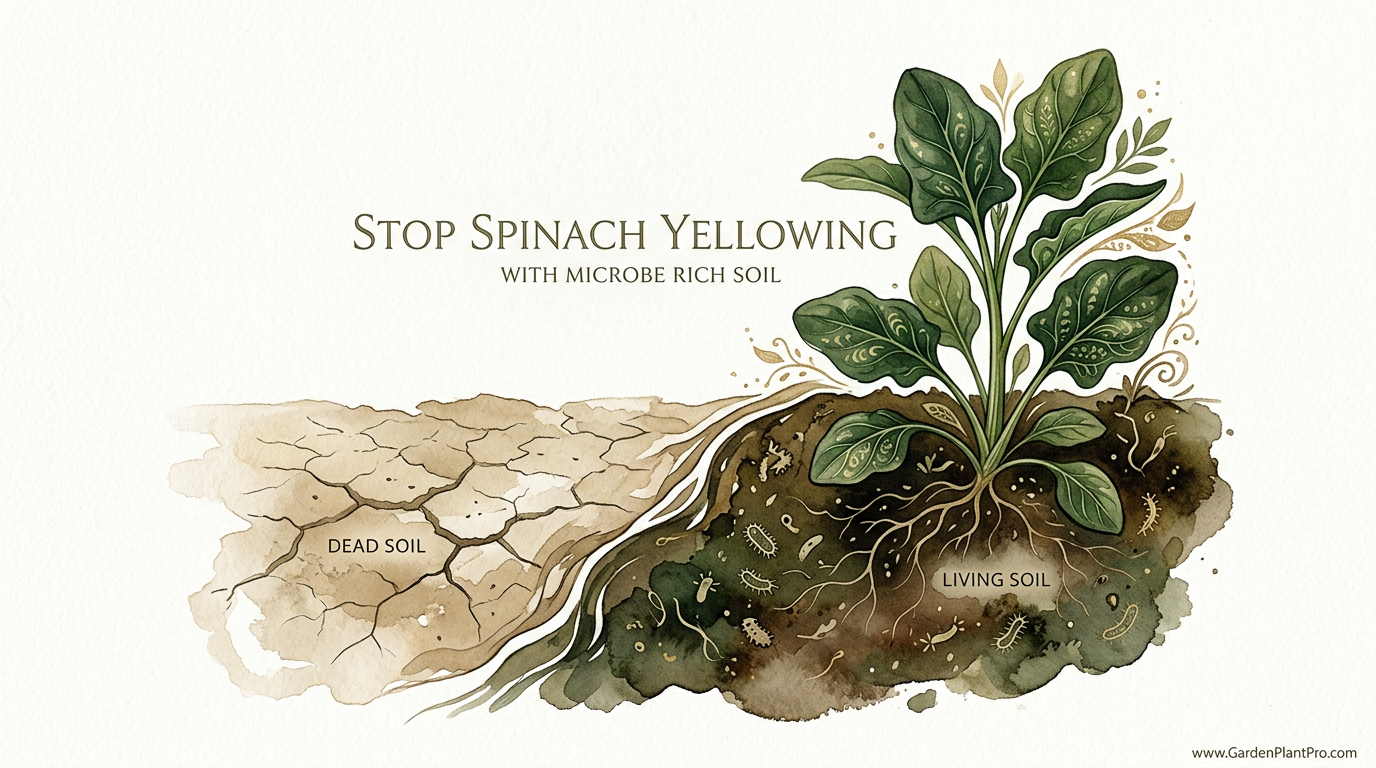
Stop Spinach Yellowing With Microbe Rich Soil
Spinach yellowing, often called chlorosis, is usually a cry for help from a plant that can’t find enough nitrogen or iron. While you can throw synthetic nitrogen at it for a quick fix, that’s like giving a hungry person a sugar cube—it’s a temporary jolt that does nothing for long-term health.
Microbe-rich soil, or “living soil,” is a thriving community of bacteria, fungi, protozoa, and beneficial nematodes. These tiny workers spend their lives breaking down organic matter into forms your spinach can actually digest. Without them, your garden is just sitting in “dirt”—a collection of minerals that are essentially locked away in a safe the plant doesn’t have the combination for.
In the real world, living soil acts as a buffer. It holds onto water so your spinach doesn’t wilt the moment the sun comes out, and it regulates the soil pH so nutrients like iron don’t get stuck in the mud. When you have a healthy microbe population, they literally “glue” soil particles together, creating tiny pockets of air and water that roots love.
How the Living Soil Engine Fixes Your Greens
To stop that yellowing, you need to understand the relationship between the root and the microbe. It’s a trade deal that’s been going on for millions of years.
The spinach plant takes sunlight and turns it into sugars. It then pumps some of those sugars out through its roots—essentially “baking cookies” for the microbes. In exchange, bacteria and fungi go out into the soil, find the nitrogen and minerals the plant needs, and bring them back to the root zone.
If you want to jumpstart this process, follow these steps:
- Incorporate Finished Compost: Adding 2–4 inches (5–10 cm) of well-aged compost provides both the food (organic matter) and the workers (microbes) in one go.
- Limit Tillage: Every time you turn the soil with a heavy tiller, you’re shredding the fungal networks that act as the plant’s extended root system. Use a broadfork or just layer mulch on top.
- Use “Living” Mulches: Covering the soil with straw or shredded leaves keeps the ground cool and moist, which is the “climate control” your microbes need to survive.
The Practical Benefits of Biological Gardening
When you switch from “feeding the plant” to “feeding the soil,” the results are measurable. For one, your spinach will be much more resilient to temperature swings. Spinach is a cool-season crop that thrives between 40°F and 75°F (4°C to 24°C). In dead soil, a sudden hot day can cause the plant to bolt or turn yellow from stress. Living soil acts like an insulator, keeping the roots cool and the plant steady.
Another benefit is nutrient density. Microbe-rich soil doesn’t just provide nitrogen; it provides a full buffet of micronutrients. You’ll notice your spinach isn’t just greener; the leaves are thicker, glossier, and stay fresh much longer after harvest. Plus, the flavor is incomparable—that’s the minerals talking.
Common Mistakes Gardeners Make
One of the biggest mistakes I see is the “more is better” approach with nitrogen. If you dump too much high-nitrogen synthetic fertilizer on your spinach, you might get a quick burst of green, but you’re actually killing off the beneficial microbes. It’s too much of a good thing, and it makes the soil salty, which prevents the roots from taking up water.
Another common pitfall is overwatering. Most folks see a yellow leaf and think the plant is thirsty. But if your soil is compacted and lacks life, that water just sits there, drowning the aerobic (oxygen-loving) microbes. This leads to root rot, which—you guessed it—turns the leaves yellow. It’s a vicious cycle.
Realistic Limitations: When Living Soil Isn’t Enough
I’ll be the first to tell you that living soil isn’t a magic wand. If your soil pH is wildly out of whack—say, below 6.0 or above 7.5—even the best microbes will struggle to help. Spinach is sensitive; it prefers a pH between 6.5 and 7.0. If you’re growing in a swamp or a desert of pure sand, you’ll need to do some physical work with drainage and minerals before the biology can really take hold.
Also, if your ground is already infested with “spinach yellows” (Fusarium wilt), microbes can help suppress it, but they might not cure it in a single season. In those cases, you have to practice crop rotation, moving your spinach to a different bed for a year or two.
Comparing Living Soil vs. Conventional Dirt
| Feature | Conventional “Dirt” | Living Soil |
|---|---|---|
| Nutrient Source | Synthetic salts (N-P-K) | Organic matter & microbial cycling |
| Water Retention | Low; dries out fast or pools | High; acts like a sponge |
| Plant Health | Prone to pests and yellowing | Strong immunity and deep green color |
| Maintenance | Weekly feeding required | Minimal once established |
Best Practices for a Green Harvest
If you’re starting today, the best thing you can do is top-dress your spinach beds with a thin layer of worm castings. Worm castings are like “microbe grenades”—they’re packed with the exact bacteria that fix nitrogen in the soil.
Also, pay attention to your watering. Instead of a light sprinkle every day, give your spinach a deep soak every few days. This encourages the roots to grow deep into the “living” layers of the soil where the microbes are most active. If you’re in a dry climate, using a drip irrigation system can keep the moisture levels consistent without washing away your hard-earned soil biology.
Advanced Strategy: The “Brix” Connection
For those who want to take their gardening to the next level, start looking into “Brix” levels. Brix is a measure of the sugar content in the plant sap. When your soil life is booming, your spinach will have higher Brix levels. This doesn’t just make the spinach taste sweeter and less metallic; it actually makes the plant invisible to many pests like aphids. Pests are nature’s “garbage collectors”—they’re designed to eat low-sugar, stressed plants. A healthy, high-Brix spinach leaf is actually hard for them to digest.
A Tale of Two Spinach Patches
I remember a few years back, I helped a friend set up two identical raised beds. In one, he used standard sterilized potting soil and synthetic 10-10-10 fertilizer. In the other, we mixed in 20% compost and a handful of mycorrhizal inoculant.
DIY PROJECT: Collect rainwater no matter where you live...
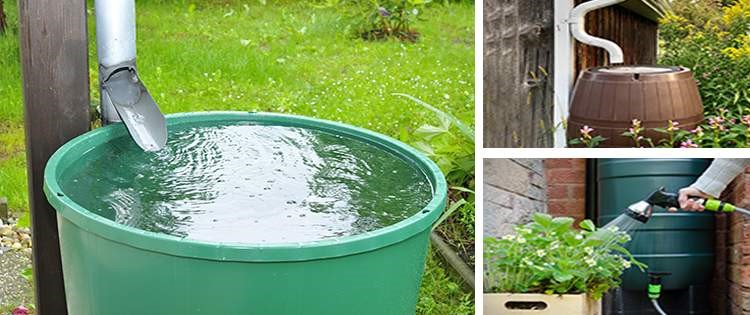
This DIY project is the best way to legally collect rainwater NO MATTER where you live. Get chlorine-free water, cut down on your water bills, and have enough for an emergency situation or to water your garden. Read More Here...
The “synthetic” bed grew fast for the first three weeks, but by week four, the bottom leaves were turning that familiar pale yellow. The “living” bed started slower, but it stayed a vibrant, dark green until the very end of the season. When a heat wave hit in late May, the synthetic bed bolted and turned bitter overnight, while the living soil bed held on for another ten days of harvests.
Final Thoughts
Fixing yellow spinach isn’t about reaching for a bottle; it’s about looking at the world beneath your fingernails. When you cultivate a living ecosystem in your garden, you’re doing more than just growing food—you’re restoring a tiny piece of the Earth.
Start small. Add a little compost, stop the heavy tilling, and let the microbes do the heavy lifting for you. Once you see that first crop of deep, emerald-green spinach, you’ll never go back to just “dirt” again. Experiment with different organic mulches and see how your soil responds; your greens will thank you for it.