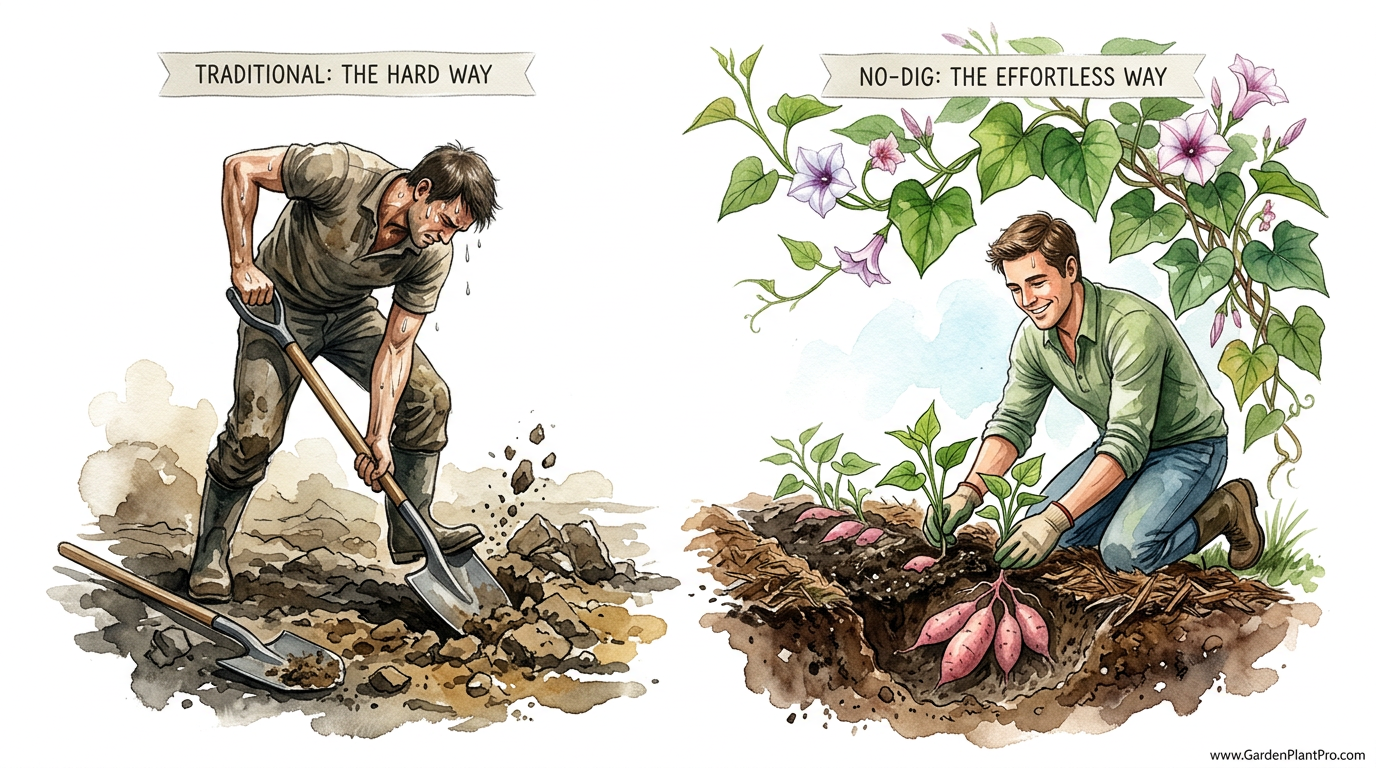
Why break your back digging for buried treasure when you can make the tubers come to you? Growing sweet potatoes in heavy soil is a recipe for broken tubers and a sore back. Using the strategic ‘No-Dig’ mulch method, you bypass the hard labor and the harvest becomes as simple as lifting a blanket.
I’ve spent years fighting with the red clay in my backyard, trying to pry out sweet potatoes that seemed determined to stay buried. Every year, I would end up with a few snapped roots and a spine that felt like it had been through a ringer. Then I discovered the magic of growing on top of the soil rather than inside it.
This approach isn’t just about laziness; it is about working with the natural behavior of the plant. Sweet potatoes love warmth and loose, airy environments where their roots can expand without resistance. When you pile up organic matter instead of digging trenches, you create the perfect tropical microclimate right on your lawn.
If you are looking for a way to grow a massive harvest without the traditional “treasure hunt” at the end of the season, you are in the right place. We are going to walk through how to set this up, from the first layer of cardboard to the final, easy harvest. Lean over the fence and let’s talk about how to make your garden work harder so you don’t have to.
No-dig Sweet Potato Growing Method
The no-dig sweet potato growing method is a technique where you grow the crop in thick layers of organic mulch rather than burying the roots deep in the earth. Instead of tilling the ground and breaking up soil structure, you layer materials like compost, straw, or aged hay directly on top of the surface. This creates a soft, nutrient-rich environment that mimics the forest floor.
Historically, this method gained popularity through gardening pioneers like Ruth Stout, who famously grew almost everything in “permanent mulch.” For sweet potatoes, specifically Ipomoea batatas, this is a game-changer. Since sweet potatoes are tuberous roots rather than true tubers like Irish potatoes, they require a specific balance of moisture and aeration to swell into those large, marketable sizes we all want.
Gardeners typically use this method in areas with poor, compacted, or rocky soil where digging is nearly impossible. It is also a favorite for those wanting to convert a patch of lawn into a productive garden without the back-breaking task of removing sod. The weight of the mulch and a bottom layer of cardboard effectively smother weeds and grass, turning them into food for your future harvest.
In a real-world setting, imagine a garden where you never pick up a spade. You aren’t fighting the ground; you are building it upward. This method is used by backyard enthusiasts and small-scale permaculture practitioners who value soil health and efficiency over traditional row cropping.
How to Start Your No-Dig Sweet Potato Patch
Setting up your bed requires a bit of preparation, but the effort is front-loaded. Once the bed is established, your daily maintenance drops significantly. You will need a sunny spot that gets at least 6 to 8 hours of direct sunlight, as sweet potatoes are true heat-seekers.
Step 1: The Foundation
Start by mowing the grass or weeds in your chosen area as short as possible. You do not need to pull the weeds; just knock them down. Lay down a thick layer of plain brown cardboard over the area, making sure to overlap the edges by at least 6 inches (15 cm) to prevent stubborn grass from sneaking through the gaps.
Wetting the cardboard thoroughly helps it stay in place and encourages it to start breaking down. This layer serves as a barrier that kills existing vegetation while providing a feast for earthworms. Earthworms are your silent partners in this process, as they will eventually tunnel through the cardboard and aerate the native soil underneath.
Step 2: Adding the Growing Medium
Place a layer of high-quality compost directly on top of the cardboard. A depth of about 4 to 6 inches (10 to 15 cm) is ideal. This acts as the initial “soil” where your slips will take root. If you don’t have enough compost, a mix of topsoil and aged manure works well too.
Sweet potatoes aren’t overly picky about nitrogen, but they do love potassium. Including some wood ash or a potassium-rich organic fertilizer in this layer can give your plants a head start. Avoid using fresh manure, as it can be too high in nitrogen and lead to beautiful lush vines but tiny, spindly roots.
Step 3: The Mulch Blanket
Cover the compost with a thick layer of straw, shredded leaves, or spoiled hay. This should be about 8 to 12 inches (20 to 30 cm) deep. While this seems like a lot, the material will settle over time. This thick blanket regulates the soil temperature and keeps the moisture levels consistent, which is critical for root development.
Step 4: Planting the Slips
When the soil temperature consistently stays above 65°F (18°C), it is time to plant. Push the mulch aside until you reach the compost layer. Poke a hole into the compost and tuck your sweet potato slip inside, ensuring at least two nodes (the bumps where leaves grow) are buried.
Space your plants about 12 to 18 inches (30 to 45 cm) apart. If you are planting multiple rows, keep the rows about 3 feet (90 cm) apart. This gives the vigorous vines plenty of room to roam and prevents them from competing too much for nutrients.
Benefits of the No-Dig Approach
The most immediate benefit is the preservation of soil structure. Traditional digging destroys the complex networks of mycorrhizal fungi and kills beneficial microbes. Keeping the soil intact allows these organisms to thrive, which in turn helps your plants absorb nutrients more efficiently.
Harvesting is another area where this method shines. Instead of using a pitchfork and risking a “speared” potato, you simply pull back the mulch and lift the roots out of the loose compost. The roots are usually cleaner, smoother, and much easier to find. This “treasure hunt” becomes a joy rather than a chore.
Weed suppression is almost entirely handled by the mulch. Very few weeds can make it through 10 inches of straw and a layer of cardboard. Any that do manage to sprout are easily pulled because the medium is so loose. You can say goodbye to hours spent hoeing between rows in the summer heat.
DIY PROJECT: Collect rainwater no matter where you live...
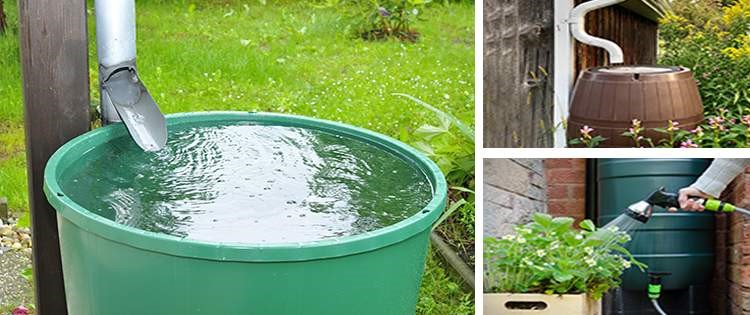
This DIY project is the best way to legally collect rainwater NO MATTER where you live. Get chlorine-free water, cut down on your water bills, and have enough for an emergency situation or to water your garden. Read More Here...
Water retention is significantly improved. The thick organic layer acts like a sponge, holding onto moisture even during dry spells. This means you won’t have to water as frequently, and the plants won’t suffer from the “feast or famine” moisture cycles that can cause roots to crack.
Challenges and Common Mistakes
Rodents are perhaps the biggest challenge with no-dig sweet potatoes. Voles and mice love the protection of a thick mulch layer. They can tunnel underneath the straw and snack on your developing tubers without you ever knowing. Checking for tunnels periodically and keeping the surrounding grass short can help discourage these uninvited guests.
Slugs can also become a problem in very wet climates. The damp environment under the mulch is a paradise for them. If you notice significant damage to the leaves or young slips, you might need to use organic slug bait or temporarily thin the mulch until the weather dries out a bit.
A common mistake is planting too early. Sweet potatoes are tropical plants and will simply sit and rot if the ground is cold. Waiting until the weather is settled and the nights are warm is essential. Even a light frost can kill the vines and damage the roots, so keep an eye on your local weather patterns.
Using the wrong mulch can also lead to issues. Avoid using fresh wood chips, as they can tie up nitrogen as they decompose. Straw or hay is much better because it breaks down faster and allows for better airflow. Ensure your hay is “spoiled” or seed-free, or you might find yourself growing more grass than sweet potatoes.
Limitations and When This May Not Be Ideal
While this method is fantastic, it isn’t a universal solution. If you live in a region with a very short growing season (less than 90 to 100 days of frost-free weather), sweet potatoes will struggle regardless of the method. They need a long, hot summer to build up the sugars and size required for a good harvest.
Excessively wet or boggy areas are also a poor fit. Even with no-dig, sweet potatoes need good drainage. If the cardboard and compost sit in standing water, the roots will rot before they have a chance to grow. In these cases, building a raised no-dig bed might be a better alternative than growing directly on the ground.
Space is another consideration. Sweet potato vines are incredibly vigorous and can easily travel 10 to 15 feet (3 to 4.5 meters) in every direction. If you have a tiny urban plot, you might find the vines taking over your paths and other vegetable beds. Pruning the vines is possible, but it can reduce the overall yield.
No-Dig vs. Traditional Row Digging
To help you decide which path is right for your garden, here is a quick look at how these two methods stack up against each other.
| Feature | Traditional Digging | No-Dig Mulch Method |
|---|---|---|
| Labor Level | High (Tilling, hilling, digging) | Low (Layering, easy lifting) |
| Soil Disturbance | High (Disrupts biology) | None (Builds biology) |
| Weed Pressure | Moderate to High | Very Low |
| Harvest Ease | Difficult (Requires tools) | Easy (By hand) |
| Risk of Damage | High (Spearing roots) | Negligible |
Practical Tips and Best Practices
One of the best things you can do for your harvest is to harden off your slips before they go into the bed. If you bought them through the mail or grew them on a windowsill, they need a few days to adjust to the wind and sun. Set them outside in a sheltered spot for a few hours a day, gradually increasing the time.
Curing is the secret to that sugary sweet flavor. Once you harvest your sweet potatoes, don’t eat them immediately. They need to sit in a warm (80°F to 90°F / 27°C to 32°C), humid spot for about 10 days. This process converts the starches into sugars and allows any nicks in the skin to heal, which is vital for long-term storage.
Keeping the vines from rooting at every node can sometimes help focus the plant’s energy on the main central cluster of roots. While many people let them roam, occasionally lifting the vines to break those secondary roots can result in larger tubers at the base. However, if you have plenty of space, letting them root everywhere can act as a natural groundcover.
Monitor the moisture levels under the mulch. During the peak of summer, the top of the straw might look bone dry, but the compost underneath could still be damp. Stick your hand deep into the mulch to check before you reach for the hose. Overwatering in the late season can cause the roots to split or lose flavor.
Advanced Considerations for Serious Growers
For those looking to optimize their yields, pay attention to your soil pH. Sweet potatoes prefer a slightly acidic environment, ideally between 5.8 and 6.2. If your soil is too alkaline, you might see yellowing leaves or stunted growth. Adding elemental sulfur or acidic compost can help nudge the pH in the right direction over time.
Scaling up a no-dig system requires a reliable source of organic matter. If you are planting a large area, look for local farmers who have “spoiled” hay that they can’t feed to livestock. This is often available for a fraction of the cost of retail straw and is full of beneficial seeds and nutrients that will improve your soil health long after the potatoes are gone.
Understanding the “fungal to bacterial ratio” in your soil can also make a difference. No-dig systems tend to become fungal-dominant over time, which is generally what you want for perennial-like root crops. This fungal network helps transport water and minerals to the plant roots from farther away than the roots could reach on their own.
Consider the variety of sweet potato you are planting. Some, like ‘Beauregard’, are known for their massive yields and reliability. Others, like ‘Purple Stokes’, have a much longer growing season and may require more attention to soil temperature. Matching the variety to your specific climate is the hallmark of an experienced gardener.
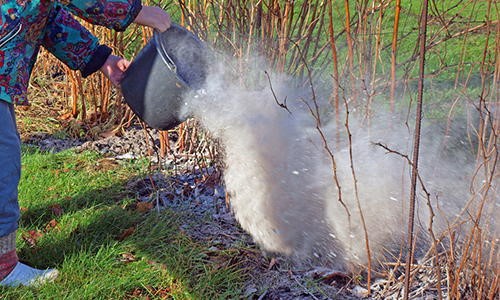
Do you have some charcoal in your house right now? We call charcoal a “miracle leftover” for anyone who wants to be a little more self-sufficient and cut costs. That’s because it can help you with so many different things around the house and garden. You can even use it to make an energy-free fridge. Read More Here...
Example Scenario: The Lawn Transformation
Let’s look at a practical example of how this might work in a standard backyard. A gardener named Sarah has a 10×10 foot (3×3 meter) patch of patchy lawn that she wants to turn into a vegetable garden. She decides to use the no-dig sweet potato method to “pre-condition” the soil for next year.
Sarah gathers 10 large appliance boxes, flattens them, and covers the entire 100-square-foot area in late spring. She buys two cubic yards of high-quality compost and spreads it over the cardboard. Finally, she tops the whole thing with three bales of wheat straw, making a fluffy bed about 10 inches (25 cm) high.
She plants 25 ‘Georgia Jet’ slips in early June. Throughout the summer, she only waters during dry spells and never pulls a single weed. By October, the vines have completely covered the straw. Sarah pulls back the mulch and finds 150 pounds (68 kg) of clean, beautiful sweet potatoes sitting right on top of the mostly-decomposed cardboard. Her soil is now soft, dark, and ready for whatever she wants to plant next spring.
Final Thoughts
Growing sweet potatoes should be a rewarding experience, not a chore that leaves you reaching for the heating pad. The no-dig method offers a path to a bounty of food while actually improving the land you are working. It respects the biology of the soil and the needs of the plant, resulting in a cleaner, easier, and often more productive harvest.
Experimenting with different mulches and varieties will help you find the “sweet spot” for your particular region. Whether you are a beginner looking to start your first garden or a seasoned grower tired of the heavy lifting, this approach has something to offer. The transition from a “digging” mindset to a “layering” mindset is one of the most liberating shifts a gardener can make.
Once you see how simple it is to pull back a blanket of straw and find a cluster of bright orange roots, you’ll never want to go back to the old way. Give the no-dig method a try this season. Your back—and your kitchen pantry—will thank you for it.