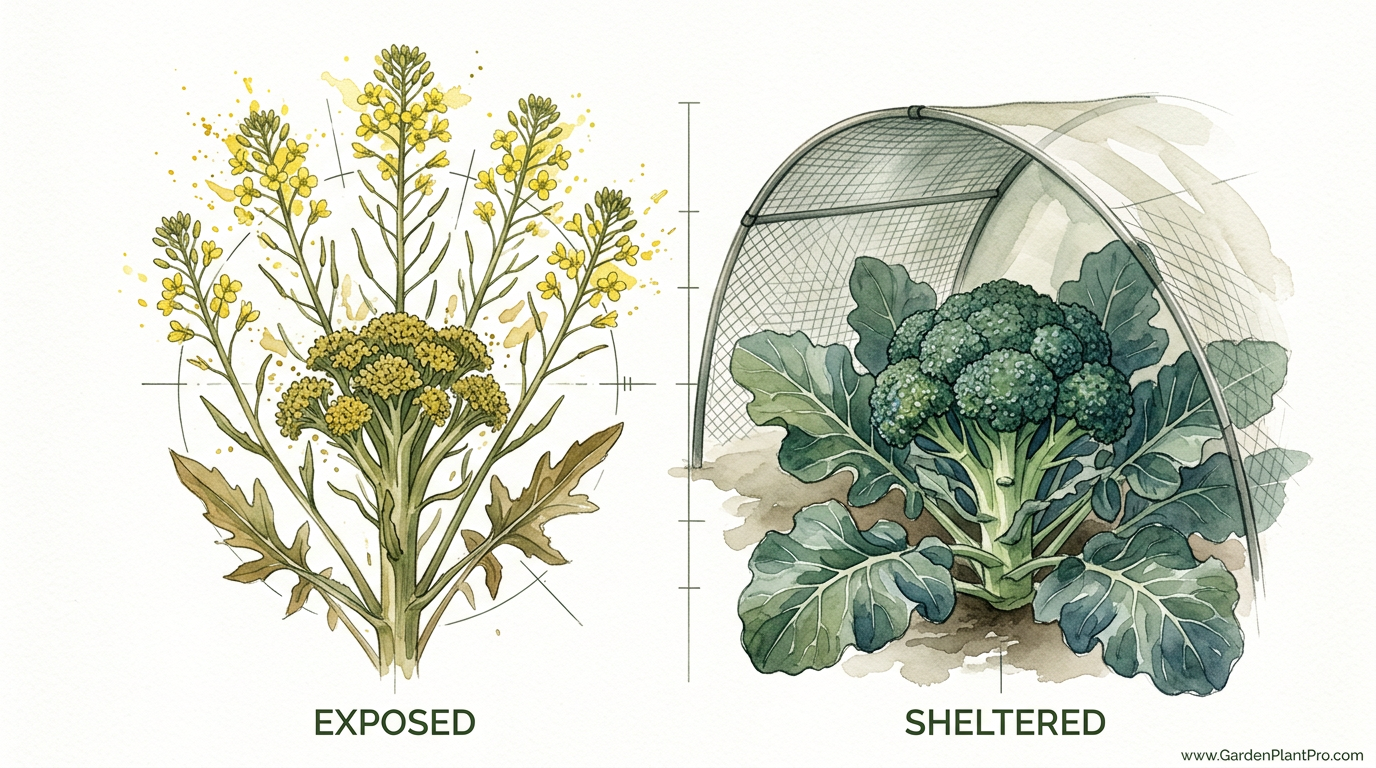
Why is your neighbor’s broccoli still tight while yours is turning into a flower garden? Stop treating your broccoli like a cactus. One afternoon of direct heat can ruin months of growth. The pros use this ‘cool canopy’ trick to keep heads tight and sweet even when the thermometer climbs.
I’ve seen it happen more times than I can count. You spend weeks nurturing those little green transplants, watching them settle into the soil. The leaves get big, the plants look strong, and then a three-day heatwave hits. Suddenly, that beautiful compact head you were waiting for starts to stretch, separate, and burst into tiny yellow flowers. It feels like the plant just gave up on you.
In the gardening world, we call this bolting. It is the plant’s way of saying it has had enough of the heat and needs to make seeds before it dies. Broccoli is a cool-weather soul at heart, and when things get too warm, its internal clock speeds up. It stops making dinner for you and starts making a future for itself.
But here is the secret I’ve learned after decades of dirt under my fingernails: you can trick the plant. You can create a little bubble of springtime even in the middle of a scorching July. It isn’t about fighting nature; it is about managing the environment right at the soil level. Let me walk you through exactly how the veteran gardeners keep their harvests tight and tasty while the beginners are left with a patch of yellow flowers.
How To Stop Broccoli Bolting In Heat
Bolting is the physiological response where a plant rapidly shifts from vegetative growth—making leaves and heads—to reproductive growth—making flowers and seeds. For broccoli, this is a disaster because the part we want to eat is actually a cluster of immature flower buds. Once those buds start to open, the texture becomes woody, the flavor turns bitter, and the window for harvest slams shut.
Most folks think bolting is caused by the air temperature, but that is only half the story. The real culprit is often the soil temperature. Broccoli thrives when the soil stays between 65°F and 75°F (18°C to 24°C). When the sun beats down on bare earth, the top few inches of soil can easily soar past 90°F (32°C). This warm soil sends a panic signal to the roots, telling the plant that summer has arrived and it’s time to reproduce or die.
To stop this, you have to manage two things: light intensity and root cooling. If you can keep the root zone cool and the direct “beating” of the sun off the head, you can significantly delay the bolting process. Think of it like wearing a wide-brimmed hat and standing on a cool wet towel on a hot day. You’ll last a lot longer than someone standing in a black suit on hot asphalt.
The Cool Canopy Trick: Using Shade Strategically
One of the most effective ways to protect your crop is to create what I call a “Cool Canopy.” This is a physical barrier that interrupts the sun’s path before it can bake the broccoli heads and the surrounding soil. It doesn’t mean growing your broccoli in the dark; it means filtering the light so the plant doesn’t feel the “sting” of the afternoon sun.
Selecting the Right Shade Cloth
Professional growers often use shade cloth with a 30% to 50% density. A 40% shade cloth is often the “sweet spot” for brassicas. It lets in enough light for photosynthesis to continue but blocks enough infrared and UV radiation to lower the ambient temperature around the plant by 10°F to 15°F (5.5°C to 8°C). This simple reduction is often the difference between a successful harvest and a bolted mess.
Building a Temporary Shade Structure
You don’t need a fancy greenhouse for this. I often use simple PVC hoops or even tall wooden stakes driven into the corners of the bed. Drape the shade cloth over the top, making sure there is at least a foot (30 cm) of clearance between the cloth and the tops of the plants. This gap is vital for airflow. If the cloth sits directly on the leaves, it can trap heat and actually scald the plant, doing more harm than good.
Natural Shading with Intercropping
If you don’t want to mess with fabrics, you can use nature’s own shade. I like to plant my spring broccoli on the north side of taller crops like trellised peas, sunflowers, or even early corn. As the sun moves across the sky, these taller neighbors cast a long shadow over the broccoli during the hottest hours of the afternoon. This “living shade” keeps the soil much cooler than a wide-open, exposed bed.
Mulching: The Root Zone’s Best Friend
If the sun is the enemy of the head, then heat is the enemy of the roots. Keeping the soil cool is perhaps the most overlooked part of stopping bolting. When the roots stay cool, the plant remains in its “vegetative” mindset longer. The best way to achieve this is through heavy, strategic mulching.
Apply a thick layer of organic mulch once the soil has warmed up slightly in the spring but before the first heatwave. I recommend a layer at least 3 to 4 inches (7.5 to 10 cm) thick. Good options include:
- Clean Straw: Excellent for reflecting light and providing a thick layer of insulation. Just make sure it is weed-seed-free.
- Dried Grass Clippings: These are great because they mat down slightly and hold moisture well. Avoid clippings from lawns treated with herbicides.
- Shredded Leaves: A natural, free resource that breaks down slowly and feeds the soil while cooling it.
- Pine Bark or Wood Chips: These are more permanent and provide heavy insulation, though they can sometimes be harder to move when it’s time to replant.
When you apply mulch, leave a small gap around the stem of the broccoli—about the size of a donut hole. This prevents moisture from sitting against the stem and causing rot or “damping off” issues. The goal is to cover the ground all the way to the drip line of the leaves, shielding every inch of soil where the roots might be spreading.
Watering Strategies to Combat Heat Stress
Consistency is king when it comes to watering broccoli. A plant that goes through “dry-wet” cycles is a stressed plant, and a stressed plant is a bolting plant. To keep your broccoli happy, the soil should feel like a wrung-out sponge—consistently moist but never waterlogged.
Morning Deep Soaks
Water your garden early in the morning, ideally before 8:00 AM. This allows the water to penetrate deep into the root zone before the heat of the day causes it to evaporate. It also ensures the plant is fully hydrated before the sun starts making demands. A hydrated plant can better regulate its internal temperature through transpiration—the plant version of sweating.
The Evaporative Cooling Effect
On exceptionally hot days, you can use water to physically cool the environment. A light misting of the foliage and the mulch during the hottest part of the day can lower the temperature through evaporation. However, do this with caution; if you live in a very humid climate, keeping the leaves wet for too long can invite fungal diseases like downy mildew. In dry climates, though, it’s a lifesaver.
Drip Irrigation Benefits
Using a drip irrigation system under your mulch is the gold standard. It delivers water directly to the roots without getting the foliage wet. It also keeps the moisture levels extremely stable. If you can automate this with a simple timer, you remove the human error of “forgetting to water” on a Tuesday, which might be the day the plant decides to bolt.
Choosing Bolt-Resistant Varieties
Sometimes the battle is won before you even step into the garden. Not all broccoli is created equal. Some varieties have been bred specifically to handle the “shoulders” of the season when heat spikes are common. If you live in an area with short springs and fast summers, you need to be picky about your seeds.
DIY PROJECT: Collect rainwater no matter where you live...
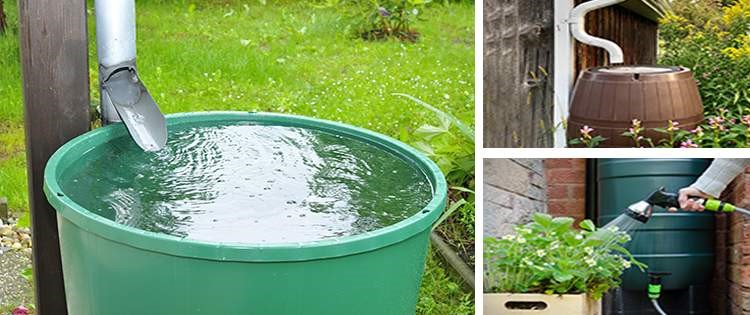
This DIY project is the best way to legally collect rainwater NO MATTER where you live. Get chlorine-free water, cut down on your water bills, and have enough for an emergency situation or to water your garden. Read More Here...
| Variety | Key Characteristics | Best Used For |
|---|---|---|
| Green Magic | Highly heat-tolerant hybrid with a very fast maturity rate (around 60 days). | Areas with unpredictable spring heatwaves. |
| Imperial | Deep green, dense heads that hold their shape even when temps climb into the 80s (27°C+). | Summer-leaning harvests. |
| Sun King | Known for producing large heads and being remarkably resistant to bolting in warm weather. | Gardeners who want the biggest heads possible. |
| Eastern Crown | Bred specifically for the humid, hot conditions of the Eastern United States. | Humid heat and disease resistance. |
| Waltham 29 | A classic heirloom. While it likes cool weather, it is surprisingly resilient if well-mulched. | Traditionalists and seed savers. |
When shopping for seeds, look for keywords like “heat tolerant,” “slow to bolt,” or “good holding ability.” “Holding ability” refers to how long the head stays tight once it reaches maturity. A variety with poor holding ability must be picked the second it’s ready, whereas a good one might give you a week of leeway.
Common Mistakes Gardeners Make
Even with the best intentions, a few simple errors can trigger the bolting response. One of the biggest mistakes is waiting too long to transplant. If a broccoli seedling becomes root-bound in its small nursery pot, it experiences stress. That stress stays with the plant even after you put it in the ground. The plant “remembers” the hardship and is much more likely to bolt early as a result.
Another error is inconsistent feeding. Broccoli is a heavy feeder, especially of nitrogen and potassium. If the plant runs out of nutrients mid-season, it enters a state of decline. To the plant, a lack of food means “the season is over,” which triggers the reproductive cycle. I like to side-dress my plants with a balanced organic fertilizer or a good compost tea every 3 to 4 weeks to keep them in high-production mode.
Lastly, crowding your plants is a recipe for bolting. Broccoli needs room for airflow. If the plants are jammed together, the air becomes stagnant and hot between the leaves. This trapped heat can be several degrees warmer than the surrounding air. Space your plants at least 18 to 24 inches (45 to 60 cm) apart to ensure every plant has its own “breathing room.”
Limitations: When the Heat Wins
Gardening is an exercise in humility. There are times when the weather is simply too much for a cool-season crop. If your local temperatures are consistently hitting 95°F (35°C) or higher for weeks on end, even shade cloth and mulch might not be enough to save a spring crop. At this point, the plant’s metabolic rate is so high that it simply cannot keep up with the stress.
In these extreme cases, it is often better to pull the plants and compost them rather than fighting a losing battle. A bolted broccoli plant attracts pests like aphids and harlequin bugs, which can then migrate to your other healthy crops. Recognizing the limits of your climate helps you plan better for next time, perhaps shifting your main broccoli crop to the fall when the temperatures are trending downward instead of upward.
Practical Tips for Immediate Results
If you see your broccoli starting to “loosen” up—where the tiny beads of the head start to look less like a carpet and more like individual bumps—you need to act fast. This is the first sign that bolting is imminent.
- Harvest Immediately: A small, tight head is much better than a large, flowering one. If you see signs of loosening, cut it that day.
- Double Down on Mulch: If a heatwave is forecasted, add another inch (2.5 cm) of straw around the base.
- Use a “Bury” Technique: If you are transplanting late, try planting the seedling slightly deeper than it was in the pot. This keeps more of the root system in the cooler, deeper soil.
- Monitor Soil Moisture: Don’t guess. Stick your finger into the soil under the mulch. If it’s dry at the second knuckle, water immediately.
Advanced Considerations: The Role of Nitrogen
For the serious practitioner, understanding the nitrogen cycle can help manage bolting. High levels of nitrogen encourage lush, green leaf growth. This is generally good for broccoli, but in extreme heat, those big leaves can actually lose water faster than the roots can pull it in. This leads to wilting, which is a major stressor.
Experienced gardeners often switch to a fertilizer higher in phosphorus and potassium once the central head begins to form. This encourages the plant to focus on developing the head structure rather than just pumping out more leaf surface area. It also strengthens the cell walls, making the plant slightly more resilient to the wilting that often precedes bolting.
Example Scenario: The July Heat Spike
Imagine it is late June in a temperate zone. Your broccoli heads are about the size of a tennis ball. The forecast suddenly calls for three days of 90°F (32°C) weather with high humidity.
Step 1: On the evening before the heat hits, give the bed a deep, slow soak. You want the moisture to go down at least 6 inches (15 cm).
Step 2: Check your mulch. If you see bare dirt, cover it with straw immediately.
Step 3: Set up your shade cloth. If you don’t have one, even an old white bedsheet draped over some tall stakes will work in a pinch. The white color reflects the heat away.
Step 4: Check the heads every morning. If they still feel firm and the “beads” are tight, leave them. If one starts to feel “squishy” or you see the stalk elongating, harvest it even if it’s small. Small broccoli is a delicacy; flowered broccoli is compost.
Final Thoughts
Stopping broccoli from bolting isn’t about magic; it’s about being a good neighbor to your plants. If you can understand the stress they feel when the sun starts to bake the earth, you can take the simple steps needed to protect them. Keeping the roots cool with mulch and the heads shaded with a ‘Cool Canopy’ will buy you the time you need to get those heads to a respectable size.
I always tell folks that the best garden isn’t the one with the most expensive tools, but the one where the gardener is paying attention. Watch your plants, feel the soil, and react before the stress becomes permanent. Once you master these cooling techniques, you’ll be the one with the tight, sweet broccoli that everyone else is asking about.
Don’t be discouraged if a few plants still bolt—even the pros lose a few now and then. Take what you’ve learned, try a different variety next year, and keep experimenting with your microclimates. Happy gardening, and may your broccoli always stay tight!
Do you have some charcoal in your house right now? We call charcoal a “miracle leftover” for anyone who wants to be a little more self-sufficient and cut costs. That’s because it can help you with so many different things around the house and garden. You can even use it to make an energy-free fridge. Read More Here...