
Most nectarine failures aren’t due to bad luck, but bad placement.
Think planting in the middle of the lawn is safe? Think again. We’re revealing the ‘Wall Secret’ that keeps nectarine trees 10 degrees warmer without a heater using simple thermal mass principles.
As a neighbor who has spent more years with dirt under my fingernails than I care to admit, I’ve seen too many good folks lose their nectarines to a late spring frost. It’s a heartbreaking sight to see those beautiful pink blossoms turn to mush overnight. But it doesn’t have to be that way.
If you understand how your garden works—how the wind moves and where the sun lingers—you can grow fruit that rivals anything from a sunny orchard in Georgia or California. It all starts with where you put that tree in the first place.
Best Location To Plant Nectarine Trees
The best location for a nectarine tree isn’t just about finding a patch of dirt; it’s about finding the right environment where the tree can thrive through all four seasons. Nectarines (Prunus persica var. nucipersica) are essentially peaches without the fuzz, which makes them a bit more sensitive to their surroundings.
In the real world, this means they need three things above all else: maximum sun exposure, excellent drainage, and protection from the biting wind. Without these, you’re fighting an uphill battle from day one.
Most gardeners think a sunny spot in the yard is enough, but “full sun” in the gardening world means at least 6 to 8 hours of direct, unfiltered sunlight every single day. This sun isn’t just for growing leaves; it’s the fuel that creates the sugars in your fruit. If you’ve ever bitten into a nectarine that felt “watery” or lacked flavor, it probably didn’t get enough sun to ripen properly.
Beyond the sun, the ground beneath the tree is the second most important factor. Nectarines despise “wet feet.” If your soil stays soggy for more than a few hours after a rain, the roots will literally suffocate and rot. This is why we look for loamy or sandy soils that let water move through freely.
The “Wall Secret”: Using Thermal Mass to Your Advantage
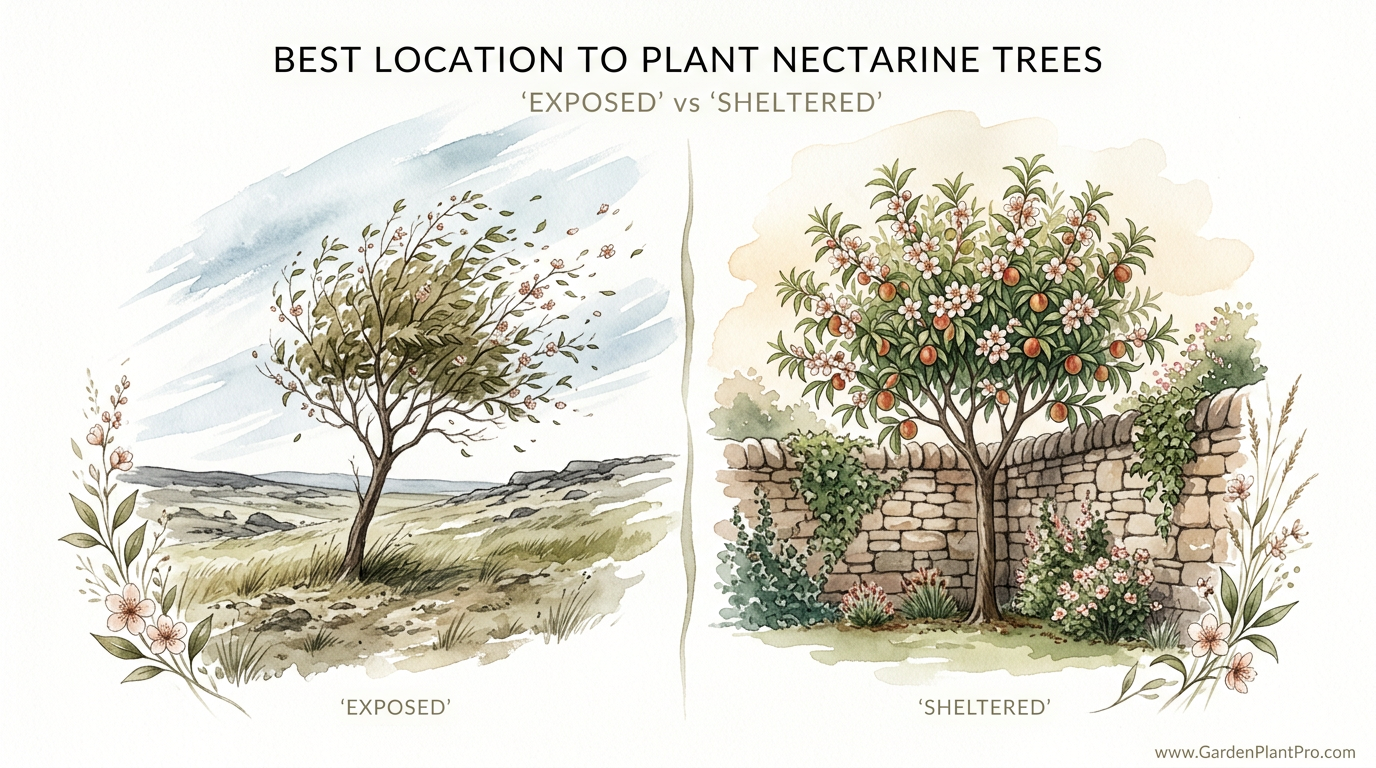
Now, let’s talk about that “Wall Secret” I mentioned. If you live in a region where spring frosts are common, planting your nectarine tree against a south-facing masonry wall (or north-facing if you’re in the Southern Hemisphere) can be a game-changer.
This works on the principle of thermal mass. Materials like brick, stone, and concrete are incredibly dense. During the day, they act like a giant sponge, soaking up the heat from the sun. When the sun goes down and the air temperature drops, that wall begins to slowly release its stored energy back into the surrounding air.
This “radiator effect” can keep the microclimate around your tree up to 10°F to 22°F (approx. 6°C to 12°C) warmer than the rest of your garden. For a nectarine tree that blooms early in the spring, that small temperature difference is often the difference between a bumper crop and a total loss.
I’ve seen snow on the ground in the middle of the yard while the nectarine against the house was happily blooming, shielded by the warmth of the bricks. It’s one of the oldest tricks in the book, used for centuries in Europe to grow Mediterranean fruits in cooler climates.
How It Works: Designing Your Microclimate
To make the wall secret work, you can’t just throw a tree near a wall and hope for the best. You need to understand the mechanics of the heat exchange.
1. Material Matters: A wooden fence won’t do much for you. Wood is an insulator, not a thermal mass. You want brick, stone, or a concrete-block wall. The darker the color, the more heat it will absorb during the day.
2. The Right Distance: If you plant the tree too close—say, within 12 inches (30 cm)—you might run into two problems. First, the roots might interfere with your home’s foundation. Second, the wall can get *too* hot in the peak of summer, potentially “sunburning” the branches or causing the tree to wake up too early in the winter. The sweet spot is usually about 1 to 3 feet (30 to 90 cm) away from the wall.
3. Airflow and Disease: One common pitfall of planting near a wall is reduced airflow. This can lead to fungal issues like Peach Leaf Curl. To combat this, we often train nectarines as “fans” or “espaliers” against the wall. This keeps the tree flat, allowing every leaf to see the sun while still keeping the structure open enough for air to circulate.
4. The Rain Shadow: Walls also create a “rain shadow.” This means the ground directly at the base of the wall stays much drier than the rest of the yard. You’ll need to be more diligent with your watering, especially during the first two years while the tree is establishing its root system.
Understanding Chilling Hours and Climate Limits
Before you buy a tree, you need to know your “chilling hours.” Nectarines are deciduous trees, meaning they go dormant in the winter. During this sleep, they need to experience a specific amount of cold—usually between 32°F and 45°F (0°C to 7°C)—to properly reset their internal clock.
If you live in a warm climate like Florida or parts of Australia and buy a “high-chill” variety (needing 800+ hours), the tree may never bloom. Conversely, if you live in a cold climate and buy a “low-chill” variety (needing 200 hours), it might wake up during a January thaw and get killed by the next freeze.
DIY PROJECT: Collect rainwater no matter where you live...
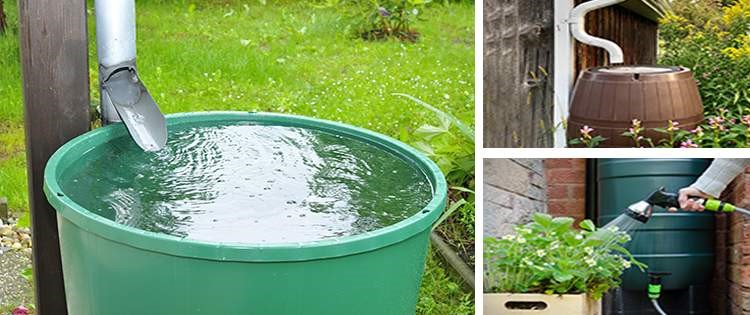
This DIY project is the best way to legally collect rainwater NO MATTER where you live. Get chlorine-free water, cut down on your water bills, and have enough for an emergency situation or to water your garden. Read More Here...
Always check the label for the chilling requirement. Varieties like ‘Goldmine’ or ‘Fantasia’ are classics, but newer “low-chill” varieties like ‘Desert Delight’ have made it possible to grow nectarines in places where it once seemed impossible.
Soil Preparation: Building the Foundation
I’ve always said that if you have ten dollars to spend on a tree, spend one dollar on the tree and nine dollars on the hole. Nectarines prefer a soil pH between 6.0 and 7.0. If your soil is too acidic (common in pine-heavy areas) or too alkaline (common in desert regions), the tree won’t be able to “eat” the nutrients in the ground, no matter how much fertilizer you give it.
Testing Your Drainage: Before you dig, do the “Bucket Test.” Dig a hole 12 inches (30 cm) deep and fill it with water. Let it drain completely, then fill it again. If it takes longer than an hour for the second bucket of water to disappear, your drainage is poor.
If you have heavy clay or poor drainage, don’t just dig a deeper hole—that creates a “bathtub effect” where the roots sit in a puddle. Instead, build a raised bed or a mound of soil at least 12 to 18 inches (30 to 45 cm) high. This allows the primary root mass to stay above the water line while the deeper roots seek out moisture.
Environmental Factors to Consider
Beyond the “Wall Secret,” there are several other environmental variables that will dictate your success.
- Wind Protection: Nectarines have delicate blossoms. A strong spring wind can strip a tree of its future fruit in a matter of hours. If you don’t have a wall, a hedge or a windbreak on the windward side can save your crop.
- Elevation: Cold air acts like water—it flows downhill and pools in low spots. This is why we avoid planting fruit trees in “frost pockets” at the bottom of a slope. Halfway up a hill is often the safest spot.
- Reflection: Light-colored walls or nearby swimming pools can reflect extra light onto the tree. While this helps with ripening, it can also increase the risk of “sunscald” on the trunk. I always recommend painting the lower 18 inches (45 cm) of a young nectarine trunk with white latex paint (diluted 50/50 with water) to reflect that harsh winter sun.
Common Mistakes to Avoid
Even with the best intentions, I see neighbors make the same mistakes year after year. Here are the big ones to watch out for:
1. Planting too deep: Look for the “graft union”—that bumpy scar near the bottom of the trunk where the fruiting tree was joined to the rootstock. This union must stay 2 to 3 inches (5 to 7.5 cm) above the soil line. If you bury it, the top part of the tree might grow its own roots, and you’ll lose the benefits of the hardy rootstock.
2. Over-fertilizing young trees: It’s tempting to dump nitrogen on a new tree to make it grow fast. Don’t. Too much nitrogen creates soft, lush growth that is a magnet for aphids and very susceptible to frost damage. Wait until the tree starts fruiting before you get serious with the fertilizer.
3. Neglecting the “Thinning”: This is the hardest lesson for new gardeners. A nectarine tree will often produce more fruit than it can handle. If you leave every fruit on the branch, they will be small, tasteless, and might even break the limbs. About a month after bloom, you must pluck off the smaller fruits until they are spaced 6 to 8 inches (15 to 20 cm) apart. Your remaining fruit will be bigger, sweeter, and juicier because of it.
Maintenance and Long-Term Care
A nectarine tree is a long-term commitment, not a “set it and forget it” plant. To keep it productive for 15 to 20 years, you need a routine.
The Pruning Cycle
Unlike apples, nectarines fruit on “one-year-old wood.” This means the branches that grew this past summer are the ones that will give you fruit next year. Because of this, we prune nectarines much more aggressively.
Most backyard growers prefer the “Open Center” or “Vase” shape. This involves cutting out the central leader (the main trunk going up) to encourage three or four main “scaffold” branches to grow outward. This lets the sun reach into the center of the tree, ripening the fruit and keeping the wood healthy.
Pest and Disease Management
Peach Leaf Curl is the bane of the nectarine gardener. It’s a fungus that makes the leaves pucker, turn red, and eventually fall off. The secret to beating it is prevention. Once you see the curled leaves in spring, it’s too late to spray. You must apply a copper-based fungicide or lime sulfur in the late fall or very early spring while the tree is still dormant.
If your tree is planted against a wall under a slight eave, you might find it has less leaf curl. This is because the fungus needs water to spread. Keeping the leaves dry during the early spring bud-break is one of the best non-chemical ways to manage the disease.
Comparing Locations: Sheltered Wall vs. Open Lawn
| Factor | Sheltered Wall (The Secret) | Open Lawn / Exposed |
|---|---|---|
| Temperature | 10-20°F warmer at night | Ambient air temperature |
| Frost Risk | Significantly reduced | High during late spring |
| Airflow | Lower (needs careful pruning) | Excellent (natural) |
| Watering Needs | High (rain shadow effect) | Standard |
| Fruit Quality | Higher sugars due to heat | Dependent on season |
Advanced Consideration: Rootstocks and Soil Types
If you really want to dive deep, you need to look at what’s under the tree. Most nectarines are grafted onto a specific rootstock that dictates how big the tree will get and what kind of soil it can handle.
If you have sandy soil and issues with nematodes (tiny worms that eat roots), look for trees on ‘Nemaguard’ rootstock. If you have heavy soil or need a more cold-hardy root, ‘Lovell’ or ‘Citation’ are excellent choices. Using a dwarfing rootstock like ‘St. Julian A’ is perfect if you are following the “Wall Secret” and want to keep the tree small and manageable.
Example Scenario: Success vs. Failure
Imagine two neighbors, Jim and Sarah. Jim plants his nectarine tree right in the middle of his back lawn. It gets plenty of sun and looks great in the summer. However, because it’s exposed, a late April frost hits his yard. The cold air settles on the grass, and his blossoms freeze at 28°F (-2°C). Jim gets zero fruit that year.
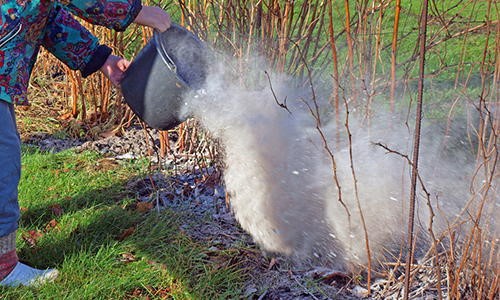
Do you have some charcoal in your house right now? We call charcoal a “miracle leftover” for anyone who wants to be a little more self-sufficient and cut costs. That’s because it can help you with so many different things around the house and garden. You can even use it to make an energy-free fridge. Read More Here...
Sarah, on the other hand, plants her nectarine 2 feet (60 cm) away from her brick house, facing south. When that same frost hits, her brick wall—which has been soaking up sun all day—radiates heat. The air immediately around her tree stays at a cozy 35°F (1.5°C). Her blossoms survive, and by July, she’s handing out baskets of nectarines to the whole block.
The only difference wasn’t the “luck” of the gardener; it was the placement.
Final Thoughts
Nectarines are one of the most rewarding fruits you can grow at home. There is simply no comparison between a store-bought nectarine, picked green and shipped in a refrigerated truck, and one that has ripened to a sun-warmed, juicy perfection right on your own tree.
Remember, the “Wall Secret” isn’t magic—it’s just working with the natural laws of thermodynamics. By choosing a sheltered spot with high thermal mass, ensuring your soil drains properly, and staying on top of your pruning, you can turn a “finicky” tree into a reliable producer.
Don’t be afraid to experiment with your garden’s microclimates. Every yard has little pockets of warmth and shelter if you know how to look for them. Take your time, prep your soil, and soon you’ll be the one sharing “secrets” over the fence with your neighbors. For those looking to expand their orchard, I often recommend looking into soil health and irrigation methods next, as they are the two pillars that support everything else we do in the garden.