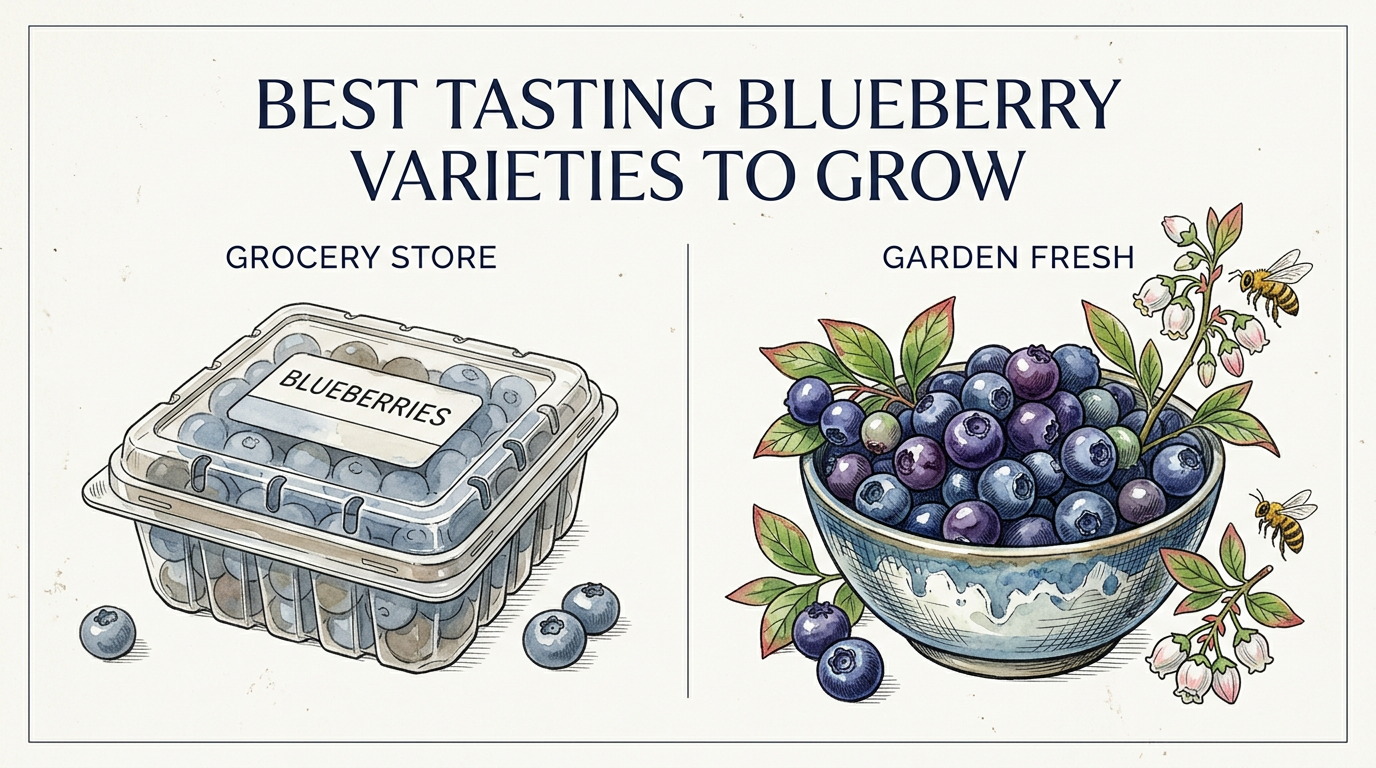
The “blueberries” you buy at the store are a different species compared to what you can grow in your backyard. Supermarket berries are bred for shipping, not flavor. When you grow “Pro” level varieties at home and time the harvest perfectly, the sugar content is 3x higher. Here is the visual proof.
Walking through a grocery store produce aisle, you see rows of perfect, uniform blue spheres. They look beautiful, but the first bite is often a watery, tart disappointment. Commercial growers prioritize “shipping firmness” and “shelf-life” over the complex aromatics and high Brix levels that define a truly great berry. To survive a 1,000-mile journey in a refrigerated truck, these berries are often harvested while they are still slightly pink or green internally, halting the sugar accumulation process before it ever reaches its peak.
In your own garden, you hold the power to let a berry hang for those final five to seven days when the magic happens. This is the period when the plant pumps the final surge of fructose and glucose into the fruit. By choosing the right varieties and managing your soil like a veteran orchardist, you can produce fruit that tastes less like a grocery store staple and more like gourmet candy. This guide will walk you through the elite cultivars and the rugged techniques required to master the blueberry harvest.
Best Tasting Blueberry Varieties To Grow
The “tastiest” blueberry is not a single variety, but a selection of cultivars bred specifically for complex flavor profiles rather than commercial durability. While the industry relies on workhorses like ‘Duke’ for their early ripening and firm skin, the home gardener should look toward “Flavor-First” varieties. These plants often have thinner skins, higher aromatic compounds, and a sugar-to-acid ratio that creates a multi-layered sensory experience.
Flavor in blueberries is measured primarily through Brix (percentage of soluble solids, mostly sugar) and titratable acidity. A standard store-bought berry might hover around 10° to 11° Brix. In contrast, elite home varieties can reach 16° to 18° Brix when grown in ideal conditions. Here are the varieties that consistently top the charts for flavor and sweetness.
1. Hannah’s Choice (Northern Highbush)
Developed by the USDA, ‘Hannah’s Choice’ is often cited as the gold standard for early-season flavor. It doesn’t just taste like sugar; it has distinct “peachy” overtones and a firm, crisp texture. The berries are large and maintain their sweetness even if picked slightly early, though waiting for full ripeness rewards you with a complex floral bouquet that shipping-grade berries lack.
2. Legacy (Northern/Southern Highbush Hybrid)
Legacy is a robust cultivar that consistently wins blind taste tests. It offers a “jammy” depth of flavor, reminiscent of wild blueberries but with the size of a cultivated berry. It is known for its exceptional sugar content, often reaching 18° Brix. Because it is a hybrid, it is adaptable to many climates, thriving in both the Pacific Northwest and the Mid-Atlantic regions.
3. Pink Lemonade (Rabbiteye Hybrid)
This variety is a visual and culinary outlier. The berries turn a bright, translucent pink when ripe rather than blue. The flavor is remarkably different—it has a citrusy, “lemony” aldehyde profile mixed with intense sweetness. It tastes more like a fruit-flavored candy than a traditional blueberry. While it yields less than standard blue varieties, the unique flavor makes it a mandatory addition for any serious fruit enthusiast.
4. Cara’s Choice (Northern Highbush)
If you want the absolute highest sugar content, ‘Cara’s Choice’ is the winner. It is a slow-growing bush that produces medium-sized fruit, but what it lacks in yield it makes up for in Brix. The berries can hang on the bush for an extended period without softening, allowing them to accumulate a honey-like sweetness that is virtually unheard of in the commercial world.
5. Spartan (Northern Highbush)
Spartan is famous for producing some of the largest berries in the blueberry world. Unlike many “jumbo” varieties that taste watery, Spartan maintains a very sweet, tangy balance. It requires very well-drained, acidic soil to thrive, making it a bit of a “diva” in the garden, but the reward is a massive, dessert-quality berry that dwarfs anything in a plastic clamshell.
How the Sugar Accumulation Process Works
To understand why home-grown berries are 3x sweeter, you must understand the “Last Mile” of ripening. Blueberries are not like tomatoes; they do not continue to sweeten once they are removed from the vine. All the sugar they will ever have must be manufactured in the leaves through photosynthesis and transported into the fruit while it is still attached to the bush.
Commercial growers harvest berries the moment they turn blue—and sometimes even when they are “blushing” purple. At this stage, the berry is firm and easy to ship, but the sugar-to-acid ratio is heavily skewed toward acid. If you leave that same berry on the bush for another five to seven days after it turns blue, the acidity drops significantly while the fructose levels spike. This is the “Visual Proof” of the home-grower’s advantage: a store-bought berry is blue on the outside but often greenish-white on the inside. A perfectly ripened garden berry is deep purple or blue all the way through the flesh.
The chemistry of flavor involves Volatile Organic Compounds (VOCs). These are the chemicals that provide the “blueberry” aroma. In the final days of ripening, the plant synthesizes compounds like linalool and methyl anthranilate. These aromatics are delicate and begin to degrade the moment a berry is refrigerated for shipping. By eating them straight from the bush, you experience the full spectrum of these compounds at their peak concentration.
Benefits of Growing Your Own Elite Varieties
The primary advantage is undeniable: Flavor Superiority. No amount of store-bought organic certification can compensate for the lack of ripeness. When you grow your own, you are participating in a different tier of nutrition. Home-grown berries, allowed to fully ripen, have higher concentrations of anthocyanins and antioxidants because these pigments are directly linked to the ripening process.
Food security and variety also play a role. The commercial market is dominated by maybe five or six varieties chosen for their ability to be machine-harvested. When you plant your own, you can choose from dozens of cultivars with different ripening times, extending your harvest from June through September. You can plant ‘Earlyblue’ for your first taste of summer and ‘Elliott’ or ‘Aurora’ to keep the harvest going into the first cool days of autumn.
There is also a tactile, nostalgic benefit. There is a specific “pioneer grit” involved in tending to a blueberry patch—acidifying the soil, mulching with pine needles, and outsmarting the local bird population. The reward is a bowl of fruit that represents months of stewardship, tasting of the earth and the sun in a way that mass-produced fruit never could.
Challenges and Common Mistakes
The most frequent mistake beginners make is Soil pH Ignorance. Blueberries are not like other garden crops. They are “ericaceous” plants, meaning they require a highly acidic environment (pH 4.5 to 5.2) to absorb nutrients. If your soil pH is 6.5—which is perfect for tomatoes—your blueberries will suffer from iron chlorosis. Their leaves will turn yellow with green veins, and the fruit will be small, tart, and sparse.
Another common pitfall is the “Early Pick” Syndrome. Because we are conditioned by the grocery store to think “Blue = Ripe,” many gardeners harvest their berries too soon. A blueberry develops a “pedicel” or a small scar where it attaches to the stem. If you pull a berry and it resists even slightly, it isn’t ready. A truly ripe berry will practically fall into your hand with the gentlest tickle. If the area around the stem is still reddish or light purple, the sugars haven’t finished moving in yet.
Neglecting water during the “Fruit Swell” stage is a third major error. Blueberries have very shallow, fibrous root systems. They don’t have deep taproots to find water during a July drought. If the soil dries out while the berries are sizing up, the plant will prioritize its own survival over the fruit, resulting in shriveled, flavorless berries. Consistent, deep moisture is the key to that “bursting” texture consumers crave.
DIY PROJECT: Collect rainwater no matter where you live...
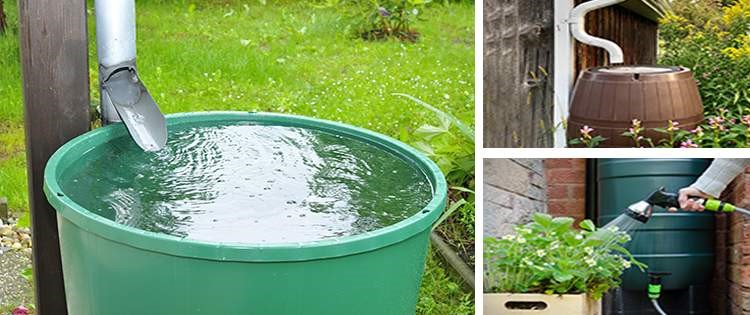
This DIY project is the best way to legally collect rainwater NO MATTER where you live. Get chlorine-free water, cut down on your water bills, and have enough for an emergency situation or to water your garden. Read More Here...
Limitations and Environmental Constraints
You cannot grow every variety in every climate. Blueberries require “Chill Hours”—a specific number of hours between 32°F and 45°F during the winter—to reset their internal clock and produce flowers in the spring. If you live in a warm climate like Florida or Southern California, you must choose “Low-Chill” Southern Highbush or Rabbiteye varieties. Conversely, if you live in Zone 3 or 4, you need “Half-High” or ultra-hardy Northern Highbush types that won’t die back in a deep freeze.
Space and time are also limiting factors. A blueberry bush is not an annual vegetable; it is a long-term investment. It takes about three years for a bush to produce a meaningful crop and six to eight years to reach full maturity. If you are a renter or plan on moving soon, you might consider growing compact varieties like ‘Sunshine Blue’ or ‘Top Hat’ in large containers, which allows you to take your “liquid gold” with you.
Comparison: Grocery Store vs. Garden Fresh
The following table illustrates why the experience of eating a home-grown berry is fundamentally different from the commercial alternative.
| Feature | Grocery Store (Commercial) | Garden Fresh (Home-Grown) |
|---|---|---|
| Sugar Content (Brix) | 9° – 11° (Low) | 14° – 18° (High) |
| Harvest Stage | “Barely Blue” (for shipping) | Fully Ripe (5-7 days post-blue) |
| Skin Texture | Thick, Tough (mechanical harvest) | Thin, Crisp, or Melting |
| Flavor Profile | One-dimensional, Tart/Watery | Complex: Peach, Citrus, Honey |
| Shelf Life | 14+ Days | 3 – 5 Days (Best eaten fresh) |
Practical Tips for Maximum Sweetness
To hit those 3x sugar levels, you need to optimize the plant’s environment. Start by mulching with pine needles or rotted oak leaves. This mimics the forest floor where blueberries evolved, providing a slow release of acidity and keeping the shallow roots cool and moist. Avoid using fresh grass clippings or high-nitrogen fertilizers late in the season, as this encourages vegetative growth at the expense of fruit quality.
Sunlight is the engine of sugar. Ensure your bushes get at least 6 to 8 hours of direct, unobstructed sunlight. Shaded berries will never reach high Brix levels because the leaves cannot produce enough energy to fuel the sugar transport. If your patch is becoming overgrown, prune out the oldest, woodiest canes to allow light into the center of the bush.
Implement a two-variety pollination strategy. While many blueberries are technically self-fertile, they produce significantly larger and sweeter fruit when they are cross-pollinated by a different cultivar of the same type. For example, planting ‘Spartan’ next to ‘Patriot’ will lead to better fruit set and more complex flavor than growing either one alone. The genetic diversity in the pollen triggers a more robust hormonal response in the developing fruit.
Advanced Considerations for Serious Growers
Serious practitioners should invest in a handheld refractometer. This simple optical device allows you to squeeze a drop of juice onto a lens and read the Brix level instantly. It takes the guesswork out of the harvest. You will soon realize that even on the same bush, berries on the south side might be at 16° Brix while those in the interior are only at 12°. This allows for a “staggered harvest” where you only pick the peak-flavor fruit each day.
Monitoring soil “drift” is another advanced skill. Over time, irrigation with city water (which is often slightly alkaline) can raise the pH of your blueberry beds. Applying elemental sulfur once or twice a year, based on a soil test, is necessary to keep the pH in the “sweet spot.” If you notice the leaf color starting to fade, a quick application of chelated iron can provide a temporary fix, but the long-term solution is always pH management.
Finally, consider the role of “Foliar Feeding” with kelp or seaweed extracts. These sprays provide trace minerals that aren’t always available in the soil. These micronutrients act as catalysts for the enzymes that build sugars and aromatics. A light misting of the leaves during the fruit-set stage can provide that extra 1% to 2% boost in sugar content that separates a good berry from a legendary one.
Example Scenario: The Weekend Harvest
Imagine it is a Saturday morning in mid-July. You have two bushes: a ‘Legacy’ and a ‘Hannah’s Choice’. You walk out to the patch and see hundreds of deep blue berries. A beginner would grab a bucket and strip the branches. But you are a practitioner of the “Last Mile” technique.
You use the “Tick Test.” You place your thumb behind a cluster and gently tickle the berries. Five large berries drop into your palm without any effort; these are the ones that have been blue for a week and are now at 17° Brix. Three others stay attached; they are blue, but their stems are still slightly purple. You leave them for Monday. By the time you sit down for breakfast, you have a bowl of fruit that is chemically superior to anything available in a five-star restaurant. The juice is thick, dark, and intensely sweet, requiring no added sugar or cream.
Final Thoughts
The gap between supermarket blueberries and home-grown varieties is one of the widest in the culinary world. By selecting “Pro” level cultivars like ‘Hannah’s Choice’ or ‘Cara’s Choice’ and exercising the patience to wait for full ripeness, you can experience a fruit that is fundamentally different from its commercial counterpart. Growing these berries is an exercise in stewardship—adjusting the soil, managing the sun, and protecting the harvest.
If you are tired of watery, bland fruit, start by testing your soil and planting two or three compatible varieties. The learning curve is real, but the reward is measurable in every bite. Once you have tasted a berry with a 18° Brix level, there is no going back to the grocery store aisle. You are no longer just a consumer; you are a cultivator of the finest fruit the earth can provide.
Experiment with different mulches and watch how your plants respond. Every garden has its own microclimate, and part of the joy is discovering which variety thrives in your specific patch of earth. Whether you are building a small container garden or a sprawling berry hedge, the principles of acidity, sunlight, and patience will never fail you.